Må
In “Må jeg bruge din stige ...?”, “Må” asks for permission: “may I ...?” The same form appears in “Det må du gerne” to grant permission. Use “Må jeg ...?” when politely asking whether you are allowed to do something.
jeg
“jeg” means “I” and refers to the person speaking. It is used as the subject in “Må jeg bruge ...?” and “Jeg har kun brug for den ...”. Use “jeg” before the verb when talking about your own action or situation.
bruge
In “bruge din stige”, “bruge” means “use”. It follows “Må jeg” and names the action the speaker is asking permission to perform. A reusable pattern is “Må jeg bruge ...?” when asking to use an object.
din
“din” means “your” and identifies the ladder as belonging to the person being addressed. In “din stige”, it comes directly before the noun it describes. Use “din” when referring to one person’s possession in this kind of phrase.
stige
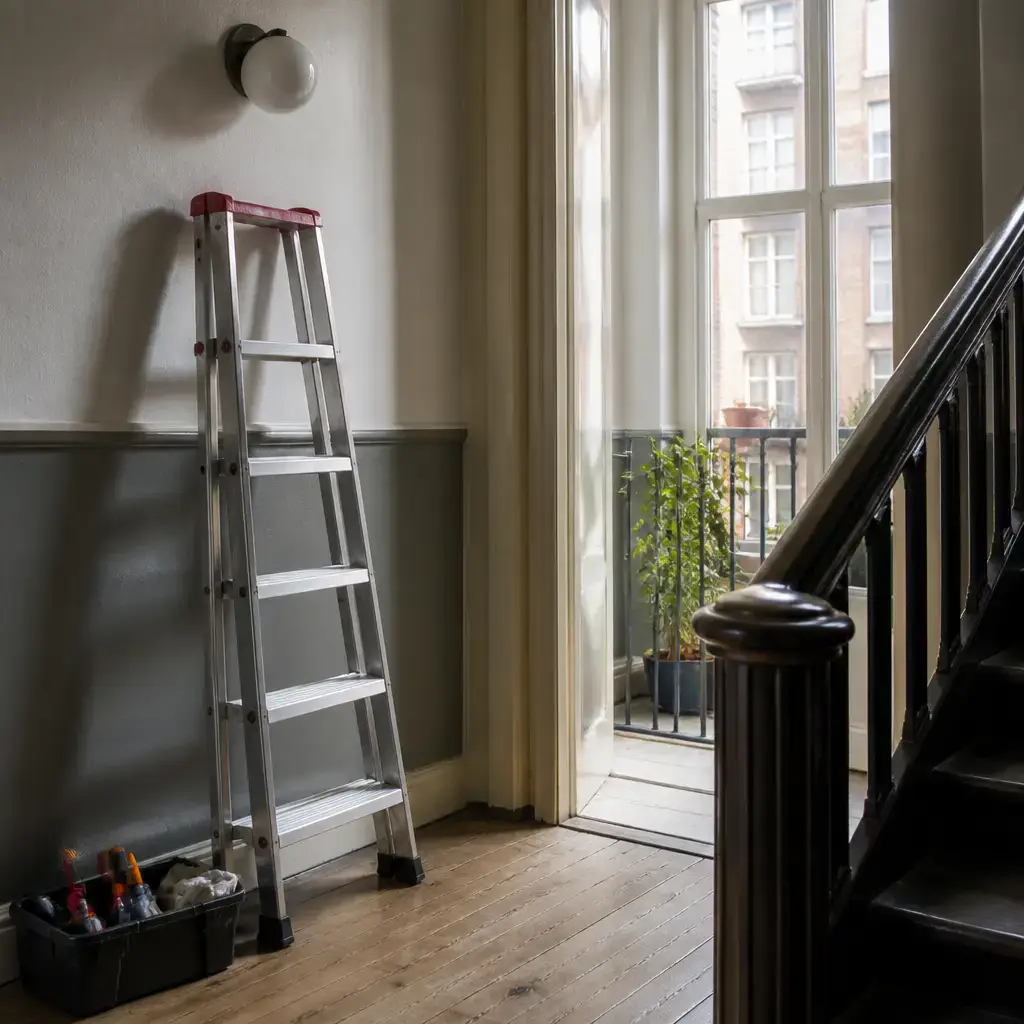
“stige” means “ladder” in “din stige”. It is the object the speaker wants to use and later return. Use “stige” when referring to a ladder in practical situations such as repairs or reaching something high.
til
In “til at skifte en loftslampe”, “til” introduces the purpose of using the ladder: “for changing a ceiling light”. The full purpose phrase is “til at skifte ...”. Use “til at” before an action when explaining what something is used for.
at
In “at skifte”, “at” marks the following verb as an infinitive, meaning “to change”. It belongs to the purpose construction “til at skifte en loftslampe”. Use “at” before a verb when that infinitive is required in a construction.
skifte
“skifte” means “change” or “replace” in “skifte en loftslampe”. Here it describes replacing the ceiling light, not simply changing an unspecified thing. Use “skifte” with an object when saying that one item is being replaced or changed.
en
“en” is the indefinite article in “en loftslampe”, meaning “a” or “an”. It introduces one ceiling light that has not been identified more specifically. Use “en” before a noun in this type of indefinite singular phrase.
loftslampe
“loftslampe” means “ceiling light” in “en loftslampe”. It is the object that the speaker wants to change. Use “loftslampe” when referring specifically to a light attached to or used on a ceiling.
Det
“Det” appears in “Det må du gerne” and “Det burde hjælpe”. In the first expression it refers to the requested action and helps grant permission; in the second it refers to the suggested support and means “that” or “it”. Use “Det” to refer back to an action, situation, or thing already understood.
du
“du” means “you” and refers to the person being addressed. In “Det må du gerne”, it identifies the person receiving permission, while in “mens du bruger den” it identifies the person using the ladder. Use “du” as the subject when speaking directly to one person.
gerne
In “Det må du gerne”, “gerne” helps grant permission and makes the meaning “you may do that” or “you are welcome to”. It is part of the expression rather than an independent description of the action. Use “må ... gerne” when allowing someone to do something.
men
“men” means “but” and connects permission with a safety condition in “Det må du gerne, men ...”. It signals that the second part limits or qualifies the first part. Use “men” to contrast an agreement with advice, a condition, or a reservation.
få
In “få nogen til at blive”, “få” means “have” or “get someone to do something”. The construction includes the person affected, “nogen”, followed by “til at blive”. Use this construction when arranging for another person to carry out an action.
nogen
“nogen” means “someone” in “få nogen til at blive i nærheden”. It refers to an unspecified person who should remain nearby. Use “nogen” when the particular person is not named or does not matter in the sentence.
blive
“blive” means “stay” or “remain” in “til at blive i nærheden”. It describes the requested action of remaining nearby while the ladder is being used. Use “blive” with a place or situation when asking someone not to leave it.
i
In “i nærheden”, “i” means “in” and places someone within the nearby area. It is also used in “i bunden” for the location at the bottom of the ladder. Use “i” before a place or area when describing where someone or something is.
nærheden
“nærheden” means “the nearby area” in “i nærheden”. The phrase tells the listener where someone should stay while the ladder is being used. Use “i nærheden” when asking someone to remain close enough to observe or help.
mens
“mens” means “while” and introduces the time relationship in “mens du bruger den”. It connects the helper’s staying nearby with the period when the ladder is being used. Use “mens” before an activity that happens at the same time as another activity.
bruger
“bruger” means “use” in “mens du bruger den”. It describes the activity taking place during the time someone stays nearby. Use “bruger” when referring to someone using an object in an ongoing situation.
den
“den” refers to the ladder in “du bruger den”, “brug for den”, and the later return instructions. In “den tid, du har brug for”, it is part of the phrase meaning “the time”. Use “den” to refer back to a known item, or as part of a specific noun phrase such as “den tid”.
Min
“Min” means “my” in “Min bror”. It identifies the brother as belonging to or being related to the speaker. Use “min” directly before a noun when referring to one thing or person connected with you.
bror
“bror” means “brother” in “Min bror”. The speaker identifies the person who can hold the bottom of the ladder. Use “bror” when referring to a male sibling.
kan
“kan” means “can” or “is able to” in “kan holde”. It says that the brother is able to perform the action. Use “kan” before a verb when describing ability or a possible action.
holde
In “holde fast i bunden”, “holde” means “hold”. It describes keeping a firm grip on the bottom of the ladder. Use “holde fast i” with the thing or person that someone holds onto securely.
fast
In “holde fast”, “fast” adds the idea of holding firmly or securely. It works together with “holde” in the expression “holde fast i bunden”. Use “holde fast” when emphasizing that something should not slip or move.
bunden
“bunden” means “the bottom” or “the base” in “i bunden”. Here it refers to the lower part of the ladder that the brother holds. Use “bunden” when referring to the lowest or supporting part of an object.
så
In “så den står stabilt”, “så” means “so that” and introduces the intended result of holding the ladder. It connects the brother’s action with the ladder’s stable position. Use “så” before a result or purpose clause when one action is meant to produce a certain outcome.
står
“står” means “stands” or “is positioned” in “den står stabilt”. It describes the ladder’s physical position rather than an action of walking or moving. Use “står” when an object is upright or positioned in a particular place.
stabilt
“stabilt” means “stably” or “securely” in “står stabilt”. It describes how the ladder is positioned after someone holds its bottom. Use “stabilt” with a verb such as “står” when describing a secure physical position.
burde
“burde” means “should” in “Det burde hjælpe”. It expresses the speaker’s expectation that the proposed support will help. Use “burde” before a verb when saying that an action or result is expected or advisable.
hjælpe
“hjælpe” means “help” in “Det burde hjælpe”. It follows “burde” and describes the expected effect of holding the ladder. Use “hjælpe” after a modal expression when talking about making a situation easier or better.
Stigen
“Stigen” means “the ladder” in “Stigen er solid”. It refers to the same ladder that is being borrowed. Use this form when talking about the specific ladder already known in the conversation.
er
“er” means “is” in “Stigen er solid”. It links the ladder with the description “solid”. Use “er” to state what something is like or what condition it is in.
solid
“solid” means “sturdy” or “solid” in “Stigen er solid”. It describes the ladder as physically strong, although the speaker still gives a safety warning. Use “solid” to describe an object that feels strong or well-built.
skal
In “du skal stadig være forsigtig”, “skal” expresses the need to be careful. In “jeg skal nok være forsigtig”, it is part of an assurance about what the speaker will do. Use “skal” before a verb when expressing a requirement, planned action, or strong assurance.
stadig
“stadig” means “still” in “du skal stadig være forsigtig”. It shows that the need for care remains even though the ladder is solid. Use “stadig” when a situation or requirement continues despite another fact.
være
“være” means “be” in “være forsigtig”. It follows “skal” and introduces the condition or behavior required of the listener. Use “være” before an adjective when describing how someone should be.
forsigtig
“forsigtig” means “careful” or “cautious” in “være forsigtig”. It describes the safe behavior required when using the ladder. Use “være forsigtig” when advising someone to act carefully in a potentially unsafe situation.
har
In “Jeg har kun brug for den”, “har” means “have” as part of the expression “have need for” or “need”. It states that the speaker needs the ladder. Use “har brug for” before the thing or person that is needed.
kun
“kun” means “only” in “kun brug for den i kort tid”. It limits the speaker’s need to a short period. Use “kun” before the part of the sentence that is being limited.
brug
In “har brug for den”, “brug” is part of the fixed expression meaning “need”. Together with “har” and “for”, it says that the speaker needs the ladder. Use the complete pattern “har brug for” before the object that is needed.
for
In “har brug for den”, “for” completes the expression “har brug for”, meaning “need”. It links the expression to the needed object, here “den”. Use “for” as part of this expression rather than treating the word alone as the full meaning.
kort
“kort” means “short” in “kort tid”. It limits the length of the time for which the ladder is needed. Use “kort” before “tid” when describing a brief period.
tid
“tid” means “time” in “i kort tid” and “den tid, du har brug for”. It refers to a period during which an activity takes place. Use “tid” with a duration word or in the pattern “den tid, du har brug for” when discussing how long something takes.
og
“og” means “and” and joins related information, such as “og jeg skal nok være forsigtig”. It adds another statement without contrasting it with the first. Use “og” to connect two actions, descriptions, or complete clauses.
nok
In “jeg skal nok være forsigtig”, “nok” adds reassurance that the speaker will indeed be careful. It makes the statement sound like an assurance rather than a simple prediction. Use “skal nok” when reassuring someone that you will do something.
Tag
“Tag” means “take” in the instruction “Tag den tid, du har brug for”. It tells the listener to allow themselves the necessary amount of time. Use “Tag ...” at the beginning of a direct instruction when telling someone to take or accept something.
Undgå
“Undgå” means “avoid” in the instruction “Undgå at bruge den udenfor”. It tells the listener not to use the ladder in the stated situation. Use “Undgå at” before a verb when advising someone not to carry out an action.
udenfor
“udenfor” means “outside” in “bruge den udenfor”. It describes the outdoor location where the ladder should not be used if the ground is wet. Use “udenfor” when referring to a place outside a building or enclosed area.
hvis
“hvis” means “if” and introduces the condition “hvis jorden er våd”. It explains when the instruction to avoid outdoor use applies. Use “hvis” before a condition that determines whether something should happen.
jorden
“jorden” means “the ground” in “hvis jorden er våd”. It refers to the surface outdoors on which the ladder might stand. Use “jorden” when describing the ground as a specific surface or environment.
våd
“våd” means “wet” in “jorden er våd”. It describes the condition of the ground that makes outdoor ladder use unsafe. Use “våd” after “er” to describe something containing or covered with water.
indenfor
“indenfor” means “indoors” or “inside” in “bruger den indenfor”. It tells the listener that the ladder will be used inside the building. Use “indenfor” when specifying that an activity takes place inside rather than outside.
tager
In “tager den tilbage”, “tager” means “takes” and describes bringing the ladder back. It is used with “tilbage” to show the direction or result of the action. Use “tager ... tilbage” when returning an object to its previous owner or place.
tilbage
“tilbage” means “back” in “tager den tilbage”. It indicates that the ladder will be returned. Use “tilbage” with a movement verb when something goes or is brought back to an earlier place or person.
når
“når” means “when” in “når jeg er færdig”. It introduces the time at which the speaker will return the ladder. Use “når” before an event that marks when another action happens.
færdig
“færdig” means “finished” in “jeg er færdig”. It describes the speaker’s work as completed. Use “være færdig” when saying that an activity or task has been completed.
ikke
“ikke” means “not” in “jeg ikke er hjemme” and “du ikke er hjemme”. It negates the statement about being at home. Use “ikke” to make a clause negative.
hjemme
“hjemme” means “at home” in “jeg ikke er hjemme”. It describes the person’s location rather than movement toward home. Use “være hjemme” when saying that someone is at their home.
stil
“Stil” means “place” or “set down” in the instruction “så stil den ved siden af min dør”. It tells the listener where to leave the ladder. Use “stil” at the start of a direct instruction when telling someone to set an object down.
ved siden af
“ved siden af” means “beside” or “next to” in “ved siden af min dør”. The whole expression gives the location: “ved” places something by a location, “siden” refers to its side, and “af” links that side to the reference point. Use “ved siden af” before the person or object that something is next to.
dør
“dør” means “door” in “min dør” and “din dør”. It identifies the location beside which the ladder should be left. Use “dør” when referring to a doorway or the physical door of a home or room.
Okay
“Okay” acknowledges the instruction in “Okay, jeg stiller den ...”. It signals agreement before the speaker confirms what they will do. Use “Okay” at the start of a reply when accepting information, advice, or an arrangement.
stiller
In “jeg stiller den ved siden af din dør”, “stiller” means “place” or “set down”. It describes leaving the ladder in a particular position beside the door. Use “stiller ...” with an object and a location when saying where you will put something.
Fokuser
“Fokuser” means “focus” in the instruction “Fokuser på sikkerheden”. It tells the listener to direct their attention to safety. Use “Fokuser på” before the topic that should receive someone’s attention.
på
In “Fokuser på sikkerheden”, “på” means “on” and completes the construction “fokusere på”. It links the act of focusing to its topic, safety. Use “fokusere på” before the subject or issue receiving attention.
sikkerheden
“sikkerheden” means “the safety” in “Fokuser på sikkerheden”. It is the specific priority the speaker wants the listener to keep in mind. Use “sikkerheden” when referring to safety as the relevant concern in a situation.
også
In “også selvom det tager længere tid”, “også” means “even” and strengthens the condition that follows. It emphasizes that safety remains the priority despite the extra time. Use “også selvom” when saying that something remains true despite a possible difficulty or consequence.
selvom
“selvom” means “even if” or “although” in “selvom det tager længere tid”. It introduces a condition that does not change the advice to focus on safety. Use “selvom” before a situation that contrasts with, but does not cancel, the main instruction.
længere
“længere” means “longer” in “tager længere tid”. It compares the duration with a shorter or expected duration. Use “tage længere tid” when saying that an action requires more time than expected or than another action.