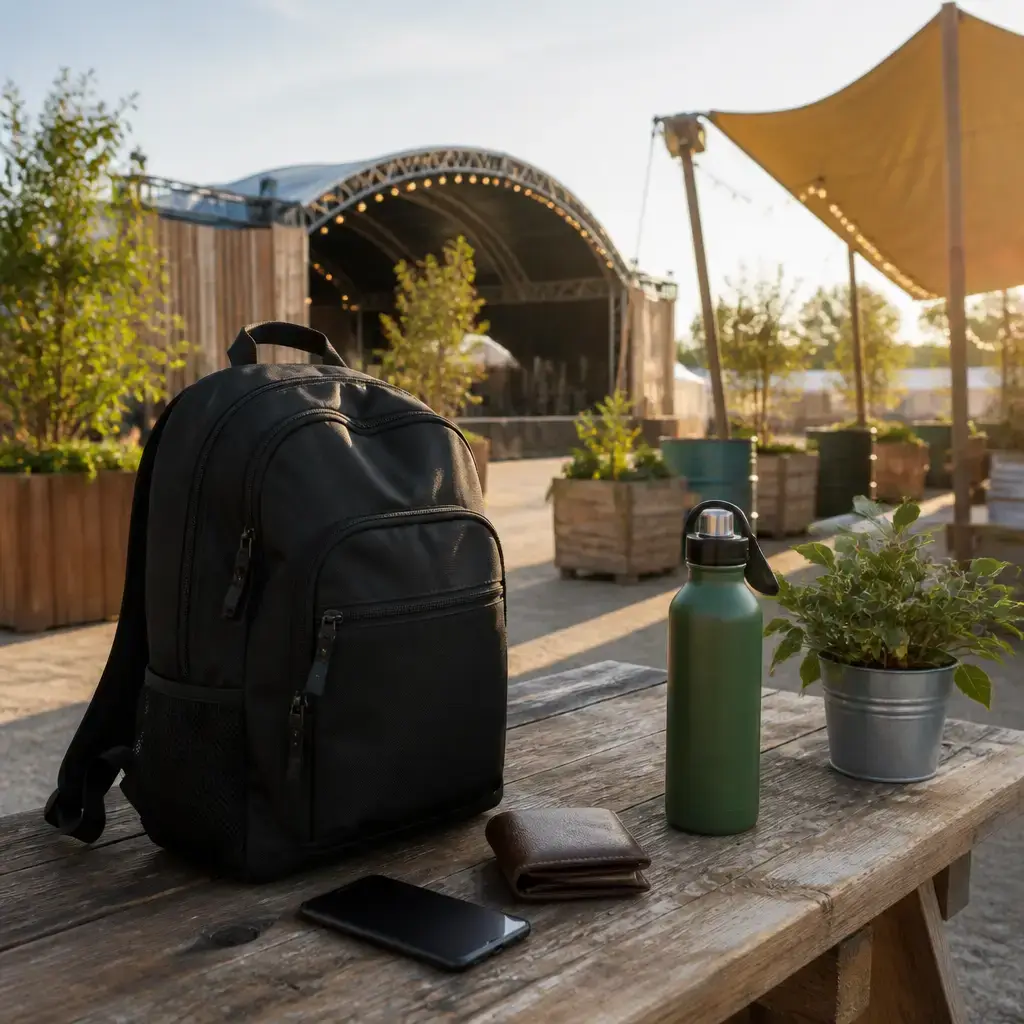
Denne
'Denne' means 'this' in 'Denne festival' and points to the festival being discussed. It is used directly before the noun it identifies, as in a new example such as 'Denne bog' for 'this book'. You would use it when identifying one nearby or already-mentioned common-gender singular thing.
festival
'festival' means 'festival' in 'Denne festival'. It names the crowded event the speakers are attending. It can be used after a determiner, as in a new example such as 'en festival' for 'a festival'.
er
'er' means 'is' in 'festival er meget mere overfyldt' and describes the festival's current condition. It links the subject with the description that follows. You can reuse it to describe a person, place, or thing, as in a new example such as 'Det er stort'.
meget
'meget' strengthens the comparison in 'meget mere overfyldt', meaning 'much more'. Here it shows that the difference in crowding is large. It can be placed before a comparative expression to emphasize the degree, as in a new example such as 'meget bedre'.
mere
'mere' means 'more' in 'meget mere overfyldt' and compares the festival with what the speaker expected. It comes before the description being compared. You can reuse the pattern 'mere + description + end ...' for comparisons, as in a new example such as 'mere rolig end før'.
overfyldt
'overfyldt' describes the festival as crowded or overcrowded in 'meget mere overfyldt'. It is the quality being compared with the speaker's expectation. You can use it to describe a place with too many people, as in a new example such as 'Bussen er overfyldt'.
end
'end' means 'than' in 'mere overfyldt, end jeg havde forventet' and introduces the second side of the comparison. It connects the festival's actual condition with the earlier expectation. Reuse the pattern 'mere ... end ...' when comparing two situations.
jeg
'jeg' means 'I' in 'jeg havde forventet' and refers to the speaker. Here it is the person whose expectation is being discussed. It is commonly used as the subject before the verb, as in a new example such as 'Jeg kommer senere'.
havde
'havde' contributes 'had' in 'jeg havde forventet', referring to the expectation held before the current observation. Together with 'forventet', it places that expectation earlier than the festival assessment. You can reuse 'jeg havde ...' when describing something you already had before another past event or realization.
forventet
'forventet' means 'expected' in 'jeg havde forventet'. It expresses what the speaker had anticipated about the festival before seeing how crowded it was. It is reusable after an expression such as 'havde' when talking about an earlier expectation.
Opbevar
'Opbevar' tells someone to keep or store something in 'Opbevar dine værdigenstande'. It is a direct instruction about where to put the valuables for safety. You can use the same command pattern with an object and a place, as in a new example such as 'Opbevar passet i tasken'.
dine
'dine' means 'your' in 'dine værdigenstande' and identifies the valuables as belonging to the person being addressed. It comes before the plural noun it describes. You can reuse it before other plural belongings, as in a new example such as 'dine nøgler'.
værdigenstande
'værdigenstande' means valuables in 'dine værdigenstande'. It refers here to possessions such as the phone and wallet that should be protected at the festival. You can use it when discussing valuable personal belongings, especially with a place or security instruction.
i
'i' means 'in' in 'i en lomme med lynlås' and marks the place where the valuables should be kept. It is followed here by the pocket containing them. Reuse 'i' before a container or location, as in a new example such as 'i tasken'.
en
'en' means 'a' in 'en lomme med lynlås' and introduces one unspecified pocket. It comes directly before the singular noun 'lomme'. You can use it when mentioning one non-specific common-gender item for the first time.
lomme
'lomme' means 'pocket' in 'en lomme med lynlås'. It identifies the safer storage place for the valuables. You can combine it with a location or description, as in a new example such as 'en lomme i jakken'.
med
'med' means 'with' in 'en lomme med lynlås' and adds the feature that the pocket has a zipper. It links the pocket to the thing or feature associated with it. Reuse 'med' to describe an item together with an accompanying part or feature, as in a new example such as 'en taske med flere lommer'.
lynlås
'lynlås' means 'zipper' in 'en lomme med lynlås'. It specifies the feature that helps make the pocket more secure. You can use it after 'med' when describing clothing, bags, or other objects that have a zipper.
ikke
'ikke' means 'not' in 'ikke i den udvendige lomme' and rejects the outside pocket as the place to use. It appears before the alternative location being negated. You can place it before a verb or phrase when saying that something should not happen or be used.
den
'den' means 'the' in 'den udvendige lomme' and identifies a particular outside pocket. It comes before the adjective and noun phrase. It can also refer back to a known common-gender item, as in a new example such as 'Jeg ser den'.
udvendige
'udvendige' describes the pocket as outside or external in 'den udvendige lomme'. It contrasts with the safer pocket with a zipper by specifying the pocket on the outside. You can use it before a noun when distinguishing an external part from an internal one.
flytter
'flytter' means 'move' in 'Jeg flytter min telefon' and describes the speaker moving the phone to a safer place. The exact dialogue form is used for the planned action before the music becomes distracting. You can reuse it with a thing and a destination or new position, as in a new example such as 'Jeg flytter stolen'.
min
'min' means 'my' in 'min telefon' and identifies the phone as belonging to the speaker. It comes before the singular noun it describes. You can reuse it before another singular possession, as in a new example such as 'min pung'.
telefon
'telefon' means 'phone' in 'min telefon'. It is the valuable item the speaker plans to move before becoming distracted. You can use it with a possession or location, as in a new example such as 'telefonen i lommen'.
før
'før' means 'before' in 'før musikken distraherer mig' and introduces the event that should happen later. It connects moving the phone with the music becoming distracting. Reuse it before a clause or time expression when ordering two events, as in a new example such as 'før mødet'.
musikken
'musikken' means 'the music' in 'før musikken distraherer mig'. The ending identifies the particular music at the festival. You can use it when referring to known music, as in a new example such as 'Musikken er høj'.
distraherer
'distraherer' means 'distracts' in 'musikken distraherer mig'. It describes the music taking the speaker's attention away from protecting the phone. You can reuse it with something causing the distraction followed by the person affected, as in a new example such as 'Støjen distraherer mig'.
mig
'mig' means 'me' in 'distraherer mig' and identifies the person affected by the distraction. It follows the verb as its object here. You can use it after an action affecting the speaker, as in a new example such as 'Hun hjælper mig'.
Gør
'Gør' means 'do' in 'Gør det nu' and gives a direct instruction to carry out the action already mentioned. It is used at the beginning of the command. You can reuse it with an object or short instruction, as in a new example such as 'Gør det senere'.
det
'det' means 'it' in 'Gør det nu' and refers back to moving the phone. It avoids repeating the whole action. You can use it to refer to a known thing or action after a command, as in a new example such as 'Jeg gør det'.
nu
'nu' means 'now' in 'Gør det nu' and emphasizes that the action should happen immediately. It commonly appears with a command or request when timing matters. You can also use it to state the current time, as in a new example such as 'Kom nu'.
Lommetyve
'Lommetyve' means 'pickpockets' in 'Lommetyve holder ofte øje med folk'. It refers to people who may try to steal from others in the crowded festival. You can use it as the subject when discussing a risk or warning in a crowded place.
ofte
'ofte' means 'often' in 'holder ofte øje med'. It says that the described behavior happens regularly, not just once. It commonly appears near the verb or verb phrase it modifies, as in a new example such as 'Hun kommer ofte her'.
holder øje med
'holder øje med' means 'keep an eye on' or 'watch for' in 'Lommetyve holder ofte øje med folk'. The whole expression describes pickpockets watching people, while 'holder', 'øje', and 'med' together form the complete construction. Reuse it with the person or thing being watched after the expression, as in a new example such as 'Jeg holder øje med tasken'.
folk
'folk' means 'people' in 'holder øje med folk'. It refers to the people whom pickpockets watch for. You can use it after expressions about observing, helping, or talking about groups of people.
der
'der' means 'who' in 'folk, der holder op med at være opmærksomme' and introduces information about the people. It links 'folk' with the action they stop doing. You can reuse it to add a description after a person or group, as in a new example such as 'folk, der arbejder her'.
holder op med
'holder op med' means 'stop' or 'cease' in 'der holder op med at være opmærksomme'. The complete expression describes ending an activity or state; 'holder', 'op', and 'med' belong together here. It is followed by 'at' and the activity or state that stops, as in a new example such as 'holder op med at tale'.
at
'at' marks the infinitive in 'at være opmærksomme' after 'holder op med'. It connects the stopping expression with the state that is ended. You can reuse it before a verb in similar infinitive constructions, as in a new example such as 'at vente'.
være
'være' means 'be' in 'at være opmærksomme'. It describes the state that people stop maintaining when they stop paying attention. You can use it after 'at' to describe a state or condition, as in a new example such as 'at være klar'.
opmærksomme
'opmærksomme' means 'attentive' or 'aware' in 'at være opmærksomme'. It describes the people paying attention to their surroundings and belongings. It is used here with 'være', and you can reuse the pattern 'være opmærksom på ...' when talking about what someone should notice.
Skal
'Skal' means 'should' in 'Skal jeg bære min rygsæk foran mig?' and introduces a question about what the speaker ought to do. It comes before the subject in this yes-or-no question. You can reuse 'Skal jeg ...?' when asking for advice about an action.
bære
'bære' means 'carry' or 'wear' in 'bære min rygsæk foran mig'. It describes keeping the backpack positioned in front of the speaker's body. It follows 'Skal jeg' in the question, and you can use it with an item being carried or worn.
rygsæk
'rygsæk' means 'backpack' in 'min rygsæk'. It is the bag whose position is being discussed for safety. You can combine it with a possessive or a location, as in a new example such as 'rygsækken på ryggen'.
foran
'foran' means 'in front of' in 'foran mig' and specifies the backpack's position relative to the speaker. It is followed here by the person serving as the reference point. You can reuse it to describe the position of an object or person, as in a new example such as 'foran døren'.
ville
'ville' contributes 'would' in 'Det ville være sikrere' and presents the suggested arrangement as a possible result. It is followed here by 'være' and the comparison 'sikrere'. You can reuse it when describing what a possible choice or situation would be like, as in a new example such as 'Det ville være bedre'.
sikrere
'sikrere' means 'safer' in 'Det ville være sikrere'. It compares carrying the backpack in front with the less-protected alternative. You can use it after 'være' to compare safety in two arrangements or situations.
nærheden
'nærheden' means 'the vicinity' in the expression 'i nærheden af madboderne'. The full expression locates the safer arrangement near the food stalls and entrance gates. Reuse 'i nærheden af' before a place or object when saying that something is nearby.
af
'af' means 'of' in 'i nærheden af madboderne' and completes the location expression 'i nærheden af'. It introduces the place used as the reference point. You can reuse it before a noun after 'i nærheden' to specify what something is near.
madboderne
'madboderne' means 'the food stalls' in 'i nærheden af madboderne'. It identifies one known festival area near which the backpack should be carried carefully. You can use it when referring to the stalls selling food at an event.
og
'og' means 'and' in 'madboderne og indgangene'. It joins the two places near which the safety advice matters. You can use it to connect nouns, phrases, or actions, as in a new example such as 'telefon og pung'.
indgangene
'indgangene' means 'the entrances' or 'entrance gates' in 'madboderne og indgangene'. It refers to the known entry points where crowds may gather. You can use it with a location expression when describing where people enter an event or building.
lægger
'lægger' means 'put' or 'place' in 'Jeg lægger også min pung i den indvendige lomme'. It describes placing the wallet inside the pocket. You can reuse it with an object followed by the place where it is put, as in a new example such as 'Jeg lægger nøglerne på bordet'.
også
'også' means 'also' or 'too' in 'Jeg lægger også min pung'. It adds the wallet to the phone and other valuables already being protected. It can be placed before the object or another part of the sentence to add one more related action or item.
pung
'pung' means 'wallet' in 'min pung'. It is the second valuable the speaker places in the inside pocket. You can use it with a possessive or a location, as in a new example such as 'pungen i tasken'.
Så
'Så' means 'that way' in 'Så er den sværere at få fat i' and introduces the result of putting the wallet in the inside pocket. It connects the previous action with its safety benefit. In other contexts, 'Så' can also introduce a consequence or next step, as in a new example such as 'Så går vi'.
sværere
'sværere' means 'harder' in 'sværere at få fat i'. It compares the difficulty of reaching the wallet with the easier access it would have elsewhere. You can reuse it before an infinitive construction, as in a new example such as 'sværere at åbne'.
få fat i
'få fat i' means 'reach' or 'get hold of' in 'sværere at få fat i'. The complete expression describes successfully reaching or obtaining something; 'få', 'fat', and 'i' work together and should not be shortened here. Reuse it with the object after the expression, as in a new example such as 'få fat i nøglerne'.
Men
'Men' means 'but' in 'Men du kan stadig nyde festivalen' and introduces a reassuring contrast with the safety precautions. It links the precautions to the fact that enjoyment is still possible. You can use it at the start of a sentence to contrast the previous statement with a new point.
du
'du' means 'you' in 'du kan stadig nyde festivalen' and refers to the person being reassured. It is the subject after the modal 'kan'. You can use it when addressing one person directly, as in a new example such as 'Du kan komme senere'.
kan
'kan' means 'can' in 'du kan stadig nyde festivalen' and expresses that the person remains able to enjoy the festival. It is followed by the infinitive 'nyde' without an infinitive marker. You can reuse 'kan' before an action to express ability or possibility.
stadig
'stadig' means 'still' in 'kan stadig nyde festivalen' and says that enjoyment remains possible despite the precautions. It is placed between the modal and the main action here. You can use it when a situation continues or remains true, as in a new example such as 'Jeg arbejder stadig'.
nyde
'nyde' means 'enjoy' in 'nyde festivalen'. It describes experiencing the festival positively while staying careful. It follows 'kan' here and can be used with an activity, event, or thing being enjoyed, as in a new example such as 'nyde musikken'.
festivalen
'festivalen' means 'the festival' in 'nyde festivalen' and refers to the specific event already being discussed. The form identifies it as a known festival. You can use it when referring back to a particular festival, as in a new example such as 'Festivalen begynder snart'.
vil
'vil' means 'want to' in 'Jeg vil ikke føle mig bekymret' and expresses the speaker's preference or intention. It is followed by 'ikke' and the infinitive 'føle'. You can reuse 'vil' before an action when stating what you want or intend to do.
føle
'føle' means 'feel' in 'føle mig bekymret'. It describes the speaker's emotional state rather than an external action. It is followed here by 'mig' and the feeling word, and you can reuse the pattern with another feeling or condition.
bekymret
'bekymret' means 'worried' or 'anxious' in 'føle mig bekymret'. It describes the emotional state the speaker does not want to experience. You can use it after 'føle mig' when describing personal worry, as in a new example such as 'Jeg føler mig bekymret'.
bare
'bare' means 'just' in 'bare være forsigtig'. It narrows the speaker's desired state to being careful rather than anxious. It can introduce a simpler alternative or limitation, as in a new example such as 'bare vent'.
forsigtig
'forsigtig' means 'careful' in 'bare være forsigtig'. It describes the practical attitude the speaker wants to have while enjoying the festival. You can use it after 'være' to describe how someone should act around a risk.
lad
'lad' means 'let' in 'lad os være opmærksomme' and introduces a suggestion for the speaker and listener together. It is followed by 'os' and the action or state being suggested. You can reuse 'lad os ...' when proposing a shared activity or attitude.
os
'os' means 'us' in 'lad os være opmærksomme' and identifies the people included in the suggestion. Together with 'lad', it makes the suggestion apply to both speakers. You can use it after 'lad' before a shared action.
uden
'uden' means 'without' in 'uden at bekymre os'. It introduces something the speakers want to avoid while staying alert. It is followed here by 'at' and the action being avoided, and you can reuse that pattern with another action.
bekymre
'bekymre' means 'worry' in 'uden at bekymre os'. It describes the unwanted mental activity that should not continue all afternoon. With 'os', it refers to the speakers worrying themselves, and you can reuse it after 'uden at' for an action to avoid.
hele
'hele' means 'the whole' in 'hele eftermiddagen' and emphasizes that the entire afternoon is meant. It comes directly before the time expression. You can use it before a singular definite time period, as in a new example such as 'hele dagen'.
eftermiddagen
'eftermiddagen' means 'the afternoon' in 'hele eftermiddagen'. It names the time period during which the speakers do not want to worry. With 'hele', it refers to the complete afternoon, and you can use it for scheduling or describing duration.