Må
Må means “may” here and asks for permission in Må jeg låne din mellemstore kuffert. A useful reuse pattern is Må jeg followed by an action in the infinitive when asking whether you are allowed to do something.
jeg
jeg means “I” and is the person asking for permission in Må jeg låne. It is used as the subject before the action being requested.
låne
låne means “borrow” in Må jeg låne din mellemstore kuffert. It follows Må in this permission question, and it takes the borrowed object directly after it.
din
din means “your” and identifies the suitcase as belonging to the person being addressed in din mellemstore kuffert. It comes before the noun and its description in this noun phrase.
mellemstore
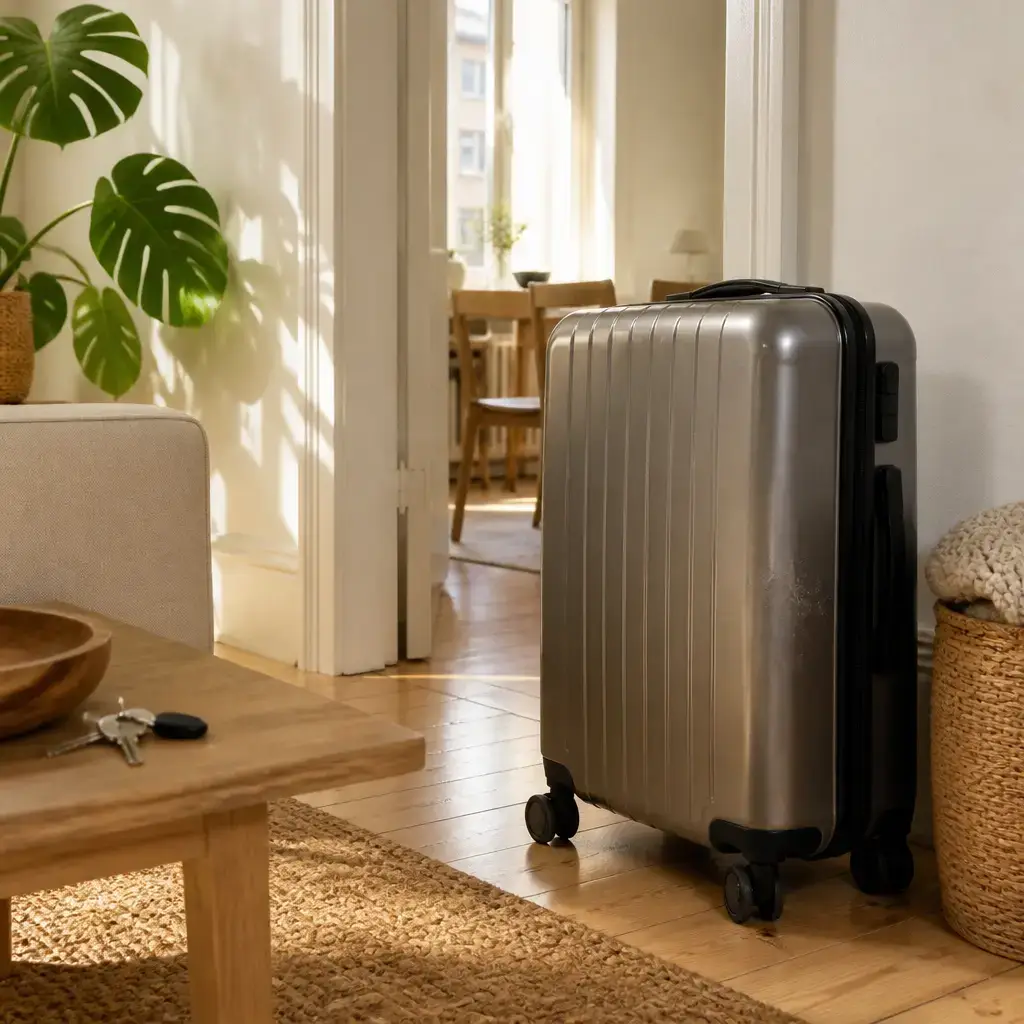
mellemstore means “medium-sized” and describes the suitcase in mellemstore kuffert. It is placed before the noun, as in the reusable phrase mellemstore kuffert.
kuffert
kuffert means “suitcase” and names the item the speaker wants to borrow. In din mellemstore kuffert, it is the noun after the possessive and description.
til
til marks the purpose of the borrowing in til min rejse, meaning “for my trip.” It commonly comes before the activity, event, or destination connected with something.
min
min means “my” and identifies the trip as belonging to the speaker in min rejse. It comes directly before the noun it describes.
rejse
rejse means “trip” or “journey” in min rejse. The phrase til min rejse shows that the suitcase is needed for this trip.
i
i means “in” in i næste uge and places the event within a time period. It is used here before a time expression.
næste
næste means “next” and describes the coming week in næste uge. It comes before the noun uge in this time expression.
uge
uge means “week” in næste uge. Together with i, the phrase i næste uge identifies when the trip will take place.
Det
Det refers back to the requested borrowing in Det må du godt. The full expression is an accepting reply that grants permission, rather than a literal reference to an object.
du
du means “you” and identifies the person who is allowed to borrow the suitcase in Det må du godt. It is the person addressed in the reply.
godt
godt helps form the permission-granting expression Det må du godt, meaning that the other person may do it. Here it contributes to the accepting reply rather than simply meaning “well.”
men
men means “but” and introduces the condition or warning that follows the permission in Det må du godt, men vær forsigtig. It connects an allowance with a caution.
vær
vær means “be” in the instruction vær forsigtig. It is the command form related to være and is used to tell someone how to act.
forsigtig
forsigtig means “careful” in vær forsigtig. It describes the way the person should handle the suitcase, especially in the phrase vær forsigtig med håndtaget.
med
med means “with” in forsigtig med håndtaget and identifies what the person must handle carefully. It comes before the object of the caution.
håndtaget
håndtaget means “the handle” in med håndtaget. It is the definite form related to håndtag, referring to the specific suitcase handle mentioned in the dialogue.
fordi
fordi means “because” and introduces the reason for the warning in fordi det er lidt skrøbeligt. It connects an explanation to the statement it explains.
er
er means “is” in det er lidt skrøbeligt and links the handle to its description. It is used before the adjective that explains the handle’s condition.
lidt
lidt means “a little” and softens the description in lidt skrøbeligt. It is placed before the adjective to indicate a small degree.
skrøbeligt
skrøbeligt means “fragile” in det er lidt skrøbeligt. It describes the handle as something that needs careful treatment, and it follows er in this description.
vil
vil expresses the speaker’s intention in Det vil jeg huske and jeg vil undgå at pakke for meget i den. It is followed by an infinitive to describe what the speaker intends to do.
huske
huske means “remember” in Det vil jeg huske. It follows vil and expresses the speaker’s intention to keep the warning in mind.
og
og means “and” and links the intention to remember with the intention to avoid overpacking in Det vil jeg huske, og jeg vil undgå. It joins two related actions.
undgå
undgå means “avoid” in jeg vil undgå at pakke for meget i den. It is followed by at and the action that the speaker plans not to do.
at
at introduces the infinitive action in at pakke for meget. Here it links undgå with the action being avoided, rather than expressing a separate meaning on its own.
pakke
pakke means “pack” in at pakke for meget i den. It is the action the speaker intends to avoid, and it is followed by the amount phrase for meget.
for
for contributes the meaning “too” in for meget, describing an excessive amount of packing. The expression for meget is used before the place or object involved here.
meget
meget means “much” in for meget and completes the expression meaning “too much.” Together with pakke, it describes packing an excessive amount into the suitcase.
den
den refers to the suitcase in i den, meaning “in it.” It is used after i to show where the speaker might pack too much.
har
har means “has” in Den har også en ridse på siden. It introduces something that the suitcase possesses or contains, here a scratch.
også
også means “also” and adds the scratch to the other information about the suitcase in Den har også en ridse. It usually comes near the part of the sentence being added.
en
en introduces the nonspecific item en ridse, meaning “a scratch.” It comes directly before the noun ridse in this noun phrase.
ridse
ridse means “scratch” in en ridse på siden. It names the mark found on the side of the suitcase.
på
på means “on” in på siden and marks the location of the scratch. It comes before the place where something is located.
siden
siden means “the side” in på siden. It is the definite form related to side and identifies the specific side of the suitcase.
have
have is part of the request Vil du have, at jeg tager et billede, where it asks whether the listener wants the speaker to take a photo. Here it does not mean possession; the whole construction expresses a preference or request about an action.
tager
tager means “take” in at jeg tager et billede. It is the form related to tage and describes the photo-taking action requested in the subordinate clause.
et
et introduces the noun phrase et billede, meaning “a photo” or “a picture.” It comes directly before billede to present one unspecified photo.
billede
billede means “photo” or “picture” in et billede. In this dialogue it is the object of tager and records the suitcase’s condition.
før
før means “before” in før jeg bruger den and introduces the action that must happen first. It links the photo-taking action with the later use of the suitcase.
bruger
bruger means “use” in jeg bruger den. It is the form related to bruge and describes using the suitcase after the photo is taken.
gøre
gøre means “make” in vil gøre dens tilstand tydelig. It follows vil and describes the effect the photo would have on the clarity of the suitcase’s condition.
dens
dens means “its” in dens tilstand and refers back to the suitcase. It comes before the noun tilstand to show what the condition belongs to.
tilstand
tilstand means “condition” or “state” in dens tilstand. In gøre dens tilstand tydelig, it is the thing whose condition the photo makes clear.
tydelig
tydelig means “clear” in gøre dens tilstand tydelig. It describes the result that the photo would produce for the suitcase’s condition.
os
os means “us” in for os begge. It identifies the two people who benefit from having the suitcase’s condition documented.
begge
begge means “both” in for os begge and refers to the two speakers together. It emphasizes that the clarity is useful to each of them.
afleverer
afleverer means “return” or “hand back” in Jeg afleverer den dagen efter. Here it states the speaker’s planned action of returning the suitcase after coming home.
dagen
dagen means “the day” in dagen efter. It is the definite form related to dag and forms part of the time expression specifying when the suitcase will be returned.
efter
efter means “after” in dagen efter, at jeg er kommet hjem. It places the return after the speaker has arrived home.
kommet
kommet means “arrived” or “come” in er kommet hjem. It is the form related to komme and is used with er to say that the speaker has arrived home.
hjem
hjem means “home” in er kommet hjem. Together with kommet, it describes arriving at the speaker’s home.
Tør
Tør is a direct instruction to “wipe” in Tør hjulene af. It is the command form related to tørre and is used here for cleaning the wheels.
hjulene
hjulene means “the wheels” in Tør hjulene af. It is the definite plural form related to hjul and names the parts that should be wiped.
af
af completes the wipe-off expression Tør hjulene af, describing removing dirt from the wheels. Its contribution is understood together with Tør and the object hjulene.
indenfor
indenfor means “inside” in tager den med indenfor. It gives the destination of bringing the suitcase and contrasts with doing the cleaning outside.
gør
gør means “do” in Jeg gør det udenfor. It is a form related to gøre and refers back to the instructed action of wiping the wheels.
udenfor
udenfor means “outside” in Jeg gør det udenfor. It identifies where the speaker will carry out the cleaning action.
tilbage
tilbage means “back” in tager den med tilbage. It shows that the suitcase is brought back toward the original place or person.
Lad
Lad is part of the command Lad mig vide, meaning “let me know.” It is the command form related to lade and introduces the request for information.
mig
mig means “me” in Lad mig vide and identifies the person who should receive the information. It follows Lad in this fixed request.
vide
vide means “know” in Lad mig vide. It completes the expression asking someone to give information to the speaker.
hvis
hvis means “if” and introduces a possible problem in hvis håndtaget giver dig problemer. It sets the condition under which the listener should inform the owner.
giver
giver means “gives” or “causes” in håndtaget giver dig problemer. It describes the handle causing difficulty for the traveler, and the same pattern places the affected person before problemer.
dig
dig means “you” or “to you” in giver dig problemer. It identifies the person who experiences the problems caused by the handle.
problemer
problemer means “problems” or “trouble” in giver dig problemer. It names the difficulty that the handle might cause during the trip.
under
under means “during” in under rejsen and places the possible handle problems within the time of the journey. It comes before the event or period involved.
rejsen
rejsen means “the trip” or “the journey” in under rejsen. It is the definite form related to rejse and identifies the specific trip already being discussed.