Jeg
“Jeg” means “I” as the speaker referring to themself in “Jeg kan ikke finde min pung”. It is used as the subject before the verb, for example in “Jeg ringer og forklarer” when reporting what you will do.
kan
“Kan” expresses ability or possibility in “Jeg kan ikke finde min pung”: the speaker is unable to find the wallet. It is followed by the infinitive “finde”; use this pattern for what someone can or cannot do.
ikke
“Ikke” makes the statement negative in “kan ikke finde”, meaning “cannot find”. It comes before the infinitive “finde” here and is useful whenever you want to say that an action does not happen or is not possible.
finde
“Finde” means “find” in “kan ikke finde min pung”. It is the infinitive used after “kan”; the same pattern can describe being able or unable to locate an object.
min
“Min” means “my” before “pung” in “min pung”. It shows that the wallet belongs to the speaker, and it is placed directly before the noun it describes.
pung
“Pung” means “wallet” in “min pung”. It names the missing personal item, and it can be used after a possessive such as “min” to identify whose wallet it is.
og
“Og” means “and” and connects two parts of the report in “Jeg kan ikke finde min pung, og jeg havde den sidst på caféen”. Use it to join related information without making a contrast.
havde
“Havde” means “had” in “jeg havde den sidst”. It is the past form of “have” and says that the speaker possessed or had the wallet at an earlier time; it can be followed by an object such as “den”.
den
“Den” means “it” in “jeg havde den sidst”, referring back to “pung”. It is used here as the object after “havde”; a remembered item can be referred to this way instead of repeating the noun.
sidst
“Sidst” means “last” or “most recently” in “jeg havde den sidst på caféen”. It identifies the latest place or occasion connected with the wallet, and it can be placed after the object in this pattern.
på
“På” means “at” in “på caféen”, identifying the place where the speaker last had the wallet. It is a preposition placed before the location; use “på” together with a place when describing where something happened.
caféen
“Caféen” means “the cafe” in “på caféen”. It is the definite form of “café”, marking a specific cafe known in the situation; it follows the preposition “på” here.
Før
“Før” means “before” in “Før du ringer”. It introduces an action that should happen earlier than the call, and it is followed here by a clause with “du” and “ringer”.
du
“Du” means “you” in “Før du ringer”. It identifies the person who is being advised to call, and it comes before the verb in this subordinate clause.
ringer
“Ringer” means “call” in “Før du ringer”. It is the form of “ringe” used with “du” in this clause; use it when referring to calling someone, especially in a time expression beginning with “Før du”.
så
“Så” means “then” or “so” in “så lav en beskrivelse”. It links the instruction to the preceding condition or time phrase, giving the practical result: prepare a description before calling.
lav
“Lav” means “make” or “prepare” in the instruction “lav en beskrivelse”. It is the imperative form of “lave”, used to tell one person what to do; it is followed by the thing to prepare, “en beskrivelse”.
en
“En” means “a” in “en beskrivelse”. It introduces one non-specific item before the noun “beskrivelse”; use it directly before a noun of this type.
beskrivelse
“Beskrivelse” means “description” in “en beskrivelse af, hvordan pungen ser ud”. It names information about an object’s appearance, and it can be followed by “af” plus what is being described.
af
“Af” means “of” in “en beskrivelse af, hvordan pungen ser ud”. It connects the description with its content, and here it is followed by a clause explaining the wallet’s appearance.
hvordan
“Hvordan” means “how” in “hvordan pungen ser ud”. It introduces the way something appears, and it is followed by the subject “pungen” and the expression “ser ud”.
pungen
“Pungen” means “the wallet” in “hvordan pungen ser ud”. It is the definite form of “pung”, referring to the specific wallet already being discussed; it is the subject of “ser ud”.
ser
“Ser” contributes “looks” to the expression “ser ud”, meaning “looks” in “hvordan pungen ser ud”. It is a form of “se” used with the subject “pungen”; use “ser ud” as a whole when describing appearance.
ud
“Ud” completes the expression “ser ud”, which means “looks” or “appears” in “hvordan pungen ser ud”. It does not mean “out” separately in this use; keep it after “ser” when describing how something looks.
Det
“Det” means “it” in “Det er en lille sort pung”. It refers to the wallet being described and forms the subject of the identification; use it before “er” when presenting what an object is like.
er
“Er” means “is” in “Det er en lille sort pung”. It links the subject “Det” with the description that follows, and the same form can introduce an object’s identity or characteristics.
lille
“Lille” means “small” in “en lille sort pung”. It describes the size of the wallet and comes before the other adjective and noun; use it before a noun when giving a physical description.
sort
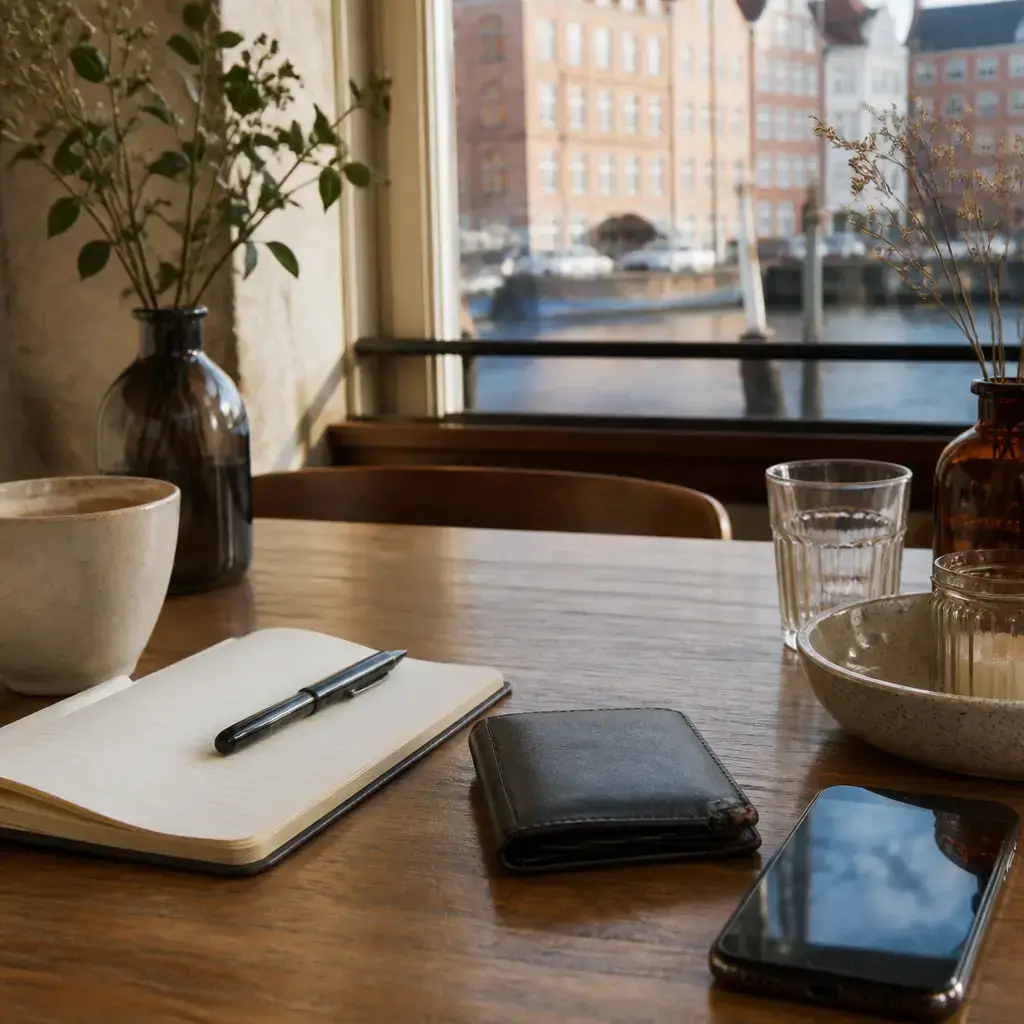
“Sort” means “black” in “en lille sort pung”. It gives the wallet’s colour and appears before the noun “pung”, together with the size description “lille”.
med
“Med” means “with” in “med et slidt hjørne”. It adds a feature that the wallet has, namely a worn corner; use it before the additional object or feature being described.
et
“Et” means “a” in “et slidt hjørne”. It introduces the non-specific feature “hjørne” and is placed directly before the adjective and noun in this description.
slidt
“Slidt” means “worn” in “et slidt hjørne”. It describes the condition of the corner and comes before “hjørne”; this pattern is useful for adding a visible condition to an object’s description.
hjørne
“Hjørne” means “corner” in “et slidt hjørne”. It identifies the part of the wallet that is worn, and it follows the article and adjective in the noun phrase.
burde
“Burde” means “should” in “Det burde hjælpe personalet”. It expresses an expected or reasonable result rather than a guaranteed one; it is followed by the infinitive “hjælpe”.
hjælpe
“Hjælpe” means “help” in “burde hjælpe personalet”. It is the infinitive after “burde” and takes the person or group receiving help, “personalet”, directly afterward.
personalet
“Personalet” means “the staff” in “hjælpe personalet”. It is the definite form of “personale”, referring to the cafe staff as a group; it is the group that can check the wallet.
at
“At” marks an infinitive in “at tjekke den” and “til at identificere den”. It links the preceding expression to the action that follows; use it directly before an infinitive such as “tjekke” or “identificere”.
tjekke
“Tjekke” means “check” in “hjælpe personalet med at tjekke den”. It is an infinitive after “at” and describes the staff examining whether the wallet is theirs to return.
uden
“Uden” means “without” in “uden at spørge efter private oplysninger”. It introduces an action that should not be required, and it is followed here by “at” plus an infinitive.
spørge
“Spørge” means “ask” in “at spørge efter private oplysninger”. It is the infinitive after “at”, and the pattern “spørge efter” is used when asking for particular information or an item.
efter
“Efter” means “for” in “spørge efter private oplysninger”. Together, “spørge efter” means asking for specific information; it comes before the thing being requested.
private
“Private” means “private” in “private oplysninger”. It describes the information as personal and not something that should be shared; it comes before the plural noun “oplysninger”.
oplysninger
“Oplysninger” means “information” or “details” in “private oplysninger”. It is the plural form of “oplysning” and names the details the staff should not ask for; it can be modified by “private”.
forklarer
“Forklarer” means “explain” in “Jeg ringer og forklarer”. It is a form of “forklare” used with “jeg” in this coordinated action; use it when saying that you will give an explanation to someone.
hvornår
“Hvornår” means “when” in “hvornår jeg opdagede”. It introduces the time of an event the speaker will explain, and it is followed by a clause with its own subject and verb.
opdagede
“Opdagede” means “noticed” or “discovered” in “jeg opdagede, at den manglede”. It is the past form of “opdage” and reports the moment when the speaker realised something; it is followed by “at” and the discovered fact.
manglede
“Manglede” means “was missing” in “at den manglede”. It is the past form of “mangle” and describes the wallet’s absence at the time the speaker noticed it; the subject is the pronoun “den”.
Nævn
“Nævn” means “mention” in the instruction “Nævn nogle få ting”. It is the imperative form of “nævne”, telling someone to name selected items; it is followed by the items to mention.
nogle
“Nogle” means “some” in “nogle få ting”. It indicates an unspecified selection of items, and it comes before “få” and the noun “ting” in this quantity phrase.
få
“Få” means “a few” in “nogle få ting”. It limits the number of items without specifying an exact number; use it before a plural noun such as “ting”.
ting
“Ting” means “things” or “items” in “nogle få ting”. It refers to objects inside the wallet, and it follows the quantity phrase “nogle få”.
der
“Der” means “that” or “which” in “ting, der er i den”. It introduces the relative clause describing which things are being mentioned; it connects “ting” with the information that they are inside the wallet.
i
“I” means “in” or “inside” in “er i den”. It identifies the wallet as the place containing the items, and it is followed by the pronoun “den” for the wallet.
men
“Men” means “but” in “men del ikke oplysninger”. It introduces a restriction contrasting with the advice to mention some items; use it to add what should not be done.
del
“Del” means “share” in the instruction “del ikke oplysninger”. It is the imperative form of “dele”, telling someone not to disclose information; it is followed by the thing that must not be shared.
fra
“Fra” means “from” in “oplysninger fra personlige dokumenter”. It identifies the source of the information, namely personal documents; use it before the source of details or material.
personlige
“Personlige” means “personal” in “personlige dokumenter”. It describes the documents as belonging to or concerning a person, and it comes before the plural noun “dokumenter”.
dokumenter
“Dokumenter” means “documents” in “personlige dokumenter”. It is the plural form of “dokument” and identifies the written materials whose details should not be shared.
foto
“Foto” means “photo” in “et foto”. It names one of the items inside the wallet, and it follows the indefinite article “et”.
sammenfoldet
“Sammenfoldet” means “folded” in “en sammenfoldet seddel”. It describes the note’s condition or shape and comes before the noun “seddel”; use it when identifying an item by how it has been folded.
seddel
“Seddel” means “note” in “en sammenfoldet seddel”. It identifies the second item inside the wallet, and it follows the article and description “en sammenfoldet”.
De
“De” means “those” in “De detaljer”. It points back to the details just mentioned, and it comes before the plural noun “detaljer” when evaluating whether they are sufficient.
detaljer
“Detaljer” means “details” in “De detaljer”. It refers to the identifying information about the wallet, and it is the subject of the statement that these details should be enough.
være
“Være” means “be” in “burde være nok”. It is the infinitive after “burde” and links the details with the evaluation “nok”; use it after this modal to describe an expected state.
nok
“Nok” means “enough” in “være nok til at identificere den”. It says that the available details are sufficient for identification, and it is followed by “til” plus the purpose or action.
til
“Til” means “for” in “nok til at identificere den”. It connects “nok” with the action that the details make possible, and it is followed by “at” plus the infinitive “identificere”.
identificere
“Identificere” means “identify” in “til at identificere den”. It is the infinitive after “at” and names the purpose of using the details; the object being identified is “den”, the wallet.
sikker
“Sikker” means “safe” in “på en sikker måde”. It describes the manner of identifying the wallet as safe, and it comes before the noun “måde” after the article “en”.
måde
“Måde” means “way” or “manner” in “på en sikker måde”. Together, this phrase means “in a safe manner”; use “på en ... måde” to describe how an action is carried out.
Hvis
“Hvis” means “if” in “Hvis de har den”. It introduces a condition for arranging a pickup, and it is followed by the conditional clause with “de” and “har”.
har
“Har” means “have” in “Hvis de har den”. It is the present form of “have” and says that the other people possess or hold the wallet; it is followed by the object pronoun “den”.
aftale
“Aftale” means “arrange” in “kan jeg aftale et tidspunkt”. It is the infinitive after “kan” and describes making an agreed time; it is followed by the arranged item, “et tidspunkt”.
tidspunkt
“Tidspunkt” means “time” or “moment” in “et tidspunkt”. It identifies the agreed occasion for collecting the wallet, and it can be followed by a clause explaining when the action will happen.
hvor
“Hvor” means “when” in “et tidspunkt, hvor jeg kan hente den”. It introduces the clause that specifies what can happen at that time; here it refers back to the arranged time rather than asking for a location.
hente
“Hente” means “pick up” in “kan hente den”. It is the infinitive after “kan” and describes collecting the wallet; the object “den” identifies what will be collected.
Ring
“Ring” means “call” in the instruction “Ring nu”. It is the imperative form of “ringe”, telling one person to make the call immediately; it is followed by the time word “nu”.
nu
“Nu” means “now” in “Ring nu”. It sets the time for the requested call, making the instruction immediate; it can be placed after an imperative as it is here.
tjekker
“Tjekker” means “check” in “så tjekker jeg din taske igen”. It is a form of “tjekke” used with “jeg” and describes examining the bag; the object being checked is “din taske”.
din
“Din” means “your” in “din taske”. It shows that the bag belongs to or is associated with the person being addressed, and it comes directly before the noun “taske”.
taske
“Taske” means “bag” in “din taske”. It identifies the item that will be checked again, and it follows the possessive “din”.
igen
“Igen” means “again” in “tjekker jeg din taske igen”. It shows that the bag has already been checked and will be checked one more time; it commonly follows the action or its object.
mens
“Mens” means “while” in “mens du venter”. It introduces an action happening during the waiting period, and it is followed by the subject “du” and the verb “venter”.
venter
“Venter” means “wait” in “mens du venter”. It is a form of “vente” used with “du” and describes what the other person does during the check; it appears after “mens” in the time clause.