Jeg
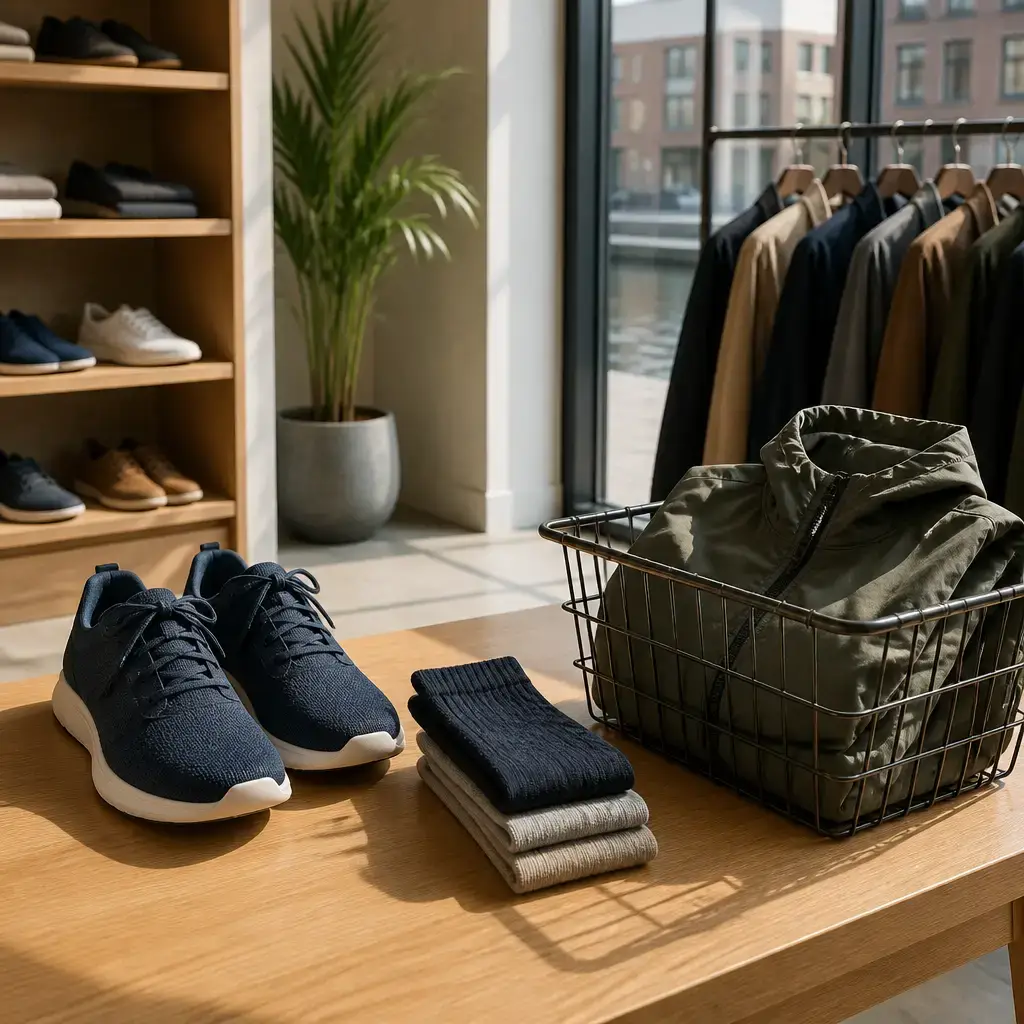
“Jeg” means “I” and identifies the speaker in “Jeg kom efter sko”. It commonly comes before the verb when stating what you do, think, or experience, such as when explaining your purpose in a shop.
kom
“kom” means “came” in “Jeg kom efter sko”, describing the speaker’s reason for coming. Use it with “efter” to say that you came for or in pursuit of something, for example when explaining why you arrived somewhere.
efter
“efter” means “for” or “in pursuit of” in “kom efter sko”. The pattern “kom efter + item” states what brought you to a place, such as a shop or service counter.
sko
“sko” means “shoes” in “Jeg kom efter sko”, naming the item the speaker came to get. It can follow “efter” when stating the purpose of a shopping visit.
men
“men” means “but” and introduces a contrast between coming for shoes and being distracted by other goods. Use it to connect two statements that do not point in the same direction, especially when correcting or limiting an idea.
de
In “de andre varer”, “de” means “the” and points to the other items on display; in “De passer”, the capitalized form “De” means “they”. Its meaning depends on the noun or verb phrase around it, so it is useful when referring either to specified items or to several things already mentioned.
andre
“andre” means “other” in “de andre varer”, distinguishing these goods from the shoes the speaker came for. Use it before a noun when referring to additional or different items, people, or choices.
varer
“varer” means “items” or “goods” in “de andre varer”. It is useful in shopping contexts when referring generally to products rather than naming one specific product.
der
“der” links “de andre varer” to the describing clause “der står fremme”, meaning “that” or “which” in this context. Use it to introduce information that identifies or describes the thing just mentioned, such as goods being displayed.
står
“står” means “stands” in the description “står fremme”, where it helps describe how the goods are displayed. With “fremme”, it can describe something positioned out where people can see it, useful in a shop or exhibition.
fremme
“fremme” contributes the meaning “out” or “on display” in “står fremme”. Together with “står”, it describes goods placed visibly for customers, and the pattern is useful when explaining where something has been put.
distraherer
“distraherer” means “distracts” in “distraherer mig”, saying that the displayed items pull the speaker’s attention away from the intended purchase. Use it with the person affected, as in “distraherer + person”, when something interrupts concentration.
mig
“mig” means “me” as the person affected by “distraherer” in “distraherer mig”. It commonly follows a verb when the speaker is the receiver of an action, such as describing what catches or interrupts your attention.
Start
“Start” tells someone to begin in “Start med det, du kom efter”. It is useful for giving direct advice, especially with “med” to say what should be dealt with first.
med
“med” means “with” in the instruction “Start med det, du kom efter”, marking the thing to begin with. The pattern “Start med + thing” is useful when ordering steps or prioritizing a task.
det
In “det, du kom efter”, “det” refers to what the person came for; in “Det gør”, the capitalized form “Det” means “that” or “it” and refers to the preceding choice. It can point to an idea, action, or item already understood from the context.
du
“du” means “you” in “du kom efter” and identifies the person being advised. It commonly comes before the verb in a clause describing what the other person did, wants, or chooses.
før
“før” means “before” in “før du vælger noget andet”, placing one action earlier than another. Use it before a clause when giving an order of actions, such as deciding on the needed item before considering extras.
vælger
“vælger” means “choose” in “du vælger noget andet”, referring to selecting another item. It can be followed by the thing selected, which is useful when discussing shopping decisions or alternatives.
noget
“noget” means “something” or, in “noget andet”, “anything” in the sense of any additional thing. Together with “andet”, it refers to another possible choice, useful when warning someone not to add more items yet.
andet
“andet” means “else” or “other” in “noget andet”, referring to a different item from the one already chosen. The expression is useful when discussing an additional option without naming it specifically.
Skoene
“Skoene” means “the shoes” and refers to the specific shoes being discussed. The same item is later mentioned as “skoene”, so this form is useful when returning to a known purchase rather than introducing shoes generally.
er
“er” states that the shoes have the quality described in “Skoene er nødvendige”. It links a subject with a description and is useful when explaining whether an item is necessary, suitable, or practical.
nødvendige
“nødvendige” means “necessary” in “Skoene er nødvendige”, marking the shoes as needed rather than merely attractive. Use it after “er” to explain that something is required for a purpose or plan.
jakken
“jakken” means “the jacket” and identifies the specific jacket that is tempting but not needed. It is used with verbs such as “frister” and “blive” when discussing what should happen to that item in the shopping decision.
frister
“frister” means “tempts” in “jakken frister mig”, describing the jacket’s effect on the speaker. The pattern “frister + person” is useful when an attractive option makes someone want something they had not planned to buy.
bare
“bare” means “just” or “only” in “frister mig bare”, narrowing the statement to the fact that the jacket is tempting. It is useful for emphasizing that something has one limited effect or is merely a temptation in the current situation.
Så
“Så” means “then” at the beginning of “Så lad jakken blive ude af kurven”, showing the consequence of the previous statement. It is useful for introducing advice or an action that follows logically from what was just said.
lad
“lad” tells someone to let or allow something in “lad jakken blive ude af kurven”. The pattern “lad + item + blive” is useful when advising someone to leave an item in its current place or state.
blive
“blive” means “stay” or “remain” in “blive ude af kurven”, describing the jacket remaining outside the basket. Use it with a place or state when telling someone that something should not be moved or added.
ude
“ude” means “out” in “ude af kurven”, indicating that the jacket is outside the basket. The pattern “ude af + place or container” is useful when saying that something is not inside a particular location.
af
“af” means “out of” in “ude af kurven”, linking the jacket’s position to the basket. Use it in the pattern “ude af + noun” when describing something as outside a container or area.
kurven
“kurven” means “the basket” in “ude af kurven”, referring to the shopping basket being used. It is useful when discussing whether an item has been placed in the basket or left out of it.
indtil videre
“indtil videre” means “for now” in “lad jakken blive ude af kurven indtil videre”. It marks the decision as temporary, useful when postponing a choice while keeping the current plan.
her
In “De her sokker”, “her” contributes the meaning “these”, pointing to the socks currently being shown or considered. The pattern “de her + noun” is useful when selecting nearby items in a shop or comparing visible options.
sokker
“sokker” means “socks” in “De her sokker”, naming the additional item that supports the shoe purchase. It is useful in shopping conversations when identifying clothing items or accessories.
passer
“passer” means “match” in “passer til skoene”, saying that the socks go well with the shoes. Use it with “til” and the item being matched when discussing coordinated clothing or suitable combinations.
til
“til” means “with” in “passer til skoene”, linking the socks to the shoes they match. The pattern “passer til + item” is useful when saying that one item suits or goes with another.
og
“og” means “and” and joins the two useful features of the socks: they match the shoes and can replace the old pair. It is useful for adding another item, action, or reason without creating a contrast.
kan
“kan” means “can” in “kan erstatte”, expressing that replacing the old pair is possible. It is commonly followed by another verb when describing an available action or practical option.
erstatte
“erstatte” means “replace” in “kan erstatte mit slidte par”, referring to putting the new socks in place of the worn pair. Use it with the item being replaced when discussing an upgrade or a needed substitution.
mit
“mit” means “my” in “mit slidte par”, showing that the worn pair belongs to the speaker. It comes before the noun it describes and is useful when identifying personal belongings.
slidte
“slidte” means “worn” in “mit slidte par”, describing the condition of the old pair. It is useful before a noun when explaining why an item needs to be replaced.
par
“par” means “pair” in “mit slidte par”, referring here to the matching set of socks. It is useful when clothing or other objects are considered together as two matching pieces.
bedre
“bedre” means “better” in “passer bedre ind i din plan”, showing that the socks fit the plan more successfully than the jacket. Use it to compare how well different choices support a goal or arrangement.
ind
“ind” contributes the idea of fitting into something in “passer bedre ind i din plan”. Together with “i”, it is useful for describing how an item, action, or idea belongs within a plan or context.
i
“i” means “in” in “ind i din plan”, marking the plan as the context that the socks fit into. It commonly comes before a noun when describing inclusion within a place, situation, or arrangement.
din
“din” means “your” in “din plan”, identifying the plan as belonging to the person being addressed. It comes before the noun and is useful when discussing another person’s choices, goals, or arrangements.
plan
“plan” means “plan” in “din plan”, referring to the intended focus of the shopping trip. It is useful when evaluating whether a choice supports or distracts from a planned goal.
end
“end” means “than” in the comparison with “jakken”, marking the second option against which the socks are judged. Use it after a comparative expression when comparing two items, actions, or choices.
gør
“gør” means “does” in “end jakken gør”, completing the comparison by referring back to the jacket’s role in fitting the plan. In a comparison, it can stand for the action already mentioned instead of repeating the whole verb phrase.
tager
“tager” means “take” in “Jeg tager skoene og sokkerne”, expressing the speaker’s decision to take the selected items. The pattern “tager + item” is useful when confirming a purchase or choosing what to bring.
sokkerne
“sokkerne” means “the socks” and refers back to the socks already considered. This form is useful when making a final decision about a specific pair rather than discussing socks generally.
går
“går” means “go” or “leave” in “og så går jeg”, indicating that the speaker will leave after taking the shoes and socks. The pattern “så går jeg” is useful for announcing the next step after finishing an activity.
indkøbstur
“indkøbstur” means “shopping trip” in “din indkøbstur”, naming the whole visit for buying things. It is useful when talking about whether a shopping outing is organized, focused, or practical.
fokuseret
“fokuseret” means “focused” in “gør din indkøbstur fokuseret”, describing a trip that stays directed toward its intended purchases. Use it with “gør” to describe the result of keeping attention on the main goal.
praktisk
“praktisk” means “practical” in “fokuseret og praktisk”, describing a shopping trip that serves a useful purpose without unnecessary additions. It is useful when evaluating whether a decision is sensible and functional.