Hvilket
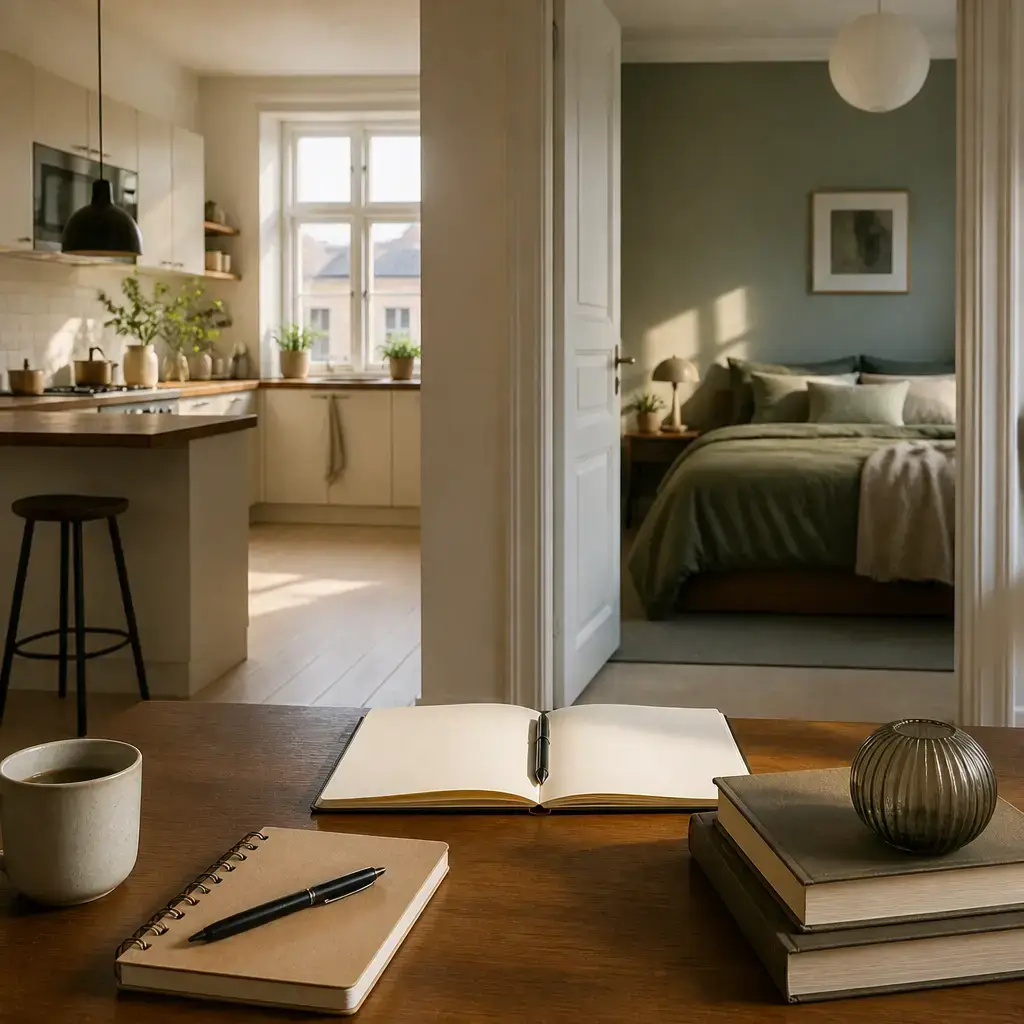
Hvilket means “which” in the question Hvilket rum skal jeg bruge til at studere? It introduces a choice of room and is used directly before rum here.
rum
Rum means “room” in Hvilket rum skal jeg bruge til at studere? It is the thing being selected, so a useful pattern is Hvilket rum ...? when asking which room.
skal
Skal expresses what the speaker should or needs to do in skal jeg bruge. It is followed by a subject and an infinitive, as in skal jeg bruge.
Jeg
Jeg means “I” and is the subject in Jeg skal kunne koncentrere mig uden afbrydelser. Use Jeg at the beginning of a statement about yourself.
bruge
Bruge means “use” in skal jeg bruge, referring to using a room for studying. After skal, the verb stays in this infinitive form; the pattern is skal bruge something.
til
Til marks the purpose in til at studere, meaning “for studying” or “to study.” It connects the use of the room with the activity that will happen there.
at
At introduces the infinitive studere in til at studere. Together, til at studere expresses the purpose of using the room.
studere
Studere means “study” in til at studere and later in vil studere. It is used after at or after vil to describe the intended activity.
Hvad
Hvad means “what” in Hvad med soveværelset eller køkkenet? The phrase asks which suggestion the listener thinks about, and Hvad can begin a question about an option.
med
Med appears in Hvad med soveværelset eller køkkenet?, the phrase used to suggest or ask about an option. Here med links the proposed room to the topic under discussion.
soveværelset
Soveværelset means “the bedroom” in Hvad med soveværelset eller køkkenet? The form refers to a specific bedroom, and it is also used in i soveværelset for the chosen location.
eller
Eller means “or” and connects the two alternatives in soveværelset eller køkkenet. Use it between options when presenting a choice.
køkkenet
Køkkenet means “the kitchen” in soveværelset eller køkkenet and Køkkenet er lysere. The form refers to a specific kitchen being compared with the bedroom.
er
Er means “is” in Køkkenet er lysere and Soveværelset er mere stille. It links each room with a description.
lysere
Lysere means “brighter” in Køkkenet er lysere. The ending marks a comparison, so it describes the kitchen as brighter than another option in this discussion.
men
Men means “but” in Køkkenet er lysere, men der bliver larm. It introduces the contrasting problem of noise after the positive description of the kitchen.
der
Der is used in der bliver larm to introduce the situation that noise occurs. It does not refer to a particular place here; the place is given separately in på gangen.
bliver
Bliver means “becomes” or “gets” in der bliver larm, describing the point when the situation becomes noisy. A useful pattern is der bliver followed by a condition or situation, as in der bliver larm.
larm
Larm means “noise” in der bliver larm and hvis der bliver larm på gangen. It names the unwanted noise, while the whole expression der bliver larm means that it gets noisy.
mere
Mere means “more” in mere stille and mere behageligt. It comes before these descriptions to compare the bedroom with the other room.
stille
Stille means “quiet” in mere stille and det mere stille rum. It describes the room’s sound level; mere stille means “quieter.”
og
Og means “and” in Soveværelset er mere stille og mere behageligt. It joins two descriptions of the same bedroom.
behageligt
Behageligt means “comfortable” or “pleasant” in Soveværelset er mere stille og mere behageligt. It gives a second positive description of the bedroom, alongside mere stille.
kunne
Kunne adds the meaning “be able to” in skal kunne koncentrere mig. In the whole phrase, the speaker says that they need to be able to focus without interruptions.
koncentrere
Koncentrere means “focus” or “concentrate” in skal kunne koncentrere mig. It is used with the reflexive object mig here, giving the expression koncentrere mig for “focus.”
mig
Mig means “me” in koncentrere mig and refers back to the speaker Jeg. Together, koncentrere mig means that the speaker focuses themselves, or simply “focuses.”
uden
Uden means “without” in uden afbrydelser. It introduces what must be absent, so uden can be followed by the thing or situation being avoided.
afbrydelser
Afbrydelser means “interruptions” in uden afbrydelser. It names the interruptions the speaker wants to avoid while studying.
Så
Så means “then” in Så giver det bedre mening at vælge det mere stille rum. It connects the stated need for quiet with the conclusion that follows.
giver
Giver is the verb in giver det bedre mening, where it contributes the idea of “gives” or “makes.” The whole expression giver det bedre mening says that a choice makes more sense.
det
Det is the “it” in giver det bedre mening, referring to the choice or conclusion being discussed. In this expression, it is part of the statement that something makes better sense.
bedre
Bedre means “better” in giver det bedre mening. It compares this choice with the earlier alternatives, so the whole phrase says that the choice makes more sense.
mening
Mening means “sense” or “meaning” in giver det bedre mening. With bedre, the exact phrase bedre mening describes a conclusion as more sensible.
vælge
Vælge means “choose” in at vælge det mere stille rum. It is the action being considered, and the pattern is at vælge followed by the chosen object.
vil
Vil expresses intention in Jeg vil studere i soveværelset i dag, meaning that the speaker plans or wants to study there. It is followed by the infinitive studere.
i
I means “in” in i soveværelset and i dag. Here it marks location with a room and forms the time expression i dag for “today.”
dag
Dag means “day” in i dag, the exact phrase meaning “today.” Use i dag to state that something happens on the current day.
Luk
Luk is the direct instruction “close” in Luk døren. It tells the listener to close a specific door.
døren
Døren means “the door” in Luk døren. It refers to the specific door that the listener is told to close.
hvis
Hvis means “if” in hvis der bliver larm på gangen. It introduces the condition under which the listener should close the door.
på
På appears in på gangen, which means “in the hallway” in this dialogue. It places the noise in relation to the hallway in the expression der bliver larm på gangen.
gangen
Gangen means “the hallway” in på gangen. The form refers to the specific hallway where noise may occur.