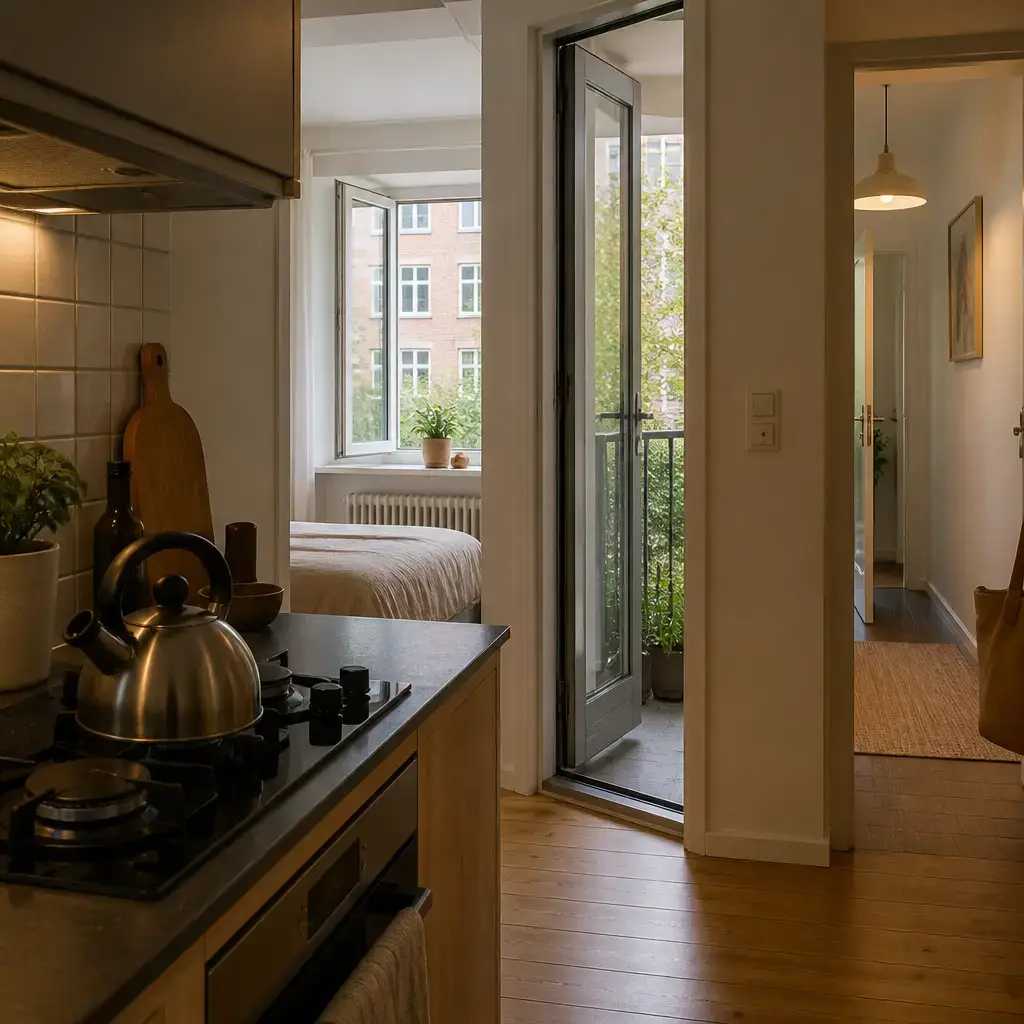
Før
In “Før vi går” and “før det bliver for sent”, this means “before” and introduces an event that must happen earlier than another event. It can come at the beginning of a clause describing when something happens.
vi
In “Før vi går”, “vi” means “we”, including the speaker and the other person. It is used as the subject before the action in this clause.
går
In “vi går”, “går” means “go” or “leave”; here it refers to leaving the apartment. Use it when the subject is going or leaving somewhere.
bør
In “bør vi tjekke lejligheden”, “bør” expresses what the speakers should do. It comes before the action “tjekke” to give a recommendation or expected action.
tjekke
In “bør vi tjekke lejligheden”, “tjekke” means “check” or “inspect”. It is followed by the thing being checked, here “lejligheden”.
lejligheden
In “tjekke lejligheden”, “lejligheden” means “the apartment”, the place the speakers are checking before they leave. It functions as the thing affected by the checking action.
Jeg
In “Jeg har allerede slukket for komfuret” and “Jeg lukker det”, “Jeg” means “I” and identifies the speaker as the person doing the action. It is used as the subject before the action.
har
In “Jeg har allerede slukket for komfuret”, “har” helps express that the turning-off action has already been completed. It combines with “slukket” in this completed-action phrase.
allerede
In “har allerede slukket”, “allerede” means “already” and shows that the action happened before this point. It is placed before the completed action in this sentence.
slukket
In “har allerede slukket for komfuret”, “slukket” means “turned off”. Together with “har” it describes an action that is completed, and the phrase includes what was turned off.
for
In “slukket for komfuret”, “for” belongs to the expression used for turning off the stove; its meaning comes from the whole expression. In “for sent”, it is part of the expression meaning “too late”, so it has a different function there.
komfuret
In “slukket for komfuret”, “komfuret” means “the stove” that has been turned off. It identifies the household appliance involved in the action.
Er
At the beginning of “Er alle vinduerne lukkede?”, “Er” means “are” and opens a question about the windows’ state. It comes before the subject in this question.
alle
In “alle vinduerne”, “alle” means “all” and includes the entire set of windows. It comes before the plural noun phrase it describes.
vinduerne
In “alle vinduerne lukkede?”, “vinduerne” means “the windows” being checked. It identifies the windows whose state is being asked about.
lukkede
In “alle vinduerne lukkede?”, “lukkede” means “closed” and describes the state of the windows. It is used with the windows as the thing being described.
Vinduet
In “Vinduet i soveværelset”, “Vinduet” means “the window”, specifically the one in the bedroom. It is the main thing being described in the next sentence.
i
In “i soveværelset”, “i” means “in” and links the window to its location. It introduces the place where the window is.
soveværelset
In “i soveværelset”, “soveværelset” means “the bedroom”. It specifies the room in which the window is located.
står
In “står stadig åbent”, “står” means “stands” but here presents the window as remaining in a particular state. It is used with a thing and a description of that thing’s state.
stadig
In “står stadig åbent” and “er stadig tændt”, “stadig” means “still” and shows that a state continues. It is placed before the word describing the continuing state.
åbent
In “står stadig åbent”, “åbent” means “open” and describes the bedroom window’s state. It follows “står” to say how the window remains.
lukker
In “Jeg lukker det”, “lukker” means “close”. The object being closed follows it, here “det”, which refers to the bedroom window.
det
In “Jeg lukker det”, “det” means “it” and refers to the bedroom window. In “Det burde være det hele”, the first “Det” refers to the expected result, while “det hele” is a fixed expression meaning “everything”; in “før det bliver for sent”, it refers to the situation or time becoming too late.
og
In “Jeg lukker det og låser altandøren”, “og” means “and” and connects the two actions. It lets the speaker link closing the window with locking the balcony door.
låser
In “låser altandøren”, “låser” means “lock”. The thing being locked follows it, here “altandøren”.
altandøren
In “låser altandøren”, “altandøren” means “the balcony door”. It is the object that the speaker locks before leaving.
Lysene
In “Lysene i gangen”, “Lysene” means “the lights”, specifically the lights in the hallway. It is the subject whose state is described as still being on.
gangen
In “i gangen”, “gangen” means “the hallway”. It identifies the location of the lights.
tændt
In “er stadig tændt”, “tændt” means “on” or “switched on”. Together with “er” and “stadig”, it says that the hallway lights remain on.
Så
In “Så slukker jeg dem”, “Så” means “so” and marks the consequence of noticing that the lights are still on. It connects the situation with the action that follows.
slukker
In “slukker jeg dem”, “slukker” means “turn off”. The object “dem” follows it and identifies the things being switched off.
dem
In “slukker jeg dem”, “dem” means “them” and refers to the hallway lights mentioned just before. It is used as the object of the turning-off action.
burde
In “Det burde være det hele”, “burde” means “should” or “ought to” and expresses the expected result of the apartment check. It comes before “være” in this statement.
være
In “burde være det hele”, “være” means “be” and describes the expected result. It follows “burde” and is followed by the phrase “det hele”.
hele
In “det hele”, “hele” contributes the idea of “whole”. The complete expression “det hele” means “everything” or “the whole thing” that needed checking.
Lad
In “Lad os gå”, “Lad” helps make a suggestion to do something together. Together with “os” and the following action, it introduces the suggestion to leave.
os
In “Lad os gå”, “os” means “us” and refers to the speaker and the other person together. It is part of the suggestion directed at both people.
bliver
In “før det bliver for sent”, “bliver” means “becomes” or “gets”. It describes time changing into the state expressed by “for sent”.
sent
In “for sent”, “sent” means “late”. The complete expression “for sent” means “too late”, describing the time by which the speakers want to leave.