Jeg
“Jeg” means “I” here: the speaker is talking about themself in “Jeg købte en lille plante”. It is used before the action or description, as in “Jeg håber”. Use it when stating what you do, think, or hope.
købte
“Købte” means “bought” in “Jeg købte en lille plante”. It describes the completed purchase of the plant. A useful pattern is “Jeg købte” followed by the thing purchased, such as “Jeg købte en lille plante”.
en
“En” means “a” before “plante” in “en lille plante”. It introduces one non-specific plant. Use “en” before a noun in a similar phrase when referring to one item without identifying it further.
lille
“Lille” means “small” and describes the plant in “en lille plante”. It comes before the noun here. Use it before a noun when describing something as small, as in “en lille plante”.
plante
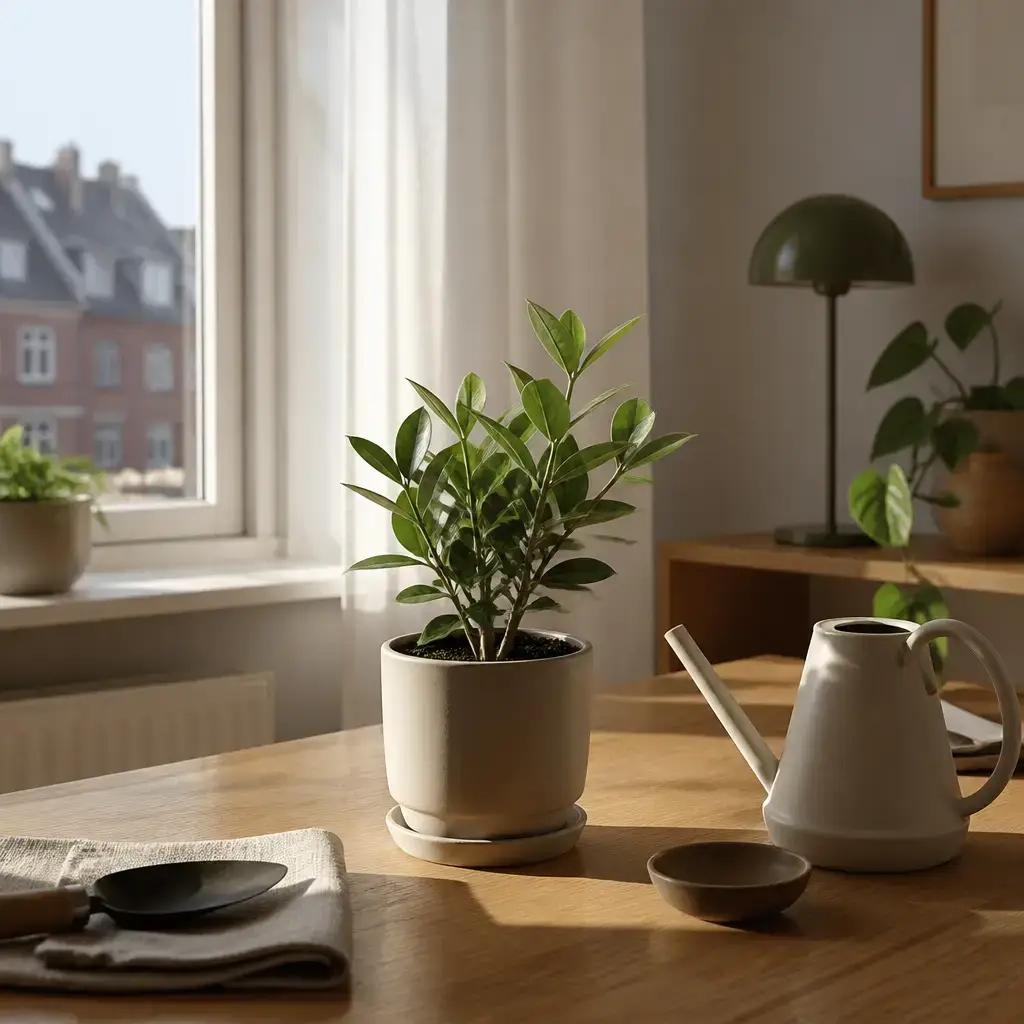
“Plante” means “plant” in “en lille plante”. It is the thing that was bought and later discussed with “den”. Use it after a describing word such as “lille” when talking about a plant.
til
“Til” means “for” in “til mit værelse”, showing the intended place or purpose of the plant. It introduces the room connected with the plant. A useful pattern is “til” followed by a place or recipient.
mit
“Mit” means “my” in “mit værelse”, identifying the room as belonging to the speaker. It is used directly before “værelse” here. Use “mit” before a relevant noun when referring to something connected with yourself.
værelse
“Værelse” means “room” in “mit værelse”. It names the place where the speaker intends to keep the plant. Use it after a possessive such as “mit” when referring to a room.
Har
“Har” helps form the question “Har den brug for meget sollys?”, asking whether the plant needs much sunlight. Here it begins the question and is part of “har brug for”. Use “Har” at the beginning of a question about whether someone or something has or needs something.
den
“Den” means “it” here and refers to the plant in “Har den brug for meget sollys?”. It is also used in “så stil den”, where the plant is the thing being placed. Use “den” to refer back to a relevant non-person noun such as “plante”.
brug
“Brug” contributes to the expression “har brug for”, which means “needs” in “Har den brug for meget sollys?”. The complete expression is used before the thing that is needed. A useful pattern is “har brug for” followed by a noun, such as “har brug for meget sollys”.
for
“For” has two uses in the dialogue: “har brug for” means “need”, while “for meget” means “too much”. Its meaning depends on the complete expression around it. Reuse “har brug for” before a need and “for meget” before something excessive.
meget
“Meget” means “much” in “meget sollys” and helps form “for meget”, meaning “too much”, later in the dialogue. It describes a large amount of something that is not counted individually. Use “meget” with an amount such as “meget sollys”.
sollys
“Sollys” means “sunlight” in “meget sollys”. It is the light that the plant may need. Use it after an amount word or adjective when discussing sunlight, such as “meget sollys”.
På
“På” means “on” in “På mærket står der”, referring to information written on the label. It introduces the surface or source where the information appears. Use “på” before a surface or place when saying where something is located or written.
mærket
“Mærket” means “the label” in “På mærket står der”. It is the definite form used for the particular label attached to or associated with the plant. Use “på mærket” when referring to information written on a specific label.
står
“Står” means “says” or “is written” in “På mærket står der”. With written information, it describes what the label contains. Use “står” with a source such as a label when reporting its written message.
der
“Der” is an introductory word in “På mærket står der” and does not mean a physical “there” in this context. Together with “står” it helps present what is written on the label. Use this construction when introducing information found in a text or sign.
at
“At” means “that” in “at den bedst kan lide indirekte lys”. It introduces the clause containing what the label says. Use “at” to connect a statement with the information or belief that follows it.
kan lide
“Kan lide” is the complete expression meaning “likes” in “den bedst kan lide indirekte lys”. “Kan” and “lide” work together here: “kan” is followed by “lide” to express liking, not merely ability. Use “kan lide” before the thing someone or something likes, such as “kan lide indirekte lys”.
bedst
“Bedst” means “best” in “den bedst kan lide indirekte lys”, showing the type of light the plant prefers most. It strengthens “kan lide” in this context. A useful pattern is “bedst kan lide” followed by the preferred thing.
indirekte
“Indirekte” means “indirect” and describes the light in “indirekte lys”. It specifies the kind of light that the label recommends. Use it before “lys” when describing light that is not direct.
lys
“Lys” means “light” in “indirekte lys”. It is the thing that the plant likes according to the label. Use it after a describing word such as “indirekte” when specifying the type of light.
Så
“Så” means “then” in “Så stil den tæt på vinduet”, connecting the advice to the information just given. It signals the recommended consequence. Use “Så” at the start of a response when giving the next step based on what was said.
stil
“Stil” tells the listener to place the plant in “stil den tæt på vinduet”. It is a direct instruction about where to put something. A useful pattern is “stil” followed by an object and then a place.
tæt
“Tæt” means “close” in “tæt på vinduet”. Together with “på”, it describes the plant’s position near the window. Use the pattern “tæt på” followed by a place or object.
vinduet
“Vinduet” means “the window” in “tæt på vinduet”. It identifies the specific place near which the plant should stand. Use this form when referring to a particular window.
ikke
“Ikke” means “not” in “ikke udenfor”, excluding the possibility of putting the plant outside. It negates the location that follows. Use “ikke” before the word or phrase you want to reject or negate.
udenfor
“Udenfor” means “outside” in “ikke udenfor”. It names the location that is specifically ruled out. Use it when describing a position outside a building or other enclosed place.
Hvor
“Hvor” means “how” in the question “Hvor ofte skal jeg vande jorden?”. Together with “ofte”, it asks about frequency rather than location. Use “Hvor” before a question word such as “ofte” when asking how frequently something happens.
ofte
“Ofte” means “often” in “Hvor ofte”, asking how frequently the soil should be watered. It is part of the frequency question. Use “Hvor ofte” before asking about a repeated action.
skal
“Skal” asks what the speaker should do in “Hvor ofte skal jeg vande jorden?”. It is followed by the action “vande”. Use “skal” followed by an action when asking or stating what someone should do.
vande
“Vande” means “to water” in “skal jeg vande jorden”. It names the action the speaker is asking about. Use “vande” before the thing receiving water, such as “vande jorden”.
jorden
“Jorden” means “the soil” in “vande jorden”. It is the thing being checked and watered. Use this form when referring to the specific soil of the plant.
Tjek
“Tjek” means “check” in “Tjek jorden to gange om ugen”. It gives a direct instruction to inspect the soil. Use “Tjek” before the thing to inspect, such as “Tjek jorden”.
gange
“Gange” means “times” in “to gange om ugen”, counting how often an action occurs. It follows the number “to” here. Use a number followed by “gange” to state the number of repetitions.
om
“Om” means “per” in “om ugen”, expressing a frequency over a week. It forms the time expression together with “ugen”. Use “om” before a time period when saying how often something happens.
ugen
“Ugen” means “the week” in “to gange om ugen”. It identifies the time period used to measure the watering frequency. Use “om ugen” when describing how often something happens during each week.
før
“Før” means “before” in “før du vander den”. It places the checking of the soil earlier than the watering. Use “før” followed by an action or clause when giving an earlier step.
du
“Du” means “you” in “før du vander den”, referring to the person who will water the plant. It identifies the addressee of the advice. Use “du” when addressing one person directly.
vander
“Vander” means “water” in “før du vander den”. It describes the watering action performed by the addressee, with “den” as the plant being watered. A useful pattern is “vander” followed by the object, as in “vander den”.
håber
“Håber” means “hope” in “Jeg håber, at den vokser godt her”. It introduces the speaker’s desired or expected result for the plant. Use “Jeg håber, at” before the outcome you wish for or expect.
vokser
“Vokser” means “grows” in “den vokser godt her”. It describes the plant’s development. Use it with the thing that grows, such as “den vokser”, and add a word like “godt” to describe how it grows.
godt
“Godt” means “well” in “vokser godt”. It describes the quality of the plant’s growth. Use a verb followed by “godt” when saying that an action or process is going well.
her
“Her” means “here” in “vokser godt her”, referring to the current place where the plant is kept. It gives the location of the growth. Use it after an action when referring to the place where something happens.
Det
“Det” refers back to the hoped-for result in “Det skulle den gerne”, namely that the plant grows well here. It lets the speaker answer without repeating the whole previous idea. Use “Det” to refer back to an already mentioned situation or result.
skulle
“Skulle” helps express expectation or reassurance in “Det skulle den gerne”. The meaning here is that the expected result should happen, while “gerne” completes the reassuring expression. Use “skulle gerne” when saying that something is expected or hoped to happen.
gerne
“Gerne” is part of “skulle den gerne” and makes the reply reassuring: the plant is expected to grow well. Here it does not mean that someone is doing something gladly. Use “skulle gerne” to express a favorable expectation.
så længe
“Så længe” means “as long as” in “så længe du ikke vander den for meget”. “Så” and “længe” work together to introduce the condition that must remain true. Use “så længe” followed by a clause when stating a condition for an expected result.