Dette
“Dette” means “this” in “Dette marked” and points to the market being discussed. It is used before a noun in patterns such as “Dette + noun” when identifying a specific thing nearby or under discussion.
marked
“Marked” means “market” in “Dette marked”. It names the crowded place where the speakers are walking and discussing their belongings. It can be used after a determiner or possessive when referring to a market.
er
“Er” means “is” and links “Dette marked” with the description “mere fyldt med mennesker”. It is the form used in patterns such as “X er + description” to describe a person, place, or thing.
mere
“Mere” means “more” in the comparison “mere fyldt med mennesker, end jeg forventede”. It increases the degree of the following description and commonly appears in the pattern “mere ... end” for comparisons.
fyldt
“Fyldt” describes the market as filled or crowded with people in “fyldt med mennesker”. The reliable construction is “fyldt med + noun”, which states what fills a place or container.
med
“Med” means “with” and introduces what fills the market in “fyldt med mennesker”. In this use, it commonly follows “fyldt” in the pattern “fyldt med + noun”.
mennesker
“Mennesker” means “people” and identifies what the market is filled with in “fyldt med mennesker”. It is used after “med” when describing people present in a place.
end
“End” means “than” and introduces the comparison with the speaker’s expectation in “mere fyldt med mennesker, end jeg forventede”. It commonly follows the first part of a comparison in the pattern “mere ... end”.
jeg
“Jeg” means “I” and is the subject of the expectation clause “jeg forventede”. It is used as the subject when the speaker refers to themself.
forventede
“Forventede” means “expected” in “jeg forventede”, referring to what the speaker had anticipated. It is used after “jeg” in a clause about an expectation, such as “jeg forventede” followed by what was anticipated.
Hold
“Hold” means “keep” or “hold” as a direct instruction in “Hold dine værdier i forlommen”. It is useful in the command pattern “Hold + object + place” when telling someone where to keep something.
dine
“Dine” means “your” and shows that the valuables belong to the person being addressed in “dine værdier”. It is used before a plural noun to express possession, as in “dine + plural noun”.
værdier
“Værdier” means “valuables” in “dine værdier”. It refers here to valuable personal belongings that should be kept safely. It can follow a possessive such as “dine” when referring to more than one valuable item or belonging.
i
“I” means “in” and shows the location of the valuables in “i forlommen”. It is commonly used before a place, pocket, bag, or other container to state where something is located.
forlommen
“Forlommen” means “the front pocket” and names the recommended place for the valuables in “i forlommen”. The reusable location pattern is “i forlommen” when saying that something is kept in the front pocket.
Skal
“Skal” asks whether something should happen in “Skal jeg lyne min taske helt?”. It is used at the beginning of a question in the pattern “Skal + subject + verb” when asking for advice or confirmation.
lyne
“Lyne” means “zip” in “lyne min taske helt” and refers to closing the bag with its zipper. It follows “Skal” in the pattern “Skal jeg lyne + object” when asking whether to zip something.
min
“Min” means “my” and shows that the bag belongs to the speaker in “min taske”. It is used before a singular noun to express the speaker’s possession.
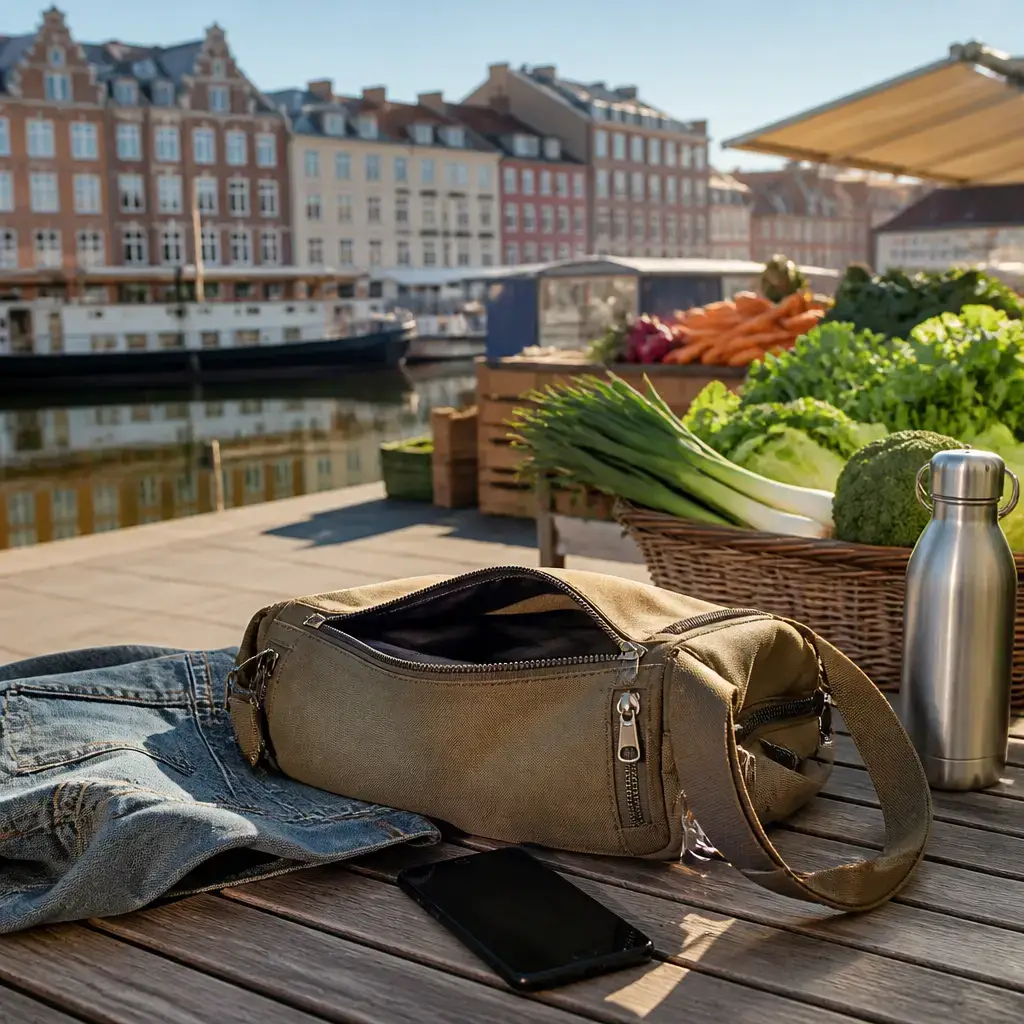
taske
“Taske” means “bag” in “min taske”. It is the object of “lyne” and the item that should be closed. It can be used after a possessive such as “min” when referring to the speaker’s bag.
helt
“Helt” means “completely” or “fully” and shows that the bag should be zipped all the way in “lyne min taske helt”. It commonly follows an action verb when specifying that an action should be completed fully.
Luk
“Luk” means “close” as an instruction in “Luk den helt med lynlåsen”. It is useful in the command pattern “Luk + object” when telling someone to close a bag, door, or similar item.
den
“Den” means “it” in “Luk den” and refers back to the bag. Here it is an object pronoun, used after the command verb when the object is already known from the conversation.
lynlåsen
“Lynlåsen” means “the zipper” in “med lynlåsen”. It identifies the tool used to close the bag. The pattern “med + object” can show what is used to carry out an action.
og
“Og” means “and” and links the instructions “Luk den helt med lynlåsen” and “hold den foran dig”. It is used to join two related actions or statements in one instruction.
foran
“Foran” means “in front of” in “foran dig” and describes where the bag should be held. It commonly appears before a person or object in a location pattern such as “foran + reference”.
dig
“Dig” means “you” in “foran dig” and identifies the person whose front is meant. It is used after “foran” to describe a position relative to the person being addressed.
telefon
“Telefon” means “phone” in “Min telefon”. It names the valuable item whose location the speaker explains. It can follow a possessive such as “min” when referring to the speaker’s phone.
indvendige
“Indvendige” means “inside” or “inner” in “den indvendige lomme”. It describes the pocket as being on the inside of the bag. It is used before “lomme” in this expression to specify which pocket is meant.
lomme
“Lomme” means “pocket” in “den indvendige lomme”. It identifies the place where the phone is stored. It can be used with a describing word before it, as in “indvendige lomme”.
Det
“Det” means “that” or “it” in “Det er sikrere” and refers to keeping the phone in the inside pocket. It is used as the subject of a following description in the pattern “Det er + description”.
sikrere
“Sikrere” means “safer” and compares the inside pocket with the outside pocket in “sikrere end den udvendige lomme”. It is used in the comparison pattern “sikrere end + thing being compared”.
udvendige
“Udvendige” means “outside” or “outer” in “den udvendige lomme”. It identifies the pocket on the outside of the bag and contrasts it with “den indvendige lomme”. It is used before “lomme” to specify the outside pocket.
vil
“Vil” expresses “will” or the speaker’s intention in “Jeg vil være forsigtig”. It is followed by the verb “være” in the pattern “Jeg vil + verb” when stating what the speaker intends to do.
være
“Være” means “be” in “vil være forsigtig” and completes the expression of the speaker’s intended behavior. It follows “vil” in the pattern “vil være + description”.
forsigtig
“Forsigtig” means “careful” and describes how the speaker intends to behave in “være forsigtig”. It is used after “være” when describing a person’s careful behavior.
mens
“Mens” means “while” and introduces the action happening at the same time in “mens vi går”. It commonly links a main action with a simultaneous activity.
vi
“Vi” means “we” and is the subject of “går” in “mens vi går”. It is used when the speaker includes themself and at least one other person.
går
“Går” means “walk” in the context of “mens vi går”. It describes the activity the group is doing while the speaker promises to be careful. It is used after a subject such as “vi” to describe walking or going.
tæt
“Tæt” means “close” in “tæt på” and describes staying near another person. The reliable pattern is “tæt på + person or place” when expressing physical proximity.
på
“På” means “near” or “to” as part of the location expression “tæt på”. Together, “tæt på” tells someone to remain close to a person or place.
så
“Så” means “so that” and introduces the purpose of staying close in “så vi ikke bliver væk fra hinanden”. It commonly connects an action with the result or purpose that should follow.
ikke
“Ikke” means “not” and negates “bliver” in “vi ikke bliver væk fra hinanden”. It is placed before the verb in this clause to say that the unwanted separation should not happen.
bliver
“Bliver” means “get” or “become” in the expression “bliver væk fra hinanden”. Together with “væk fra hinanden”, it expresses a change into a state of being separated. This form can be reused in expressions describing becoming or getting into a state.
væk
“Væk” means “away” or “lost” in “bliver væk fra hinanden”. Together, the expression says that the people may become separated from one another. It is used here with “fra hinanden” to describe separation.
fra
“Fra” means “from” and marks the point of separation in “væk fra hinanden”. The pattern “væk fra + person or thing” describes moving or becoming away from something.
hinanden
“Hinanden” means “each other” in “væk fra hinanden”. It shows that the separation concerns the people in the group in relation to one another. It is used after “fra” in this expression to describe mutual separation.