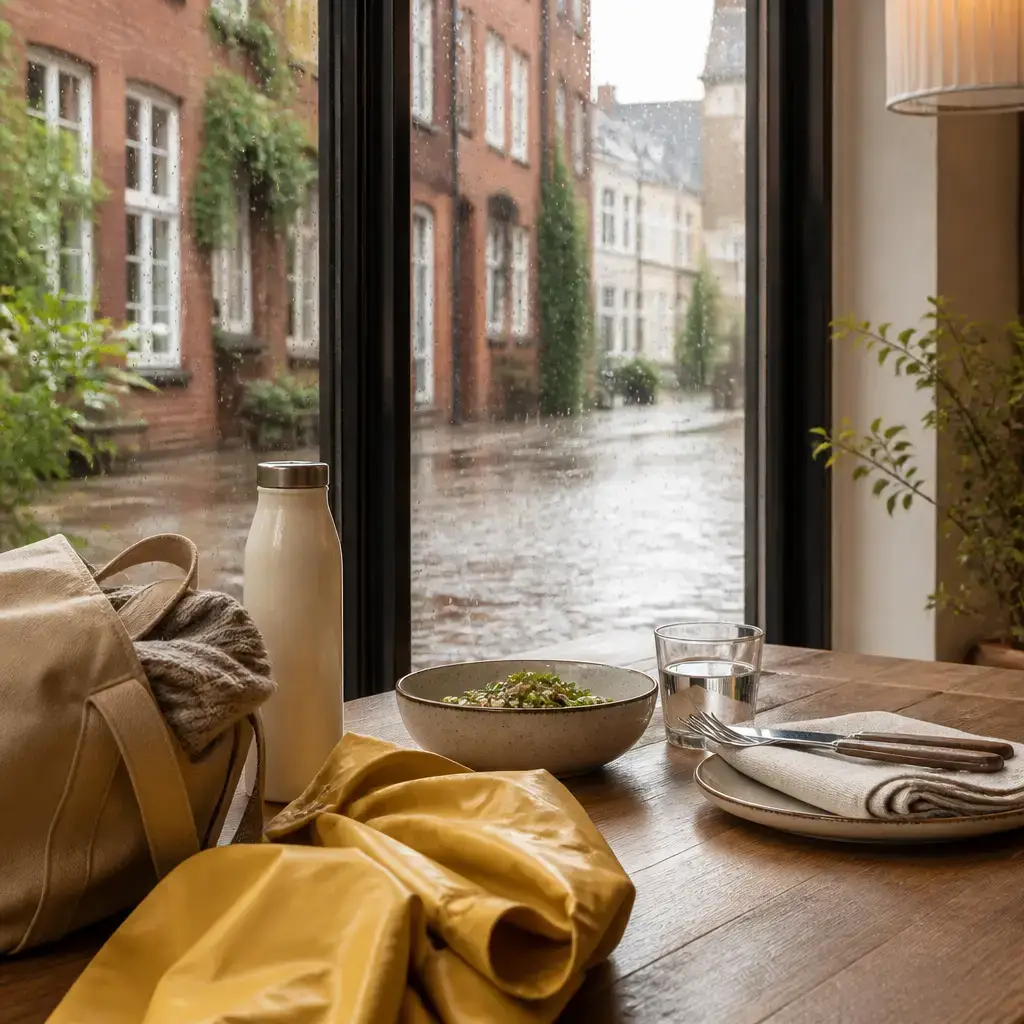
Vejret
“Vejret” means “the weather” in “Vejret kan ændre vores planer.” It is the definite form used when referring to the weather as a known topic. Use “vejret” when talking about the weather in general or its current condition.
kan
“Kan” expresses possibility or ability here: the weather may change the plans, and the picnic may become difficult. It is followed by an infinitive, as in “kan ændre” and “kan blive.” Use “kan” before an action that is possible or feasible.
ændre
“Ændre” means “change” in “kan ændre vores planer.” It is the action that the weather may cause and follows “kan” directly. A useful pattern is “ændre + something,” such as “ændre vores planer.”
vores
“Vores” means “our” in “vores planer,” showing that the plans belong to the speakers and their group. It comes directly before the noun it describes. Reuse the pattern “vores + noun” when referring to something shared by the group.
planer
“Planer” means “plans” in “vores planer.” It is the plural form used for the arrangements that may change. Use “planer” for arrangements or intentions, often after a possessive such as “vores planer.”
Picnicen
“Picnicen” means “the picnic” in “Picnicen kan blive svær.” The ending “-en” marks the specific picnic being discussed. Use “picnicen” when referring to a particular planned picnic.
blive
“Blive” means “become” or “get” in “kan blive svær,” describing a change into a difficult situation. It follows “kan” as an infinitive. A useful pattern is “blive + adjective,” as in “blive svær.”
svær
“Svær” means “difficult” in “blive svær.” It describes how the picnic may turn out if it rains. Use “blive svær” to say that an activity or situation may become difficult.
hvis
“Hvis” means “if” and introduces the condition “hvis det regner.” It connects a possible situation with its result. Use “hvis” before a condition, such as “hvis det regner.”
det
“Det” appears in both “det regner” and “Det lyder.” In “det regner,” it is the impersonal subject used for the weather; in “Det lyder,” it refers to the suggestion just mentioned. Use “det” in these common weather and reference patterns.
regner
“Regner” means “rains” in “det regner.” Together, “det regner” expresses that it is raining. Use this expression when describing rainy weather.
Skal
“Skal” asks what the speakers should do in “Skal vi aflyse eller planlægge noget indenfor i stedet?” It introduces a suggestion or decision question before “vi” and an infinitive. Use “Skal vi ...?” when proposing an action together.
vi
“Vi” means “we” in “Skal vi aflyse” and “Vi kan stadig spise.” It identifies the speakers as the people taking or considering the action. Use “vi” as the subject when talking about an action done by the group.
aflyse
“Aflyse” means “cancel” in “Skal vi aflyse.” It is an infinitive after “Skal vi” and names one possible response to the weather. Use “aflyse” for cancelling a planned event or arrangement.
eller
“Eller” means “or” and links the two options “aflyse” and “planlægge noget indenfor.” It presents alternatives in the question. Use “eller” between choices or possible actions.
planlægge
“Planlægge” means “plan” in “planlægge noget indenfor.” It names the alternative action to cancelling and appears as an infinitive after “Skal vi.” Use the pattern “planlægge + something,” as in “planlægge noget.”
noget
“Noget” means “something” in “planlægge noget indenfor.” It is the unspecified thing being planned. Use “noget” when the object is not specified or does not need to be named.
indenfor
“Indenfor” means “indoors” or “inside” in “noget indenfor” and “mødes indenfor.” It indicates that the alternative activity or meeting takes place inside. Use “indenfor” to describe an indoor location without naming a specific room.
i
“I” means “in” as part of the expression “i stedet,” which means “instead.” Here it contributes to the expression for choosing an alternative. Use the full pattern “i stedet” when replacing one plan or option with another.
stedet
“Stedet” contributes to the expression “i stedet,” meaning “instead” in this question. The complete expression refers to choosing an alternative, rather than merely naming a place. Use “i stedet” after describing a different option.
Lad
“Lad” begins the suggestion “Lad os være fleksible og mødes indenfor,” meaning “let’s.” With “os,” it invites the group to do the following actions. Use “Lad os + infinitive” to suggest a shared action.
os
“Os” means “us” in “Lad os være fleksible.” It identifies the people included in the suggestion introduced by “Lad.” Use “Lad os” before an infinitive when suggesting that the group do something.
være
“Være” means “be” in “Lad os være fleksible.” It follows “Lad os” and introduces the state the speakers suggest adopting. Use “være + adjective” to describe a suggested or desired state.
fleksible
“Fleksible” means “flexible” in “være fleksible.” It describes the approach the friends suggest while deciding how to respond to the weather. Use “være fleksible” when people are willing to adapt their plans.
og
“Og” means “and” and links “være fleksible” with “mødes indenfor.” It joins two actions in the same suggestion. Use “og” to connect related actions or ideas.
mødes
“Mødes” means “meet” in “mødes indenfor.” It describes the friends meeting one another inside and follows “Lad os.” Use “mødes” when people arrange to meet each other at a place or time.
lyder
“Lyder” means “sounds” in “Det lyder bedre.” It gives an evaluation of the suggested indoor plan. Use the pattern “Det lyder + adjective,” such as “Det lyder bedre,” to comment on how an idea seems.
bedre
“Bedre” means “better” in “Det lyder bedre end at blive våd udenfor.” It evaluates the indoor option by comparing it with getting wet outside. Use “bedre end” to say that one option is preferable to another.
end
“End” means “than” in “bedre end at blive våd udenfor.” It introduces the option used for comparison. Use “adjective + end” when comparing one situation or choice with another.
at
“At” marks the infinitive in “at blive våd udenfor.” It introduces the action being compared after “bedre end.” Use “at” before an infinitive in this kind of comparison, as in “bedre end at ...”.
våd
“Våd” means “wet” in “blive våd udenfor.” It describes the result of being outside in the rain. Use “blive våd” when talking about getting wet.
udenfor
“Udenfor” means “outside” in “at blive våd udenfor.” It specifies the location where the person may get wet. Use “udenfor” when contrasting an outdoor location with an indoor one.
stadig
“Stadig” means “still” in “Vi kan stadig spise frokost sammen.” It shows that lunch remains possible even though the original picnic plan may change. Use “stadig” when an action or possibility continues despite a change in circumstances.
spise
“Spise” means “eat” or “have food” in “spise frokost sammen.” It follows “kan” as an infinitive and describes the activity that remains possible. A useful pattern is “spise + meal,” such as “spise frokost.”
frokost
“Frokost” means “lunch” in “spise frokost sammen.” It is the meal the friends can still have together indoors or nearby. Use “spise frokost” to talk about having lunch.
sammen
“Sammen” means “together” in “spise frokost sammen.” It shows that the friends will share the meal rather than eat separately. Use “sammen” after an action to describe doing it with other people.
nærheden
“Nærheden” means “the vicinity” in “i nærheden,” which means “nearby.” The expression indicates that the lunch place is close to the original meeting area or another known place. Use the full pattern “i nærheden” when saying that something is nearby.
Jeg
“Jeg” means “I” in “Jeg skriver til de andre.” It identifies the speaker as the person who will contact the others. Use “Jeg” as the subject when stating what you will do.
skriver
“Skriver” means “write” or “message” in “Jeg skriver til de andre.” Here it refers to contacting people in writing about the plan change. Use the pattern “skriver til + person” when saying that you write or message someone.
til
“Til” means “to” in “skriver til de andre.” It marks the people who receive the written message. Use “skrive til + person” for writing or messaging someone.
de
“De” contributes to the expression “de andre,” meaning “the others.” It identifies a specific group of people in addition to the speakers. Use “de” before “andre” when referring to the other members of a group.
andre
“Andre” means “others” in “de andre.” Together, “de andre” refers to the other people who need to hear about the change. Use “de andre” when referring to people in the group who are not included in the current speakers.
om
“Om” means “about” in “om ændringen.” It introduces the topic of the message. Use the pattern “skrive til someone om something” when saying that you write to someone about a topic.
ændringen
“Ændringen” means “the change” in “om ændringen.” The ending “-en” marks a specific change, namely the change to the plan. Use “ændringen” when referring to a particular change already known in the conversation.
hjælper
“Hjælper” means “helps” in “Det hjælper alle med at planlægge.” It describes how sharing the information supports everyone’s planning. Use the pattern “hjælper + person + med at + infinitive.”
alle
“Alle” means “everyone” in “Det hjælper alle med at planlægge.” It refers to all the people involved in the plans. Use “alle” when the action or effect applies to every member of a group.
med
“Med” contributes to the construction “hjælper alle med at planlægge,” meaning “helps everyone to plan.” It links the help to the activity that becomes easier. Use “hjælper + someone + med at + infinitive” for this meaning.
især
“Især” means “especially” in “især når vejret skifter.” It highlights the weather changing as the situation in which the information is particularly helpful. Use “især” before the point or situation you want to emphasize.
når
“Når” means “when” in “når vejret skifter.” It introduces the situation in which the help is especially useful. Use “når” before a clause describing a time or recurring situation.
skifter
“Skifter” means “changes” in “vejret skifter.” It describes the weather becoming different, which may require the friends to adapt their plans. Use the pattern “vejret skifter” when talking about changing weather.