Har
In “Har du lyst til at spise middag sammen?” “Har” means “have” and begins the invitation about wanting to eat together. The reusable pattern “Har du lyst til at ...?” asks whether someone would like to do something.
du
In “Har du lyst til at spise middag sammen?” “du” means “you,” the person being invited. It is used as the subject in the pattern “Har du lyst til at ...?”.
lyst
In “Har du lyst til at spise middag sammen?” “lyst” expresses desire or willingness to do something. The reusable construction is “have lyst til at” followed by an action, as in “Har du lyst til at spise middag sammen?”.
til
In “Har du lyst til at spise middag sammen?” “til” is part of the construction expressing a desire to do something. It is reused in “lyst til at” before the action being considered.
at
In “Har du lyst til at spise middag sammen?” “at” marks the verb phrase “spise middag sammen” after “lyst til.” The reusable pattern is “til at” followed by an action.
spise
In “Har du lyst til at spise middag sammen?” “spise” means “eat” and names the proposed activity. It follows “at” in the pattern “lyst til at spise ...”.
middag
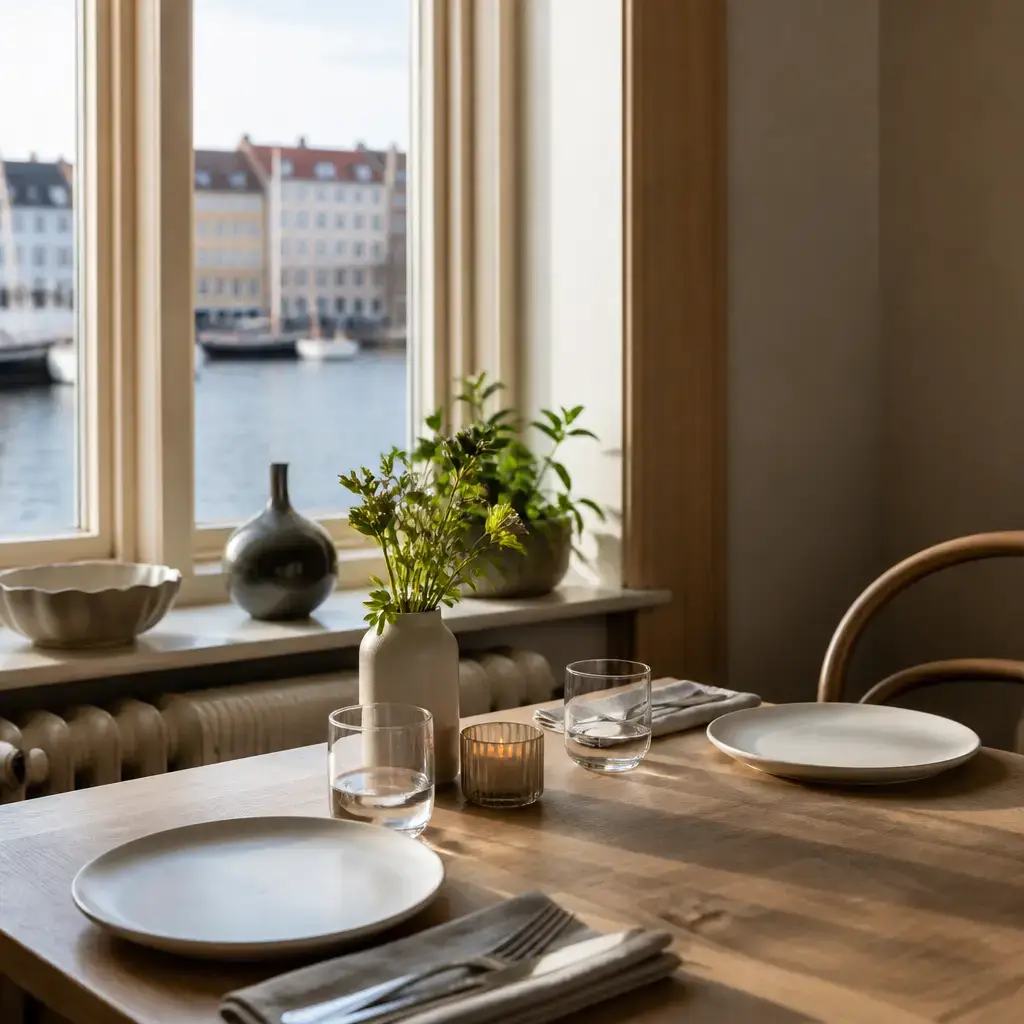
In “spise middag” the word “middag” means “dinner,” the meal the speakers are proposing to have together. The reusable expression is “spise middag,” meaning to have dinner.
sammen
In “Har du lyst til at spise middag sammen?” “sammen” means “together” and shows that the speakers would share the activity. It can be placed after the activity, as in “spise middag sammen”.
Det
In “Det vil jeg gerne” “Det” refers to the proposed dinner and means “that” in the reply. The reusable response pattern is “Det vil jeg gerne” when accepting a suggestion.
vil
In “Det vil jeg gerne” “vil” helps express willingness to accept the proposed dinner. Together with “gerne,” it forms the reusable response “Det vil jeg gerne” meaning “I’d like that.”
jeg
In “Det vil jeg gerne” and “Jeg kan bestille et bord” “jeg” means “I,” the person accepting the plan and offering to make the reservation. It is used as the subject before the verb, as in “Jeg kan ...”.
gerne
In “Det vil jeg gerne” “gerne” expresses that the speaker is willing or pleased to accept the suggestion. The reusable construction is “vil jeg gerne” in an affirmative response.
En
In “En rolig middag lyder dejligt” “En” means “a” and introduces the proposed quiet dinner. It is used before the description and noun in “En rolig middag.”
rolig
In “En rolig middag” and “Et roligt sted” “rolig” describes something quiet or calm. The reusable pattern is “rolig” before a noun, as in “rolig middag”.
lyder
In “En rolig middag lyder dejligt” “lyder” means “sounds” and introduces the speaker’s impression of the dinner. It can be used with an evaluation in the pattern “lyder ...”.
dejligt
In “En rolig middag lyder dejligt” “dejligt” gives a positive evaluation, meaning “nice” or “pleasant.” Together, “lyder dejligt” says that the proposed dinner sounds nice.
Skal
In “Skal jeg vælge et roligt sted?” “Skal” asks whether the speaker should take the suggested action. The reusable pattern “Skal jeg ...?” offers to do something or asks for confirmation.
vælge
In “Skal jeg vælge et roligt sted?” “vælge” means “choose” and names the action the speaker offers to take. It follows “Skal jeg” in the reusable pattern “Skal jeg vælge ...?”.
et
In “et roligt sted” “et” means “a” and introduces the place being considered. It is used before the adjective and noun in “et roligt sted.”
sted
In “et roligt sted” “sted” means “place,” here referring to a calm location for dinner. The reusable pattern is “et ... sted” when referring to a place with a description.
ville
In “Et roligt sted ville hjælpe os med at tale” “ville” means “would” and presents the benefit as a possible result. It is used before “hjælpe” in the pattern “ville hjælpe ...”.
hjælpe
In “Et roligt sted ville hjælpe os med at tale” “hjælpe” means “help,” referring to the place making conversation easier. The reusable construction is “hjælpe nogen med at” followed by an action.
os
In “ville hjælpe os med at tale” “os” means “us,” the people who would be helped to talk. It follows “hjælpe” in the reusable pattern “hjælpe os med at ...”.
med
In “ville hjælpe os med at tale” “med” is part of the construction meaning “help us with talking.” The reusable pattern is “hjælpe nogen med at” followed by an action.
tale
In “ville hjælpe os med at tale” “tale” means “talk,” the activity that the quiet place would make easier. It follows “med at” in the construction “hjælpe os med at tale.”
Foretrækker
In “Foretrækker du enkel mad eller noget nyt?” “Foretrækker” means “prefer” and asks which option the other person likes better. The reusable question pattern is “Foretrækker du X eller Y?”.
enkel
In “enkel mad” “enkel” describes the food as simple or uncomplicated. It is placed before the noun in the reusable pattern “enkel mad.”
mad
In “enkel mad” “mad” means “food,” specifically the type of food being discussed for dinner. It can follow a description, as in “enkel mad.”
eller
In “Foretrækker du enkel mad eller noget nyt?” “eller” means “or” and connects the two choices. It is used between alternatives in the pattern “X eller Y.”
noget
In “noget nyt” “noget” means “something” and refers to an unspecified food or option. The reusable pattern is “noget” followed by a description, as in “noget nyt.”
nyt
In “noget nyt” “nyt” means “new” and describes the unspecified option being offered as an alternative to simple food. It is used after “noget” in the expression “noget nyt.”
helst
In “Jeg vil helst vælge noget velkendt i aften” “helst” means “rather” or “preferably” and shows the speaker’s preference. The reusable pattern is “vil helst” followed by an action.
velkendt
In “noget velkendt” “velkendt” means “familiar” or “well-known,” describing the food the speaker would prefer tonight. It follows “noget” in the reusable expression “noget velkendt.”
i
In “i aften” “i” is part of the time expression meaning “this evening” or “tonight.” The reusable expression is “i aften” when referring to the evening of the current day.
aften
In “i aften” “aften” means “evening.” Together with “i,” it forms the time expression “i aften,” meaning “tonight.”
kan
In “Jeg kan bestille et bord” “kan” means “can” and shows that the speaker is able or willing to make the reservation. The reusable pattern is “Jeg kan” followed by an action.
bestille
In “Jeg kan bestille et bord” “bestille” means “reserve” in the context of reserving a table. It follows “kan” in the pattern “kan bestille et bord.”
bord
In “bestille et bord” “bord” means “table,” referring to the table being reserved at the restaurant. The reusable expression is “bestille et bord.”
på
In “på en restaurant” “på” introduces the restaurant where the table will be reserved. The reusable location pattern in this dialogue is “på en restaurant.”
restaurant
In “på en restaurant i nærheden” “restaurant” means “restaurant,” the place where the speakers plan to eat. It is used after “på” in the location expression “på en restaurant.”
nærheden
In “i nærheden” “nærheden” refers to the nearby area, so the restaurant is close to the speakers or the relevant place. The reusable expression “i nærheden” means “nearby.”
Send
In “Send mig venligst detaljerne” “Send” means “send” and is a polite request for the information. The reusable request pattern is “Send mig ...” when asking someone to send something to you.
mig
In “Send mig venligst detaljerne” “mig” means “me,” the person who should receive the details. It follows “Send” in the reusable pattern “Send mig ...”.
venligst
In “Send mig venligst detaljerne” “venligst” means “please” and makes the request polite. It can be placed inside a request such as “Send mig venligst ...”.
detaljerne
In “Send mig venligst detaljerne” “detaljerne” means “the details,” referring to the information about the dinner plans. It is the thing being requested after “Send mig venligst.”
når
In “når du kan” “når” means “when” and introduces the time condition for sending the details. The reusable pattern is “når du kan,” meaning “when you can.”