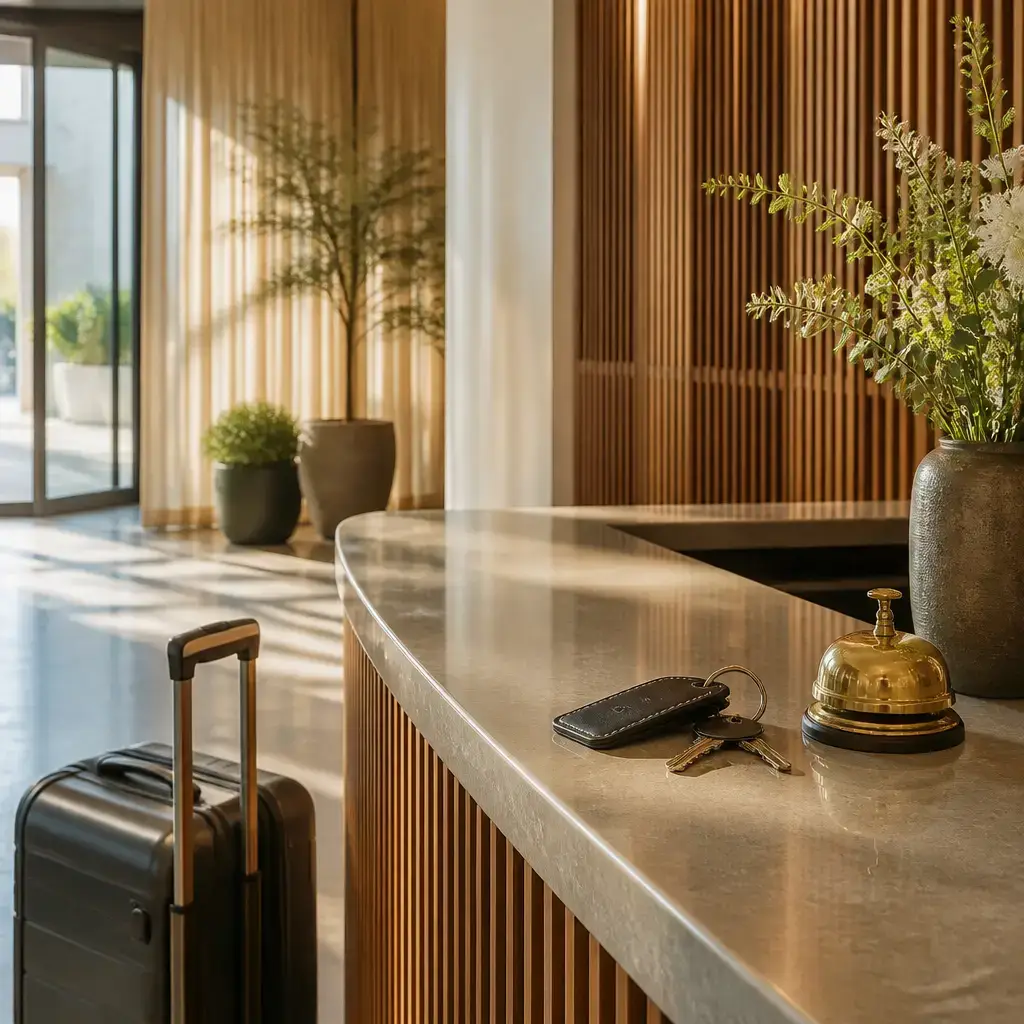
Jeg
“Jeg” means “I” and is the subject in “Jeg vil gerne tjekke ud”. It commonly comes before the verb in a statement, as in “Jeg vil gerne ...”. A guest uses it when stating what they want to do.
vil
In “Jeg vil gerne tjekke ud”, “vil” expresses wanting to do something; together with “gerne” it gives the polite meaning “would like to”. It is followed here by the infinitive “tjekke”. A learner can reuse “Jeg vil gerne” to make a polite request.
gerne
“Gerne” adds a willing or polite tone to “Jeg vil” in “Jeg vil gerne tjekke ud”, making it mean “I would like to check out”. It commonly follows “vil” in this request pattern. A guest can use it at a reception desk when politely expressing a wish.
tjekke
“Tjekke” means “check” in the expression “tjekke ud”, which means to check out of the hotel. Its form follows “vil gerne” here. A guest can use “tjekke ud” when ending a hotel stay.
ud
“Ud” is the second part of “tjekke ud”; together they express checking out. The word “ud” does not by itself mean the complete hotel procedure here. A learner can reuse “tjekke ud” when speaking about leaving a hotel.
tak
At the end of “Jeg vil gerne tjekke ud, tak”, “tak” politely softens the request and means “please” here. It is placed after the request. A guest can use it when asking hotel staff for a service.
Har
“Har” means “have” in the question “Har du din værelsesnøgle med?”. It begins a question about whether someone has something with them. “Har du ...?” is a useful pattern for asking about possession.
du
“Du” means “you” and is the person being asked in “Har du din værelsesnøgle med?”. It also appears as the person who will travel in “du får en sikker rejse”. A learner can use “du” when addressing one person directly.
din
“Din” means “your” in “din værelsesnøgle”, referring to the key belonging to the guest. It comes directly before the noun it describes. A learner can reuse “din” before a noun when asking about one person’s belongings.
værelsesnøgle
“Værelsesnøgle” means “room key” and identifies the key for the hotel room in “din værelsesnøgle”. It is used here as the thing the guest should have with them. A guest uses this word when returning or looking for a hotel key.
med
In “Har du din værelsesnøgle med?”, “med” means “with you” and asks whether the key is being carried along. It appears at the end of the question after the item being discussed. A learner can use “have noget med” when asking whether someone has something along.
Ja
“Ja” means “yes” and confirms that the guest has the key. It stands at the beginning of “Ja, her er den.” A learner uses it to give a direct positive answer.
her
“Her” means “here” in “her er den” and points to the place where the key is being presented. The pattern “her er ...” introduces or shows an item. A guest can use it when handing something to another person.
er
“Er” means “is” in “her er den”, identifying where the key is. It is the verb in the pattern “her er ...”. A learner can reuse “er” to say that an item is present or located somewhere.
den
“Den” means “it” in “her er den” and refers back to the room key. It avoids repeating the noun after the key has already been mentioned. A learner can use “den” to refer back to a previously mentioned common-gender item.
tjekker
“Tjekker” describes the receptionist’s action in “Jeg tjekker dig ud nu”: processing the guest’s checkout. It is used with “dig” and “ud” in this hotel-service expression. Staff can use this pattern when confirming that they are handling a guest’s checkout.
dig
“Dig” means “you” as the person being checked out in “Jeg tjekker dig ud nu”. It is the person affected by the receptionist’s action. A learner can reuse “dig” after a verb when addressing the person receiving the action.
nu
“Nu” means “now” and shows that the checkout is happening immediately in “Jeg tjekker dig ud nu”. It is placed at the end of the sentence here. Staff use it to reassure a guest that the requested action is being handled at once.
Kan
“Kan” means “can” or “could” in the polite request “Kan nogen hjælpe mig med min taske?”. It asks whether help is possible or available. “Kan ... hjælpe ...?” is a useful pattern for requesting assistance.
nogen
“Nogen” means “someone” in “Kan nogen hjælpe mig med min taske?”. It refers to an unspecified person who might provide help. A guest uses it when asking generally for assistance from the people nearby.
hjælpe
“Hjælpe” means “help” in “hjælpe mig med min taske”. It follows “Kan” in the request and is used with the person needing help and the thing involved. The pattern “hjælpe nogen med noget” is useful when asking for practical assistance.
mig
“Mig” means “me” in “hjælpe mig med min taske”, identifying the person who needs help. It follows “hjælpe” in this request. A guest can use “hjælpe mig med ...” to ask for help with a specific task or item.
min
“Min” means “my” in “min taske” and shows that the bag belongs to the speaker. It comes directly before the noun “taske”. A learner can reuse “min” before a noun when talking about a personal possession.
taske
“Taske” means “bag” in “min taske”, the item the guest needs help with. It follows “min” and is connected to the verb by “med”. A traveler can use this word when asking staff for help with luggage.
bede
“Bede” means “ask” in “bede nogen om at møde dig ved skranken”. It introduces a request made to another person through the pattern “bede nogen om at ...”. Staff can use this pattern when arranging for someone to assist a guest.
om
In “bede nogen om at møde dig”, “om” is part of the construction for asking someone to do something. It links the person being asked with the requested action. The reusable pattern is “bede nogen om at” followed by an action.
at
“At” marks the infinitive in “om at møde dig”, introducing the action that someone is being asked to perform. It comes directly before “møde” here. A learner can reuse “om at” before an action in a request.
møde
“Møde” means “meet” in “at møde dig ved skranken”. It is the action requested from the person who will help the guest. A hotel employee can use it when arranging for someone to meet a guest at a specific place.
ved
“Ved” means “at” or “by” in “ved skranken” and identifies the location of the meeting. It is followed here by the specific place “skranken”. A learner can use “ved” before a location when saying where someone or something is.
skranken
“Skranken” means “the desk” or “the counter” and refers here to the hotel reception desk. It is the place where the helper will meet the guest in “ved skranken”. A hotel guest can use this word when referring to the reception counter.
Værelset
“Værelset” means “the room” and refers to the hotel room in “Værelset var meget behageligt”. It is the subject of the statement about the guest’s stay. A guest can use it when giving feedback about a hotel room.
var
“Var” means “was” in “Værelset var meget behageligt”, describing the room after the stay. It connects the room with the description “meget behageligt”. A learner can reuse the pattern “[subject] var + description” when describing something in the past.
meget
“Meget” means “very” in “meget behageligt” and strengthens the description of the room. It comes before the adjective here. A learner can reuse “meget” before an adjective to make a description stronger.
behageligt
“Behageligt” means “comfortable” in “Værelset var meget behageligt”, describing the guest’s room positively. It completes the description after “var”. A guest can use it when giving a positive opinion about a room or another comfortable place.
Det
“Det” means “that” or “it” in “Det er jeg glad for at høre” and refers to the positive information about the room. It helps introduce what the speaker is pleased to hear. This expression is useful when responding positively to someone’s news.
glad
“Glad” means “glad” or “pleased” in “glad for at høre”, expressing a positive reaction. It is used with “for” to show what the speaker is pleased about. A receptionist can use this expression after a guest gives positive feedback.
for
In “glad for at høre”, “for” is part of the expression meaning “pleased about” or “glad to”. It connects the feeling “glad” with the information being heard. The reusable pattern is “være glad for” followed by a thing or an action.
høre
“Høre” means “hear” in “at høre” and refers to receiving the guest’s positive comment. It follows “at” in the expression “glad for at høre”. A learner can use “glad for at høre” when reacting positively to information.
håber
“Håber” means “hope” in “Jeg håber, du får en sikker rejse”. It introduces a good wish for what will happen to the other person. A receptionist can use “Jeg håber” when offering a friendly wish to a departing guest.
får
In “du får en sikker rejse”, “får” contributes the meaning “have” in the wish for a safe trip. It appears after “du” in “Jeg håber, du får ...”. A learner can reuse “Jeg håber, du får” before a positive experience or outcome.
en
“En” means “a” in “en sikker rejse” and introduces one trip or journey. It comes before the adjective and noun. A learner can reuse “en” before a singular noun such as “rejse”.
sikker
“Sikker” means “safe” in “en sikker rejse”, describing the hoped-for journey. It comes before “rejse” in this farewell wish. A receptionist can use it when wishing a departing traveler a safe journey.
rejse
“Rejse” means “trip” or “journey” in “en sikker rejse”. It refers to the guest’s travel after leaving the hotel. The expression “få en sikker rejse” is used as a friendly farewell wish.