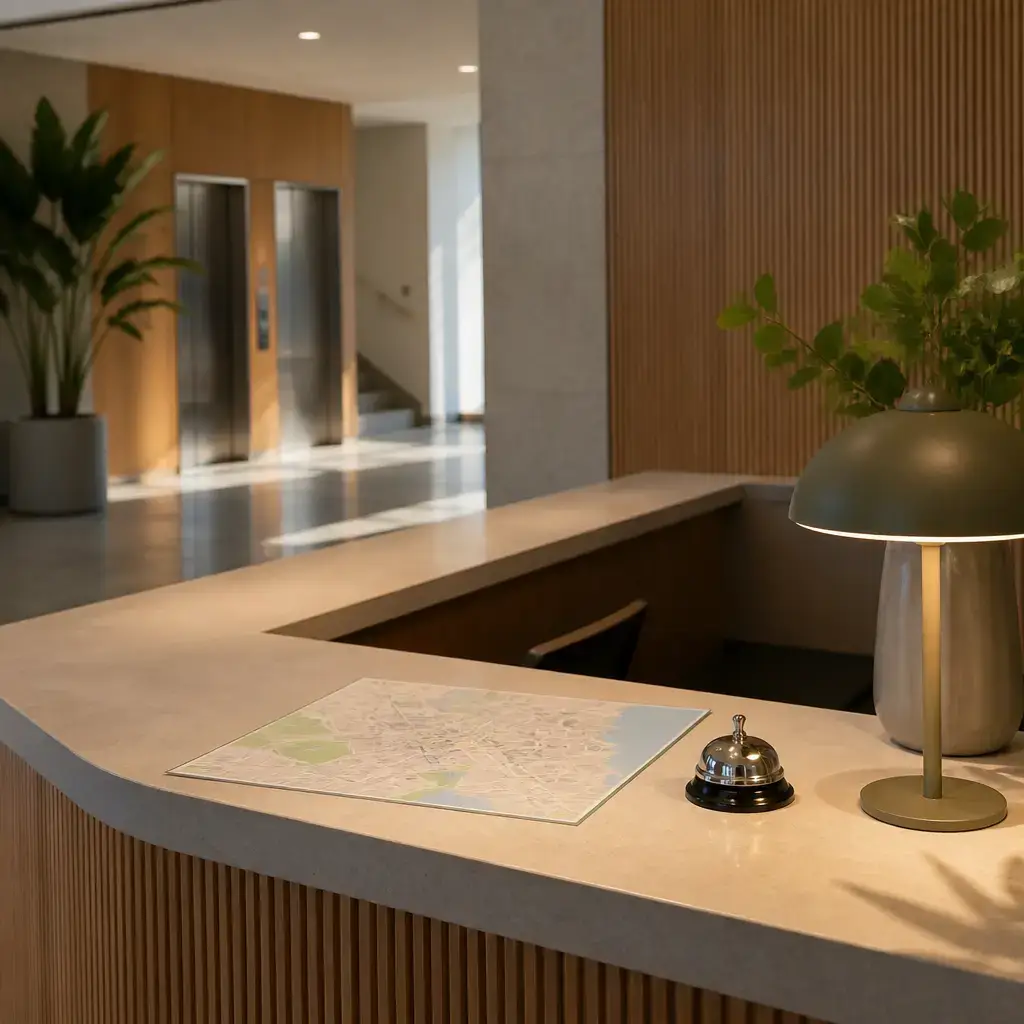
Kan
“Kan” means “can” and makes “Kan du fortælle mig...?” a polite request for information. It comes before the subject in this question. Use “Kan du...” when politely asking someone to do or tell you something.
du
“du” means “you,” the person being asked for directions. It follows “Kan” in the question “Kan du fortælle mig...?” Use “du” for one person in a direct question or statement.
fortælle
“fortælle” means “tell” in “Kan du fortælle mig...?” It is used after “kan” in the construction “Kan du fortælle mig...?” Use this pattern when asking someone to give you information.
mig
“mig” means “me” and identifies the person who should receive the information in “fortælle mig.” It comes after the verb in this expression. Use “fortælle mig” when asking someone to tell you something.
hvor
“hvor” means “where” and introduces the question about the conference room’s location. In “hvor konferencerummet er,” it is followed by the subject and then “er.” Use “hvor...” to ask about a place or location.
konferencerummet
“konferencerummet” means “the conference room” in this dialogue. The ending “-et” is part of the exact form used for a specific room. Use “konferencerummet” when referring to that conference room in the building.
er
“er” means “is” here and states the location of the conference room in “hvor konferencerummet er.” It is also used to express location with a subject. Use “er” when saying where a person or thing is.
Gå
“Gå” means “go” and gives the first direction: “Gå forbi lobbyen.” Its position at the beginning makes it a direct instruction. Use “Gå...” when telling someone how to proceed on foot.
forbi
“forbi” means “past” in “Gå forbi lobbyen,” showing that the person should continue beyond the lobby. It is followed here by “lobbyen,” the place passed. Use “gå forbi” to give directions past a landmark.
lobbyen
“lobbyen” means “the lobby,” the landmark the visitor should go past. The ending “-en” is part of the exact definite form used here. Use “Gå forbi lobbyen” when directing someone past the lobby.
Det
“Det” means “it” in “Det er tæt på elevatorerne,” referring to the conference room. It is the subject of the statement about location. Use “Det er...” when referring back to a thing or place and describing where it is.
tæt
“tæt” means “close” or “near” in “tæt på elevatorerne.” Together with “på,” it describes the conference room’s proximity to the elevators. Use “tæt på” before a place or thing that something is near.
på
“på” means “near” as part of the expression “tæt på elevatorerne.” Its meaning here comes from the whole expression “tæt på,” not from “på” alone. Use “tæt på” to say that a person or thing is close to something.
elevatorerne
“elevatorerne” means “the elevators,” the location used as a reference point. The ending “-erne” is part of the exact definite plural form. Use “tæt på elevatorerne” to describe something located near the elevators.
Skal
“Skal” means “should” in “Skal jeg tage elevatoren herfra?” and asks whether the speaker ought to take the elevator. It comes before the subject in this question. Use “Skal jeg...?” when asking what you should do.
jeg
“jeg” means “I” and identifies the person asking whether to take the elevator. It follows “Skal” in the question. Use “jeg” when referring to yourself as the subject.
tage
“tage” means “take” in “tage elevatoren,” referring to using the elevator. It follows “skal” in this question. Use “tage” with a transport option or object when saying what you will use or take.
elevatoren
“elevatoren” means “the elevator” in “tage elevatoren.” The ending “-en” is part of the exact definite form for the specific elevator. Use “tage elevatoren” when telling someone to use the elevator.
herfra
“herfra” means “from here” and indicates the starting point of the proposed elevator trip. It comes at the end of “Skal jeg tage elevatoren herfra?” Use “herfra” when describing movement or distance starting at the current place.
Tag
“Tag” means “take” in the instruction “Tag den én etage op.” It tells the visitor to use the elevator mentioned in the previous line. Use “Tag...” at the beginning of a direct instruction about what someone should take or do.
den
“den” means “it” here and refers back to “elevatoren.” It is the object of “Tag” in “Tag den én etage op.” Use “den” to refer back to a previously mentioned common-gender object.
etage
“etage” means “floor” or “storey” in “én etage op.” It identifies the amount of upward movement in the instruction. Use “én etage op” when directing someone one floor higher.
op
“op” means “up” and shows upward movement in “én etage op.” It comes after the floor expression in this direction. Use “op” with movement to indicate going higher.
Drej
“Drej” means “turn” and begins the instruction “Drej så til venstre...” It tells the visitor to change direction. Use “Drej...” when giving directions at a junction or before entering another area.
så
“så” means “then” and links this direction to the previous instruction to take the elevator up. It shows the next step in the route. Use “så” to sequence one action after another.
til
“til” means “to” in “til venstre,” identifying the direction of the turn. It is used together with “venstre,” not as a complete direction by itself. Use “til venstre” when telling someone to turn left.
venstre
“venstre” means “left” in “til venstre.” Together with “til,” it specifies the direction of the turn. Use “til venstre” when giving or following directions.
ind
“ind” means “into” and shows movement into the hallway in “ind på gangen.” It adds the idea of entering an area after turning. Use “ind” when directing someone to move inside or into a place.
gangen
“gangen” means “the hallway” in “ind på gangen.” The ending “-en” is part of the exact definite form for the hallway. Use “på gangen” when referring to being in or moving onto the hallway.
der
“der” has an existential function in “Er der et kort...?” and helps ask whether a map is present. In “Der er et ved receptionsskranken,” it introduces the available map. Use “Er der...?” for questions and “Der er...” for statements about something existing or being available.
et
“et” means “a” in “et kort,” introducing one unspecified map. It comes directly before “kort.” Use “et” before an indefinite noun when the noun takes this article.
kort
“kort” means “map” in “et kort, jeg kan bruge.” It is the thing the visitor wants to use for finding the room. Use “et kort” when asking for or referring to a map.
bruge
“bruge” means “use” in “jeg kan bruge,” describing what the speaker wants to do with the map. It follows “kan” in this construction. Use “kan bruge” with an object that you are able or allowed to use.
ved
“ved” means “by” or “at” in “ved receptionsskranken,” giving the map’s location. It is followed by the specific place where the map can be found. Use “ved” to locate something beside or at a place.
receptionsskranken
“receptionsskranken” means “the reception desk,” the place where the map is located. The ending “-en” is part of the exact definite form. Use “ved receptionsskranken” when directing someone to the reception desk.
hjælper
“hjælper” means “helps” in “Det hjælper,” expressing that the information is useful to the speaker. It follows “Det,” which refers to the directions or map information. Use “Det hjælper” to say that something makes a situation easier.
gang
“gang” means “time” or “occasion” in “første gang,” meaning the first time. Here it refers to an occasion of being in the building, not to the hallway. Use “første gang” when saying that something is happening for the first time.
i
“i” means “in” in “i denne bygning,” locating the speaker inside the building. It comes before “denne bygning.” Use “i” with a place when saying that someone or something is inside it.
denne
“denne” means “this” and points to the building the speaker is currently visiting. It comes directly before “bygning.” Use “denne” to identify a specific nearby or currently relevant thing.
bygning
“bygning” means “building” in “denne bygning.” It names the place where the speaker is visiting for the first time. Use “i denne bygning” when referring to being inside this particular building.
markeret
“markeret” means “marked” in “Konferencerummet er markeret,” saying that the room is indicated on the map or in the building information. It follows “er” in this description. Use “er markeret” when something is visibly indicated or labelled.
nær
“nær” means “near” in “nær enden af gangen,” locating the room close to the end of the hallway. It is followed by the place used as the reference point. Use “nær” before a location to describe something close to it.
enden
“enden” means “the end” in “enden af gangen,” identifying the far or final part of the hallway. The ending “-en” is part of the exact definite form. Use “enden af...” to identify the end of a place or area.
af
“af” means “of” in “enden af gangen,” linking “the end” with “the hallway.” This construction identifies the end belonging to or associated with a place. Use “enden af...” when saying the end of a street, hallway, or other area.