Må
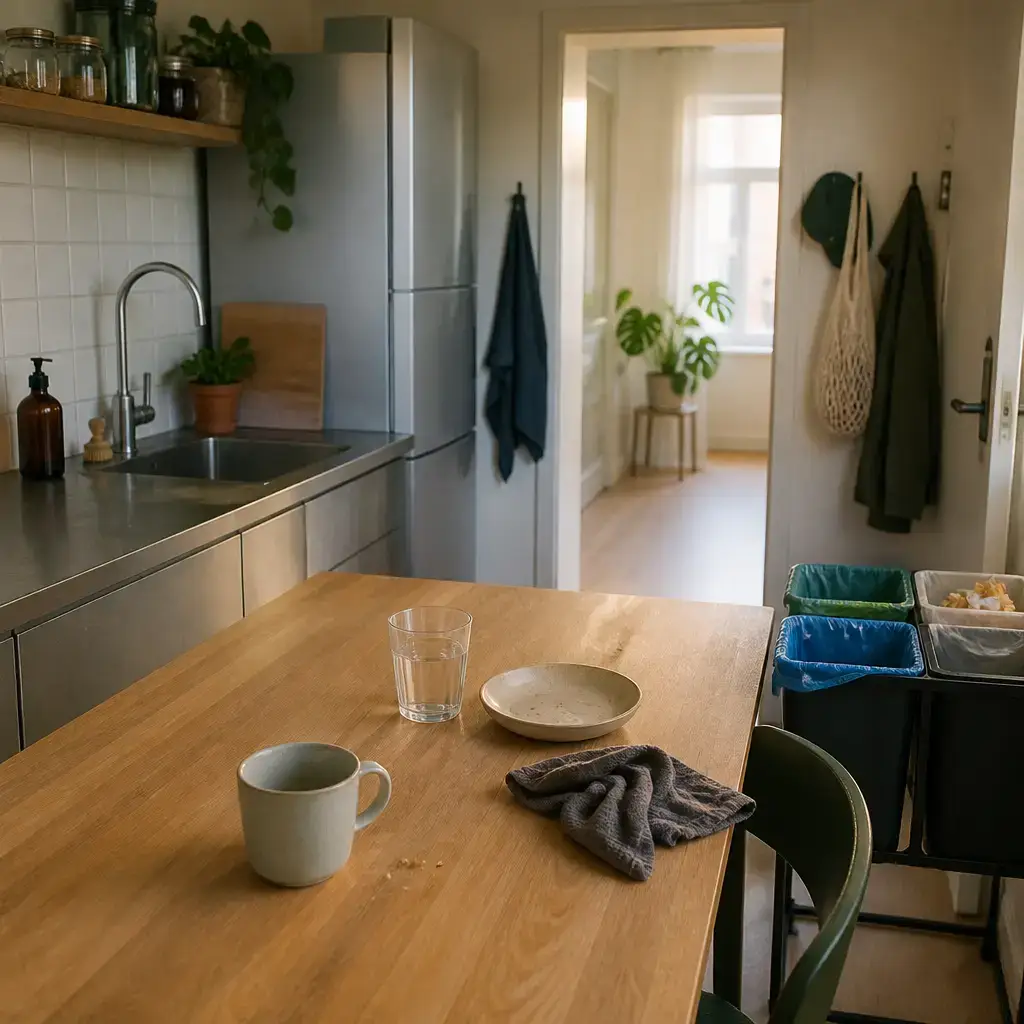
In “Må jeg vaske min kop her?” this asks for permission: “may I…?” It comes at the beginning of the question, followed by the person and the action. A reusable pattern is “Må jeg …?” when asking whether you may do something.
jeg
“jeg” means “I” and refers to the person speaking. In “Må jeg vaske min kop her?” it is the person asking permission, and in “Jeg vil gerne holde området rent.” it is the subject. Use “jeg” when talking about yourself.
vaske
“vaske” means “wash” in “Må jeg vaske min kop her?” It names the action that the speaker is asking permission to do and follows “Må jeg”. A reusable pattern is “Må jeg vaske …?” with the thing being washed after the verb.
min
“min” means “my” and shows that the cup belongs to or is associated with the speaker in “min kop”. It comes directly before the thing it describes. Use “min” before a noun when referring to something connected with yourself.
kop
“kop” means “cup” in “min kop”. It is the object that the speaker wants to wash. A reusable pattern is “vaske min kop” when talking about washing your cup.
her
“her” means “here” and identifies the place in “Må jeg vaske min kop her?” It appears at the end of the question and refers to the shared kitchen location. Use “her” to point to the place where the speaker is.
Brug
“Brug” is a direct instruction meaning “use” in “Brug vasken til venstre.” It tells the other person which sink to use. A reusable command pattern is “Brug …” followed by the object or place to use.
vasken
“vasken” means “the sink” in “Brug vasken til venstre.” The exact form refers to the particular sink on the left. Use it when identifying this sink as the object of “Brug”.
til
In “til venstre”, “til” helps identify the direction or position as “to the left”. Here it connects the sink with its location. The reusable expression is “til venstre” when giving a left-side location.
venstre
“venstre” means “left” in “til venstre.” Together, “til venstre” tells the listener where the sink is. Use this expression when directing someone to the left side.
vil
In “Jeg vil gerne holde området rent.”, “vil” expresses wanting to do something. It is followed by “gerne” and the action “holde”. A reusable pattern is “Jeg vil gerne …” when saying that you would like to do something.
gerne
In “Jeg vil gerne holde området rent.”, “gerne” adds willingness to “vil”, making the expression a polite way to say “would like to”. It appears between “vil” and the action. Use “vil gerne” before an action you would like to do.
holde
“holde” means “keep” in “holde området rent”: the speaker wants the area to remain clean. It follows “vil gerne” and takes “området” as its object. A reusable pattern is “holde [something] rent” when maintaining cleanliness.
området
“området” means “the area” or “the space” in “holde området rent.” It refers to the shared space being kept clean. It comes after “holde” and before the description “rent”.
rent
“rent” means “clean” in “holde området rent.” It describes the condition the area should have as a result of keeping it clean. Use “holde området rent” to talk about maintaining a clean area.
Tør
“Tør” is a direct instruction meaning “wipe” in “Tør venligst bordet af”. It tells the listener to wipe the table. The reusable command pattern is “Tør … af” for wiping a surface or object.
venligst
“venligst” means “please” in “Tør venligst bordet af.” It makes the instruction polite and comes after the command “Tør”. Use it in a polite request or instruction.
bordet
“bordet” means “the table” in “Tør venligst bordet af.” It is the surface that should be wiped. It follows “Tør” and comes before “af” in this command.
af
In “Tør venligst bordet af”, “af” completes the expression for wiping something off. It is used together with “Tør” and the object “bordet”, not as a separate instruction. A reusable pattern is “Tør [something] af”.
når
“når” means “when” in “når du er færdig.” It introduces the time condition for wiping the table. Use “når” before a clause that says when something happens.
du
“du” means “you” and refers to the person being addressed. In “når du er færdig”, that person is the one who finishes. Use “du” when speaking directly to one person.
er
“er” means “are” in “du er færdig.” It links “du” with the condition “færdig”. A reusable pattern is “du er …” when describing the person you are addressing.
færdig
“færdig” means “finished” or “done” in “du er færdig.” It describes the listener’s condition after completing the task. Use “er færdig” to say that someone has finished.
Skal
In “Skal skraldet i denne skraldespand?”, “Skal” asks whether the trash is supposed to go in this bin. It comes first because the sentence is a question. A reusable pattern is “Skal …?” when checking where something should go or what should happen.
skraldet
“skraldet” means “the trash” in “Skal skraldet i denne skraldespand?” It refers to the waste being sorted in the kitchen. The exact form is used as the subject of the question.
i
In “i denne skraldespand”, “i” means “in” and identifies the bin where the trash may go. It comes before the noun phrase naming the bin. Use “i” when describing something being or going inside a place or container.
denne
“denne” means “this” and points to a particular bin in “denne skraldespand.” It comes directly before the noun it identifies. Use “denne” when selecting one nearby or clearly identified thing.
skraldespand
“skraldespand” means “bin” or “trash can” in “denne skraldespand.” It names the container being considered for the trash. A reusable pattern is “i denne skraldespand” when asking whether waste belongs in this bin.
Læg
“Læg” is a direct instruction meaning “put” or “place” in “Læg det i skraldespanden ved døren.” It tells the listener where to place the trash. A reusable pattern is “Læg det i …” when instructing someone to put something in a location.
det
“det” means “it” in “Læg det i skraldespanden ved døren.” Here it refers back to the trash being discussed. It is the object of “Læg” and comes before the destination phrase.
skraldespanden
“skraldespanden” means “the bin” or “the trash can” in “i skraldespanden ved døren.” The exact form refers to the particular bin by the door. It follows “i” as the destination of “Læg det”.
ved
In “ved døren”, “ved” means “by” or “near” and identifies the bin’s location. It comes before “døren”, the nearby landmark. Use “ved” to say that something is located next to or near a place or object.
døren
“døren” means “the door” in “skraldespanden ved døren.” It is the landmark used to identify which bin to use. The phrase “ved døren” means “by the door.”
tager
In “Jeg tager mig af det nu”, “tager” is part of the expression meaning “take care of”. It says that the speaker will handle the matter now. A reusable pattern is “tage sig af …” for taking care of a task or thing.
mig
In “Jeg tager mig af det nu”, “mig” refers back to the speaker and is part of the expression “tager mig af”. Together with “tager” and “af”, it expresses taking care of something. Keep “mig” in this construction when the speaker says they will handle it themselves.
nu
“nu” means “now” in “Jeg tager mig af det nu.” It shows that the speaker will handle the matter immediately or at the present time. Use “nu” to specify that something is happening at this time.
Så
“Så” means “so” or “then” in “Så er køkkenet klar til alle.” It introduces the result of keeping the shared space clean and organized. Use “Så” to connect an action or situation with its result.
køkkenet
“køkkenet” means “the kitchen” in “Så er køkkenet klar til alle.” It refers to the shared kitchen as the place that is ready. The exact form is the subject of the sentence after “Så”.
klar
“klar” means “ready” in “køkkenet klar til alle.” It describes the kitchen’s condition after the cleaning tasks are done. A reusable pattern is “klar til …” when saying that something is ready for a person or purpose.
alle
“alle” means “everyone” in “klar til alle.” It identifies the people who can use the ready kitchen. It follows “til” in the expression “klar til alle”, meaning “ready for everyone.”