Lad
In “Lad os tjekke bestillingen”, “Lad” begins a suggestion meaning “let’s”. It is used together with “os” and an infinitive such as “tjekke”. A new example is “Lad os vente.”
os
In “Lad os tjekke bestillingen”, “os” means “us” and completes the “let’s” suggestion with “Lad”. A reusable pattern is “Lad os” followed by an infinitive, such as “Lad os tjekke ...”.
tjekke
“tjekke” means “check” in “Lad os tjekke bestillingen”. It is the action suggested after “Lad os”, and it can be followed by the thing being checked, as in “tjekke bestillingen”.
bestillingen
“bestillingen” means “the order” in “Lad os tjekke bestillingen”, referring to the specific order being checked. It is the definite form related to “bestilling”, meaning “order”. A useful pattern is “tjekke bestillingen” when checking an order.
Drikkevarerne
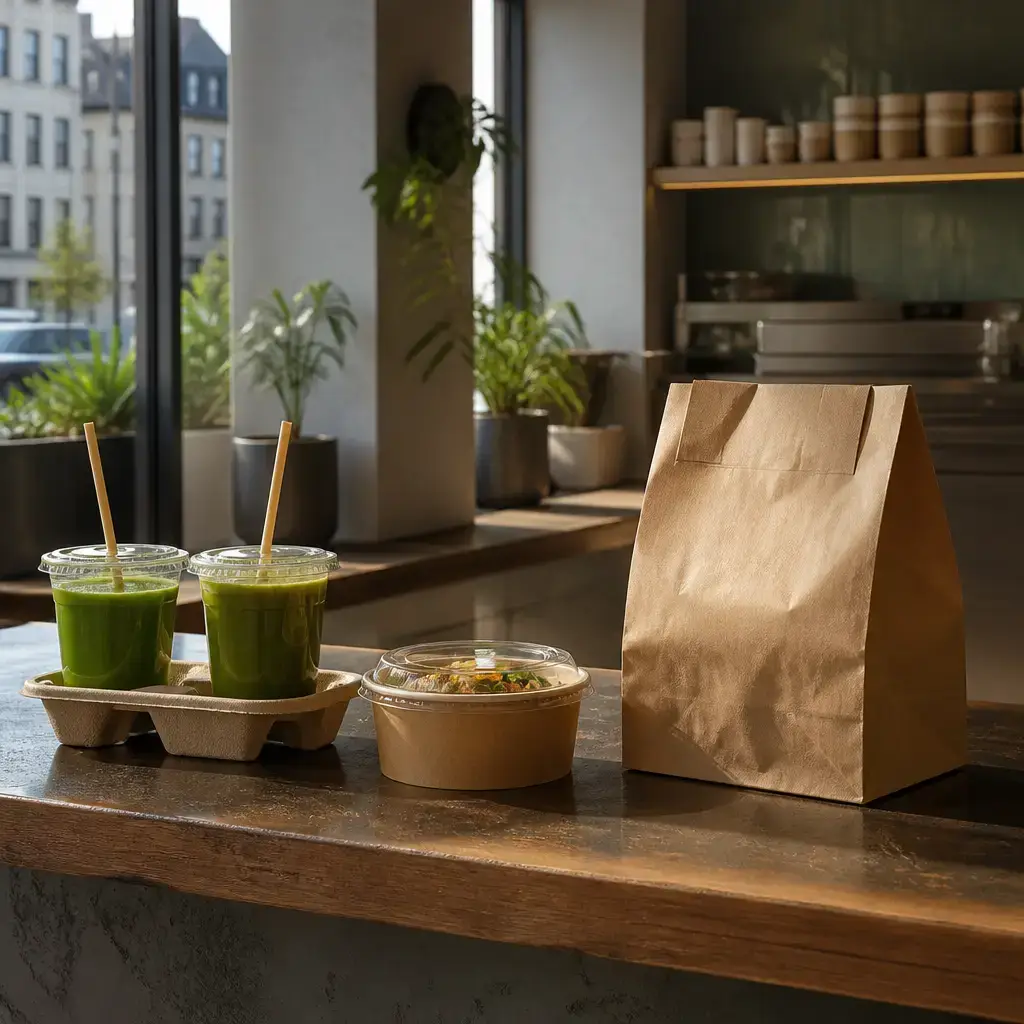
“Drikkevarerne” means “the drinks” in “Drikkevarerne er her”. It refers to the drinks that have arrived at the pickup counter and is the subject of the sentence. A reusable phrase is “tage drikkevarerne” when taking the drinks.
er
“er” expresses “are” in “Drikkevarerne er her” and “is” in “Den er i denne pose”. It is a form of “være”, meaning “to be”, and connects the subject with a location or description. A common pattern is “[something] er her.”
her
“her” means “here” in “Drikkevarerne er her”, identifying the drinks’ location. It commonly follows “er” when saying that someone or something is here. A reusable pattern is “[something] er her.”
Har
“Har” means “have” at the beginning of the question “Har vi også maden?”. The question asks whether the speakers have the food as well as the drinks. A useful pattern is “Har vi ...?” followed by the item being checked.
vi
“vi” means “we” in “Har vi også maden?”, referring to the two people checking the order together. It is the subject of the question after “Har”. A reusable question pattern is “Har vi ...?”.
også
“også” means “also” or “too” in “Har vi også maden?”, adding the food to the drinks already mentioned. It appears before the item that is being added to the question. A common reuse pattern is “også” plus another item or activity.
maden
“maden” means “the food” in “Har vi også maden?”. It refers to the food included in the order and is the item being checked. It is the definite form related to “mad”, meaning “food”.
Den
“Den” means “it” in “Den er i denne pose”, referring back to the food or its bag as the item located in the bag. It is the subject of the sentence describing the location. A reusable pattern is “Den er i ...” followed by a container or place.
i
“i” means “in” in “Den er i denne pose”, showing that something is inside the bag. It is used before the container or place where something is located. A common pattern is “i” plus a place or container, such as “i denne pose”.
denne
“denne” means “this” in “denne pose”, pointing to the particular bag being identified. It comes directly before the noun “pose”. A reusable pattern is “denne” plus a nearby or specifically identified noun.
pose
“pose” means “bag” in “denne pose”. It names the container where the food is located. A useful phrase is “i denne pose” when referring to something inside this bag.
det
“det” appears in “Er det hele rigtigt?” as part of “det hele”, meaning “everything”, and in “Det passer med kvitteringen”, where it refers to what has been checked. Its exact meaning depends on the surrounding expression. Useful patterns from the dialogue are “det hele” and “Det passer med ...”.
hele
In “det hele”, “hele” contributes the idea of “the whole” or “all of it”, so the expression means “everything”. The meaning “everything” comes from the whole expression “det hele”, not from “hele” alone. A reusable pattern is “det hele” when referring to everything in a situation.
rigtigt
“rigtigt” means “correct” or “right” in “Er det hele rigtigt?”, asking whether everything is correct. Its form is used here with “det hele” in this question. A reusable pattern is “Er ... rigtigt?” when checking whether something is correct.
passer
“passer” means “matches” or “fits” in “Det passer med kvitteringen”, saying that the order agrees with the receipt. It is a form of “passe”, meaning “to fit” or “to match”. A useful pattern is “passer med” followed by the thing used for comparison.
med
“med” means “with” in “passer med kvitteringen”, linking what is being checked to the receipt used for comparison. It forms the reusable combination “passer med”. Use “med” before the person or thing that something matches or goes together with.
kvitteringen
“kvitteringen” means “the receipt” in “Det passer med kvitteringen”, referring to the receipt used to check the order. It is the definite form related to “kvittering”, meaning “receipt”. A useful pattern is “passer med kvitteringen” when comparing an order with the receipt.
Jeg
“Jeg” means “I” in “Jeg kan tage drikkevarerne” and “Jeg bærer madposen”, identifying the person taking responsibility for an action. It is used as the subject at the beginning of these statements. A reusable pattern is “Jeg kan ...” when offering or stating what you can do.
kan
“kan” means “can” in “Jeg kan tage drikkevarerne”, expressing that the speaker is able or willing to take the drinks. It is followed by the infinitive “tage”. A useful pattern is “Jeg kan” followed by an action, such as “Jeg kan tage ...”.
tage
“tage” means “take” in “Jeg kan tage drikkevarerne”. It follows “kan” and names the action the speaker offers to do. A reusable pattern is “kan tage” followed by the object being taken.
bærer
“bærer” means “carry” in “Jeg bærer madposen”, stating that the speaker will carry or is carrying the food bag as part of the plan. It is a form of “bære”, meaning “to carry”. A useful pattern is “Jeg bærer” followed by the item being carried.
madposen
“madposen” means “the food bag” in “Jeg bærer madposen”. It refers to the specific bag containing the food. It is the definite form related to “madpose”, meaning “food bag”, and can be used after “bærer” to name what is being carried.