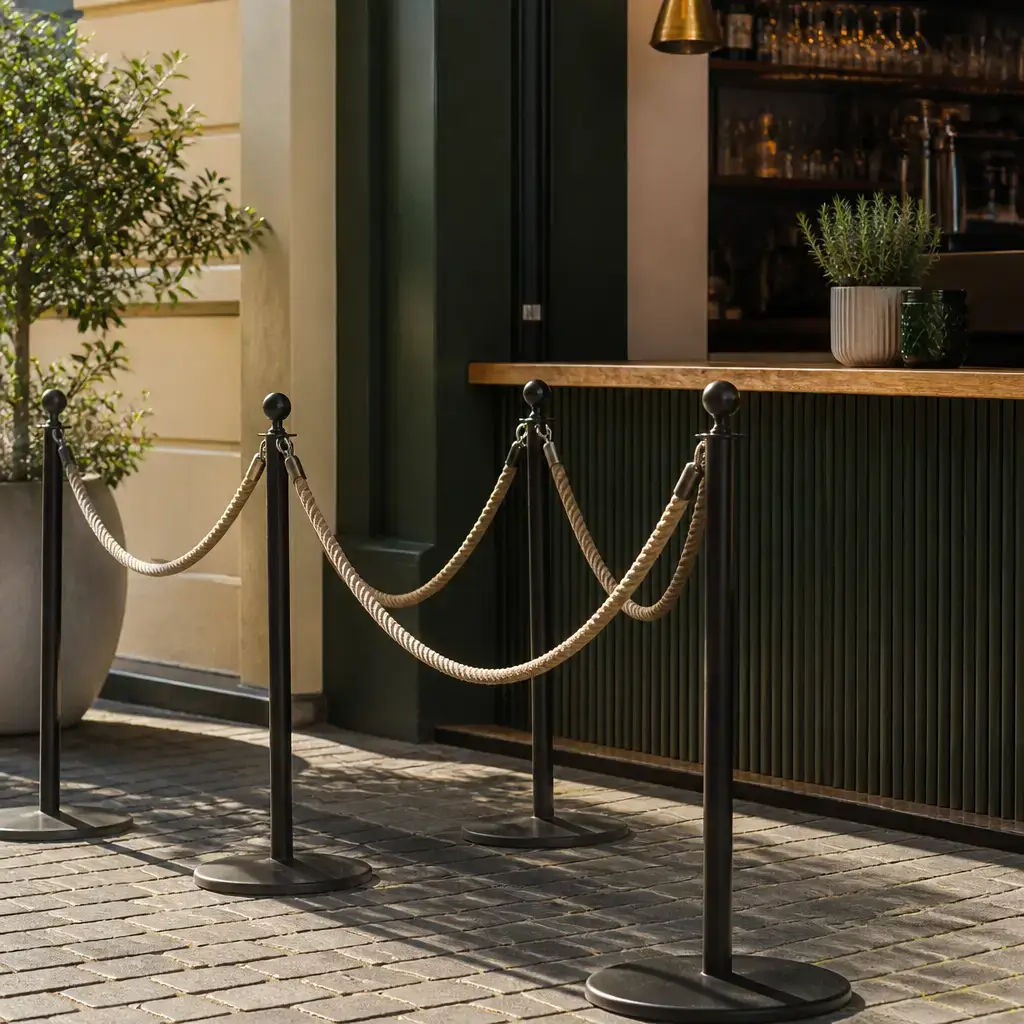
Kan
“Kan” means “can” here and asks whether the other person is able to help. It is used before an infinitive in “Kan du holde”; a useful request pattern is “Kan du” followed by an action.
du
“du” means “you” and refers to the person being asked. It comes after “Kan” in the question “Kan du holde”; use “du” for the person you are addressing in a direct request.
holde
“holde” means “hold” or “keep” in “holde min plads”, referring to keeping someone’s place in the line. It is the infinitive after “Kan”; “holde” can be used with an object such as “min plads”.
min
“min” means “my” and identifies the place as belonging to the speaker in “min plads”. It comes before the noun it describes; the reusable pattern here is “min” plus a possession such as “min plads”.
plads
“plads” means “place” or “spot” here, specifically the speaker’s position in the line. It follows “min” in “min plads”; use it when referring to a place someone occupies or keeps.
i
“i” means “for” in the time expression “i et minut”, not a location. With a duration, it introduces how long something lasts; “i et minut” is a reusable time pattern.
et
“et” means “a” in “et minut” and introduces the noun “minut”. It is part of the time expression “i et minut”; use it before this noun when referring to one minute without specifying which minute.
minut
“minut” means “minute” in “i et minut”. It names the duration for which the place should be kept; it can follow a time expression such as “i et minut”.
Jeg
“Jeg” means “I” and identifies the speaker as the person who can help or act. It begins statements such as “Jeg kan holde” and “Jeg henter den nu”; use it before an action done by the speaker.
din
“din” means “your” and identifies the place as belonging to the person who has left. It comes before the noun in “din plads”; the reusable pattern is “din” plus the thing belonging to the person addressed.
mens
“mens” means “while” and introduces the time during which the other person is away in “mens du er væk”. It connects two clauses; use “mens” before an event or situation happening at the same time.
er
“er” means “is” or “are” in “du er væk”, describing the person’s state of being away. It is the present form of “være” used with “du”; the pattern “du er” introduces a description or state.
væk
“væk” means “away” in “du er væk”, meaning that the person is not present at the line. It follows “er” in this expression; “er væk” is a reusable way to describe someone being away.
glemte
“glemte” means “forgot” in “Jeg glemte min pung”. It is the past form of “glemme” and is used here for the wallet the speaker left behind; the pattern is “glemte” followed by the forgotten object.
pung
“pung” means “wallet” in “min pung”. It is the object that the speaker forgot; use it after a possessive such as “min” when identifying whose wallet it is.
Prøv
“Prøv” means “try” and gives a brief instruction in “Prøv at komme tilbage snart”. It is used before “at” plus an infinitive; this pattern lets someone suggest or ask another person to try an action.
at
“at” marks the infinitive in “at komme tilbage”, giving the meaning “to come back”. It comes directly before the infinitive “komme”; use “at” in the pattern “Prøv at” followed by an action.
komme
“komme” means “come” in “komme tilbage”, referring to returning to the line. It is the infinitive after “at”; the reusable pattern “komme tilbage” means to come back.
tilbage
“tilbage” means “back” in “komme tilbage”, describing movement to the previous place. It follows “komme” in this expression; use “tilbage” to indicate a return.
snart
“snart” means “soon” and asks for the return to happen after a short time in “komme tilbage snart”. It gives a time indication; it can be placed with an action when saying that it should happen soon.
henter
“henter” means “gets” or “fetches” in “Jeg henter den nu”, referring to going to get the wallet. It is the present form of “hente” and is used before the object “den”; the pattern is “Jeg henter” plus the thing being fetched.
den
“den” means “it” here and refers back to the wallet, “min pung”. It is the object in “Jeg henter den nu” and “Jeg fandt den”; use “den” to refer back to this already-mentioned item.
nu
“nu” means “now” and shows that the speaker will fetch the wallet immediately in “Jeg henter den nu”. It gives the timing of the action; place it with an action to say that it is happening now.
bliver
“bliver” means “stays” in “Jeg bliver her i køen”, explaining that the other person will remain at the line. It is the present form of “blive”; the pattern “Jeg bliver her” states that the speaker will remain in the current place.
her
“her” means “here” and refers to the speaker’s current location in “Jeg bliver her i køen”. It follows “bliver” to identify where the person remains; use “her” for the place where the speaker is.
køen
“køen” means “the line” or “the queue” in “i køen”. It is the definite form used for the particular line in this scene; the reusable expression is “i køen” for being in the line.
fandt
“fandt” means “found” in “Jeg fandt den”, referring to finding the wallet. It is the past form of “finde” and is followed by the object “den”; use the pattern “Jeg fandt” plus the thing that was located.
og
“og” means “and” and links the two completed actions in “Jeg fandt den og kom straks tilbage”. It joins actions or statements; here it connects finding the wallet with returning.
kom
“kom” means “came” in “kom straks tilbage”, referring to the speaker’s return to the line. It is the past form of “komme” and is combined with “tilbage” to show returning; the pattern is “kom” plus a return expression such as “kom straks tilbage”.
straks
“straks” means “right away” or “immediately” in “kom straks tilbage”. It emphasizes that the speaker returned without delay; use it with an action when describing something done immediately.
gå
“gå” means “go” or “walk” in “gå ind i køen igen”, describing re-entering the line. It is the infinitive after “kan”; the pattern “kan gå” is followed here by a direction and destination.
ind
“ind” means “in” and shows movement into the line in “gå ind i køen igen”. It follows “gå” to express inward movement; use it in a pattern such as “gå ind i” followed by a place.
igen
“igen” means “again” in “gå ind i køen igen”, indicating a return to the line. It marks repetition or a return to a previous situation; here it completes the instruction to go back into the queue.