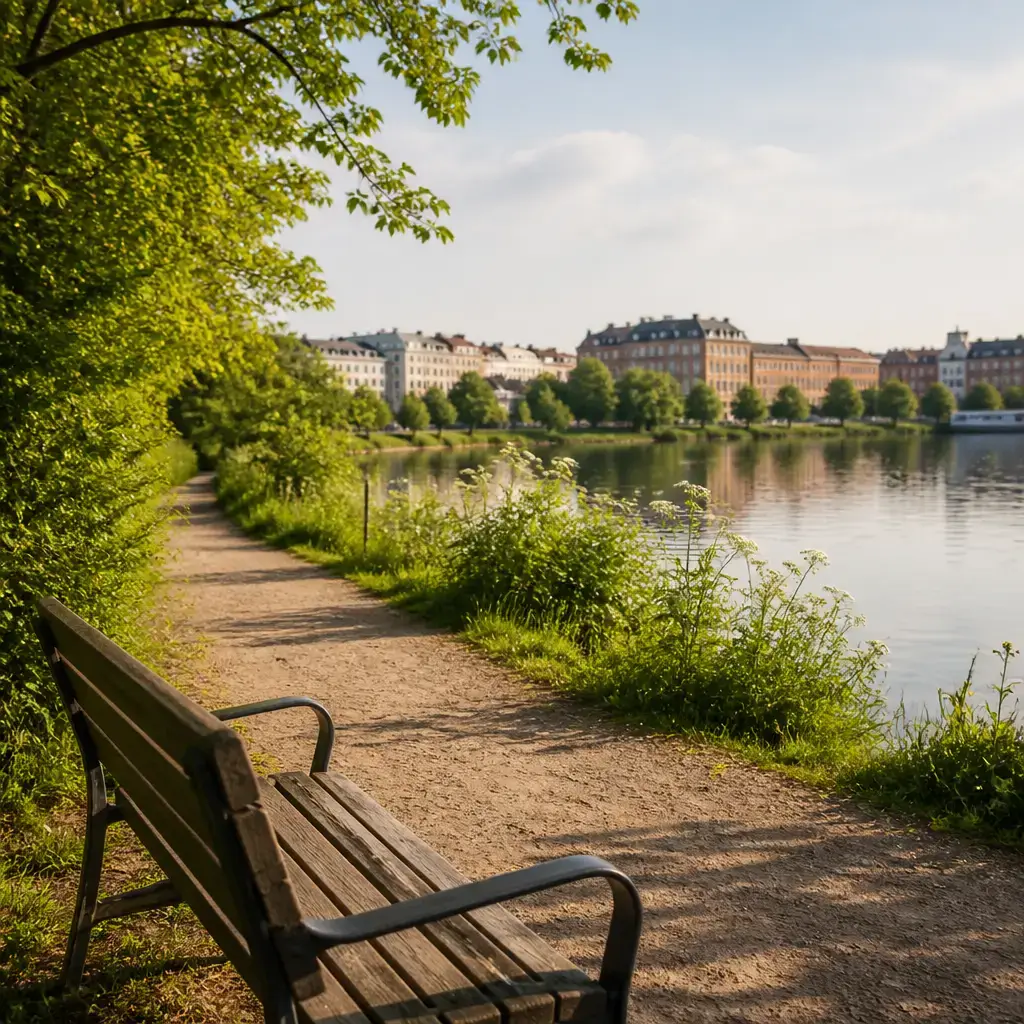
About This Lesson
Use Walking as a hobby to practice Danish conversation, pronunciation, vocabulary, grammar, and quizzes.
Dialogue
A
Er gåture din hobby?
air GOH-too-uh deen HUH-bee? Is walking your hobby?
B
Jeg kan godt lide at gå ture i min fritid.
yai ken got LEE-thuh ad GOH TOO-uh ee meen FREE-teeth. I like going for walks in my free time.
A
Hvor plejer du at gå hen?
voh PLY-uh doo ad GOH HEN? Where do you usually go?
B
Jeg går i parken.
yai gawr ee PAR-gen. I walk in the park.
A
Er ruten lang?
air ROO-den LANG? Is the route long?
B
Det er en kort og nem tur.
day air en KORD oh NEHM TOOR. It is a short, easy walk.
A
Det lyder afslappende.
day LOO-thuh uf-SLEH-buh-nuh. That sounds relaxing.
B
Vi kan gå derhen sammen.
vee ken GOH dair-HEN SAM-un. We can go there together.Word by Word
Er
In "Er gåture din hobby?", "Er" means “is” and starts a yes-or-no question. It comes before the subject "gåture" in this question pattern. You can reuse "Er ...?" when asking whether something is a particular thing or condition.
gåture
In "Er gåture din hobby?", "gåture" means walks as a hobby or activity. The expression "at gå ture" is used for going for walks. This is useful when talking about walking as a regular free-time activity.
din
In "din hobby", "din" means “your” and identifies the hobby as belonging to the person being asked. It appears directly before the noun "hobby". You can reuse the pattern "din + noun" when asking or speaking about something belonging to another person.
hobby
In "din hobby", "hobby" means a hobby or regular leisure activity. It is the thing that "gåture" is being identified as in the question. You can use "hobby" when talking about an activity someone enjoys in their free time.
Jeg
In "Jeg kan godt lide at gå ture", "Jeg" means “I” and identifies the speaker. It comes before the verb expression "kan godt lide". You can reuse "Jeg + verb" to begin a statement about yourself.
kan
In "kan godt lide", "kan" is part of the expression meaning “like”, while in "Vi kan gå derhen sammen" it expresses that going there is possible or something the speakers can do. The exact meaning therefore depends on the construction around it. Reuse "kan godt lide" for expressing likes and "kan + verb" for ability or possibility.
godt
In "kan godt lide", "godt" is part of the fixed expression for saying that someone likes something; it does not mean “well” by itself here. The complete expression is "Jeg kan godt lide at gå ture". Use "kan godt lide + noun or activity" to express what you like.
lide
In "kan godt lide", "lide" contributes to the meaning “like”. Its meaning is understood together with "kan godt", not as a separate translation in this sentence. You can reuse the full pattern "kan godt lide at gå ture" when saying that you like an activity.
at
In "at gå ture", "at" marks the following verb expression as an activity, giving the meaning “to go for walks”. It comes directly before "gå". Reuse the pattern "at + verb" when referring to an activity, as in "at gå ture".
gå
In "at gå ture", "gå" means go or walk, and in "gå derhen" it means go toward that place. The surrounding words show whether the focus is walking as an activity or going to a destination. You can reuse "at gå ture" for walking and "gå derhen" for going there.
ture
In "at gå ture", "ture" means walks or walking trips. Together, "gå ture" describes going for walks rather than one specific walk. This expression is useful when talking about walking as a hobby or free-time activity.
i
In "i min fritid" and "i parken", "i" means “in”. It introduces the time period "min fritid" and the place "parken". You can reuse "i + place" for location and "i + time expression" for when something happens.
min
In "min fritid", "min" means “my” and identifies the free time as belonging to the speaker. It comes directly before "fritid". You can reuse "min + noun" when referring to something belonging to yourself.
fritid
In "min fritid", "fritid" means free time, the time when the speaker is not occupied with other obligations. The phrase "i min fritid" means “in my free time”. Use this phrase when describing activities you do during your leisure time.
Hvor
In "Hvor plejer du at gå hen?", "Hvor" means “where” and asks about a destination. It appears at the beginning of the question. You can reuse "Hvor ...?" when asking where someone goes or where something is.
plejer
In "plejer du at gå hen", "plejer" indicates a usual or habitual action. The construction "plejer at + verb" asks what someone normally does. Use it when asking about a regular routine, as in "Hvor plejer du at gå hen?".
du
In "plejer du at gå hen?", "du" means “you” and refers to the person being asked. It is the person whose usual destination is being discussed. You can reuse "du" when addressing one person directly.
hen
In "gå hen", "hen" adds direction to the movement, so the phrase refers to going toward a destination. It appears after "gå" in "Hvor plejer du at gå hen?". You can also see the same directional idea in "gå derhen".
går
In "Jeg går i parken", "går" means walk or go and describes the speaker’s movement in the park. It is the form used in this statement after "Jeg". You can reuse "Jeg går i parken" when saying that you walk in the park.
parken
In "i parken", "parken" means “the park”, the place where the walking happens. It is the definite form of "park" used for a particular park. You can reuse "i parken" when describing an activity taking place in the park.
ruten
In "Er ruten lang?", "ruten" means “the route”, referring to the walking route under discussion. It is the definite form of "rute". You can reuse "Er ruten lang?" when asking about the length of a particular route.
lang
In "Er ruten lang?", "lang" means long and describes the route’s length. It comes after "ruten" and completes the question about the route. You can reuse "Er ... lang?" when asking whether something is long.
Det
In "Det er en kort og nem tur" and "Det lyder afslappende", "Det" refers to the walk or situation being discussed. It functions as “it” or “that” at the start of both statements. Reuse "Det er ..." to describe something and "Det lyder ..." to give an impression of it.
en
In "en kort og nem tur", "en" means “a” and introduces one walk. It comes directly before the noun phrase "kort og nem tur". You can reuse "en + noun" when referring to one non-specific item or activity.
kort
In "en kort og nem tur", "kort" means short and describes the walk. It is paired with "nem" before the noun "tur". You can reuse "kort" to describe a walk or route that does not take a long time or cover a long distance.
og
In "en kort og nem tur", "og" means “and” and connects the two descriptions "kort" and "nem". It allows both qualities to describe the same walk. You can reuse "og" to join words or descriptions.
nem
In "en kort og nem tur", "nem" means easy and describes the walk as not difficult. It is connected to the description "kort" by "og". You can use "nem" when describing an activity or task that is easy to do.
tur
In "en kort og nem tur", "tur" means a walk or trip. The dialogue also uses the plural form "ture" in "at gå ture". These expressions let you distinguish one particular walk from walking as a general activity.
lyder
In "Det lyder afslappende", "lyder" means “sounds” and introduces the speaker’s impression of something just mentioned. It is followed here by "afslappende". You can reuse "Det lyder + description" when reacting to information or a suggestion.
afslappende
In "Det lyder afslappende", "afslappende" means relaxing and describes the impression made by the short, easy walk. It completes the expression "Det lyder afslappende". Use this expression when responding positively to a calm or restful activity.
Vi
In "Vi kan gå derhen sammen", "Vi" means “we” and refers to the two people together. It is the subject of the suggestion to go there. You can reuse "Vi + verb" when talking about an action done by yourself and another person or group.
derhen
In "gå derhen", "derhen" means “there” with a sense of movement toward the place already being discussed. It follows "gå" and identifies the destination. You can reuse "gå derhen" when suggesting or describing going to that place.
sammen
In "Vi kan gå derhen sammen", "sammen" means “together” and shows that the people will go as a group. It comes at the end of the suggestion. You can reuse "gå derhen sammen" when proposing to go to a place with someone else.
Grammar Points
lyder + adjektiv
lyder afslappende
LOO-thuh uf-SLEH-buh-nuhsounds relaxing
Efter lyder beskriver et adjektiv, hvordan noget virker eller opleves; afslappende er ikke et adverb her.
gå + derhen
gå derhen
GOH dair-HENgo there
Derhen viser bevægelse mod et sted, mens hvor bruges til at spørge om en placering.
Danish Vocabulary
fritid
noun
FREE-teeth
free time
- Gender
- common
gå
verb
GOH
go; walk
gåtur
noun
GOH-toor
walk
gåture
- Gender
- common
hobby
noun
HUH-bee
hobby
- Gender
- common
hvor
adv
voh
where
kan godt lide
phrase
ken got LEE-thuh
like
Jeg kan godt lide at gå ture.
kort
adj
KORD
short
lang
adj
LANG
long
nem
adj
NEHM
easy
park
noun
PARK
park
parken
- Gender
- common
plejer
verb
PLY-uh
usually
rute
noun
ROO-duh
route
ruten
- Gender
- common
Quiz
Word Order
Arrange the words in the correct order.
Is walking your hobby?
Show Answer
Er gåture din hobby?Where do you usually go?
Show Answer
Hvor plejer du at gå hen?I walk in the park.
Show Answer
Jeg går i parken.Spelling
Tap the letters to spell the word.
park
Show Answer
parkenusually
Show Answer
plejerwhere
Show Answer
hvorroute