Må
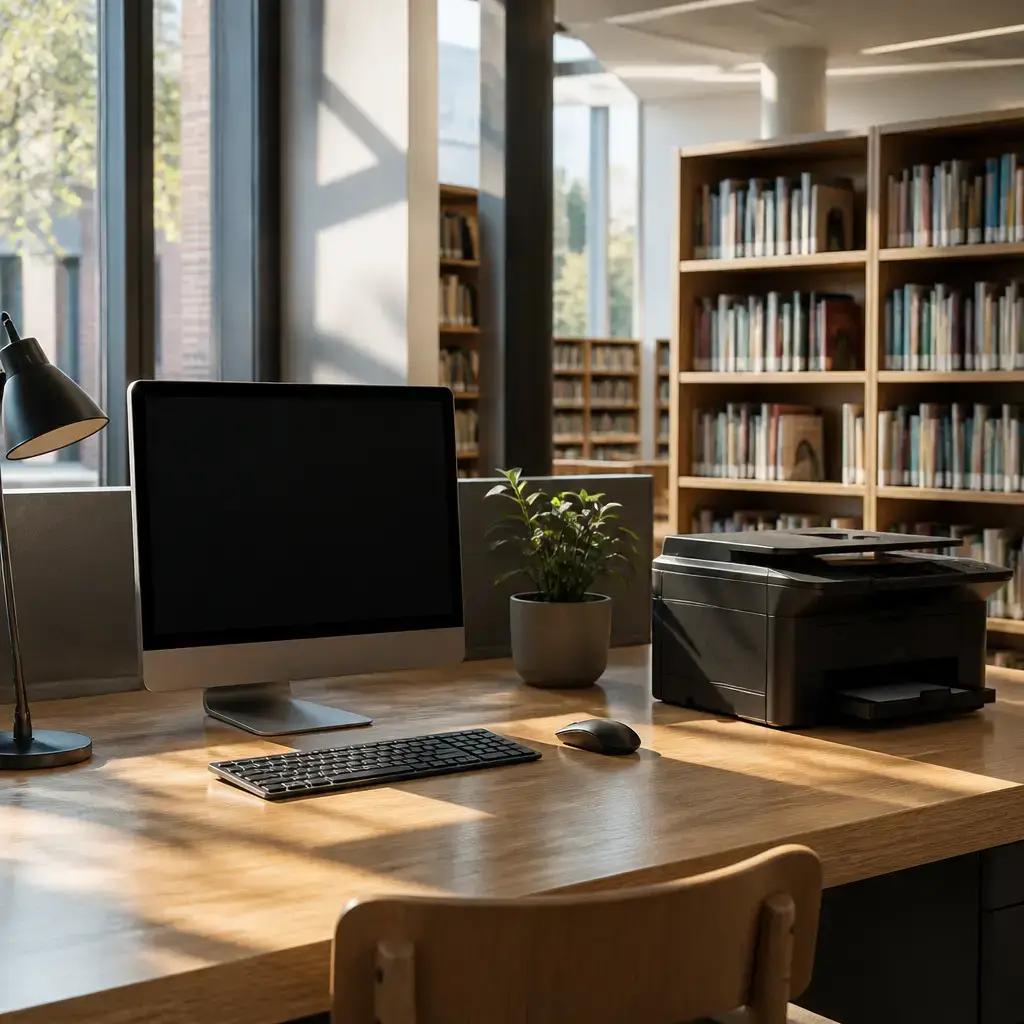
“Må” asks for permission here: “may” or “can” I use it. In “Må jeg bruge denne computer?” it comes before the person and the action to form a polite request. Use “Må jeg ...?” when asking whether you are allowed to do something.
jeg
“jeg” means “I,” the person asking to use the computer. It follows “Må” in “Må jeg bruge denne computer?” Use “jeg” for yourself as the subject of an action.
bruge
“bruge” means “use” in the request “Må jeg bruge denne computer?” It names the action and is followed here by the object “denne computer.” Use “bruge” with an object when saying that you use something.
denne
“denne” means “this” and points to the computer near or selected by the speaker in “denne computer.” It comes directly before the noun it identifies. Use “denne” before a noun when pointing out a particular item.
computer
“computer” means “computer” in both “denne computer” and “Den computer.” In “denne computer,” it is the thing the speaker wants to use. Use “computer” after a word such as “denne” when referring to a specific computer.
Den
“Den” refers back to the computer just mentioned: “that computer” or “the one mentioned.” In “Den computer er ledig,” it begins the reply about that particular computer. Use “Den” to refer to a previously identified item.
er
“er” means “is” in “Den computer er ledig” and “Skærmen er meget lys.” It links the subject with information about its state or quality. Use “er” to say what something is like or what condition it is in.
ledig
“ledig” means “free” or “available” here, so the computer can be used. It follows “er” in “Den computer er ledig.” Use “ledig” for a place, item, or resource that is available.
Skærmen
“Skærmen” means “the screen” in “Skærmen er meget lys.” The form refers to a particular screen, and it is the definite form of “skærm.” Use “Skærmen” when talking about a known screen, such as the one on the computer.
meget
“meget” means “very” in “meget lys” and strengthens the description of the screen’s brightness. It comes before “lys” in this sentence. Use “meget” before a description when you want to express a high degree.
lys
“lys” means “bright” here, describing the screen in “Skærmen er meget lys.” It follows “meget” to show that the screen is very bright. Use “lys” after “er” to describe something that gives or reflects a lot of light.
Du
“Du” means “you,” the person receiving the instruction about the computer settings. It starts “Du kan skrue ned for lysstyrken her.” Use “Du” when addressing one person directly.
kan
“kan” means “can” here and says that the listener is able or allowed to lower the brightness. It is followed by the action phrase “skrue ned for lysstyrken.” Use “kan” before an action to express ability or possibility.
skrue ned for
“skrue ned for” means “lower” or “turn down” in “skrue ned for lysstyrken.” The whole expression describes reducing a setting; “skrue,” “ned,” and “for” work together here, and the object is “lysstyrken.” Use “skrue ned for” with something adjustable, such as the brightness or volume.
lysstyrken
“lysstyrken” means “the brightness” of the screen in “skrue ned for lysstyrken.” The form refers to a specific brightness setting and is the definite form of “lysstyrke.” Use “lysstyrken” when discussing the brightness of a known screen or light.
her
“her” means “here,” indicating the place where the brightness control can be changed. In “Du kan skrue ned for lysstyrken her,” it comes at the end of the instruction. Use “her” to point to the current place or the relevant control location.
også
“også” means “also” or “too” in “Må jeg også bruge printeren?” It adds the printer to the computer as another thing the speaker wants to use. Use “også” when adding a person, item, or action to something already mentioned.
printeren
“printeren” means “the printer” in “Må jeg også bruge printeren?” and “Du kan bruge printeren ved skrivebordet.” The form refers to a specific printer and is the definite form of “printer.” Use “printeren” when the listener knows which printer you mean.
ved
“ved” means “by” or “near” in “ved skrivebordet,” locating the printer next to or near the desk. It comes before the place being described. Use “ved” with a noun to say that something is located near it.
skrivebordet
“skrivebordet” means “the desk” in “ved skrivebordet.” The form refers to a particular desk and is the definite form of “skrivebord.” Use “skrivebordet” when identifying a known desk as a location.
vil
“vil” expresses the speaker’s intended action in “Jeg vil bruge hovedtelefoner.” Here it means “will” or “intend to.” Use “vil” before an action when stating what you plan or intend to do.
hovedtelefoner
“hovedtelefoner” means “headphones,” the device the speaker will use while playing audio. In “Jeg vil bruge hovedtelefoner,” it follows “bruge” as the object of the action. Use “hovedtelefoner” when talking about listening privately or avoiding disturbing other people.
hvis
“hvis” means “if” and introduces the condition “hvis jeg afspiller lyd.” It connects a possible action with the speaker’s plan to use headphones. Use “hvis” before a condition when saying what happens or applies in a particular situation.
afspiller
“afspiller” means “play” here, specifically playing audio in “hvis jeg afspiller lyd.” It is followed by the object “lyd.” Use “afspiller” with “lyd” when referring to playing sound from a device.
lyd
“lyd” means “sound” or “audio” in “afspiller lyd.” It is the thing being played, and no separate article is used before it in this dialogue form. Use “lyd” when referring generally to sound from a computer or another device.
Så
“Så” means “then” or “so” here and introduces the result of using headphones: “Så vil der være stille i rummet.” Use “Så” at the start of a sentence when drawing a consequence from what was just said.
der
“der” has an existential function in “der vil være stille i rummet”; it helps express that a quiet condition will exist in the room. It is part of the whole construction and does not mean a specific place here. Use “der vil være ...” to say that a condition or situation will be present.
være
“være” means “be” or “exist” in “der vil være stille i rummet.” It follows “vil” in this expression and describes the condition that is expected to exist. Use “vil være” when saying that something will be a certain way.
stille
“stille” means “quiet” in “være stille.” It describes the condition of the room after headphones are used for audio. Use “være stille” to say that a place or situation is quiet.
i
“i” means “in” and places the quiet condition inside the room in “stille i rummet.” It comes before the place noun. Use “i” with a place when saying that something is inside it or occurs there.
rummet
“rummet” means “the room” in “stille i rummet.” The form refers to a particular room and is the definite form of “rum.” Use “rummet” when talking about a known room as the location of an action or condition.