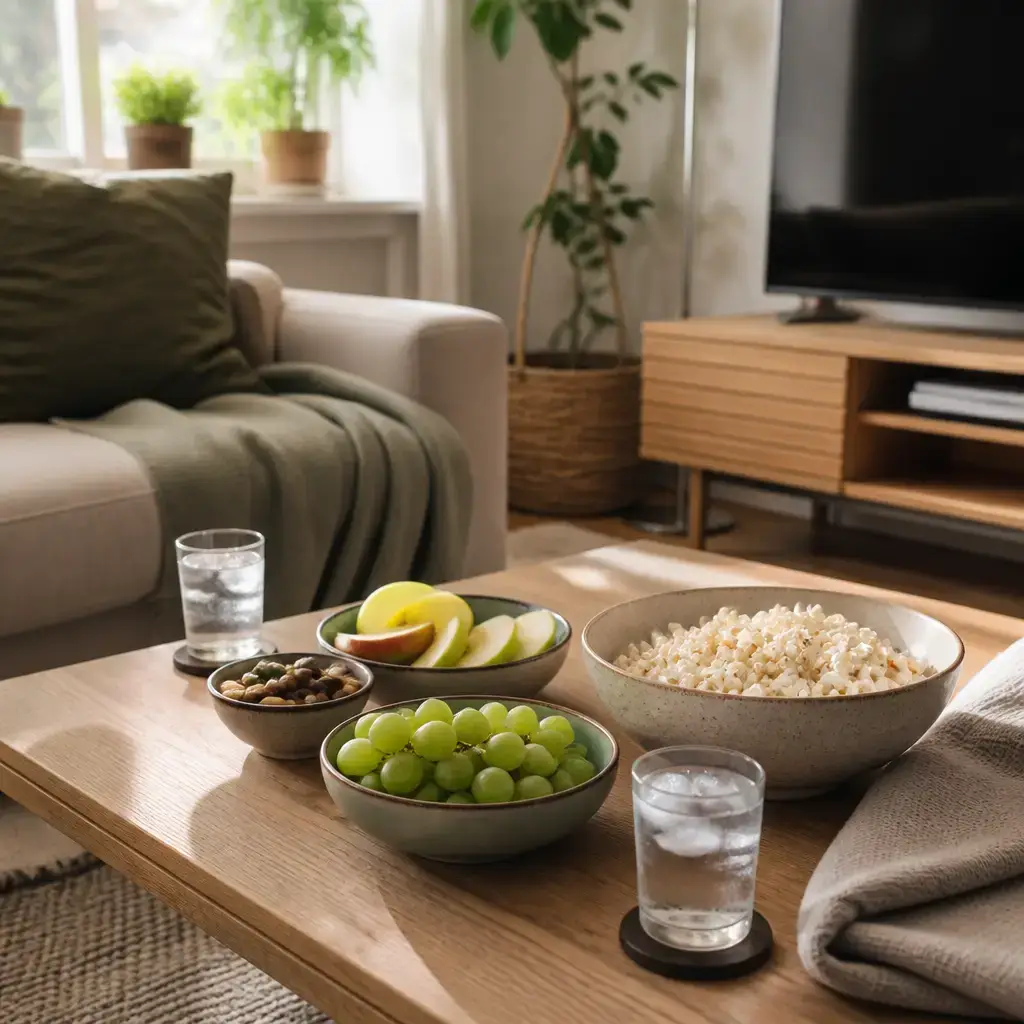
About This Lesson
Use Planning a Movie at Home to practice Danish conversation, pronunciation, vocabulary, grammar, and quizzes.
Dialogue
A
Hvad med en film derhjemme?
VATH meh en FEELM dair-YEM-uh? How about a movie at home?
B
Det lyder rart og nemt.
Deh LOO-uh RAHD oh NEMT. That sounds nice and easy.
A
Lad os vælge en kort film.
LATH ohs VEL-yuh en KOHRD FEELM. Let's choose a short movie.
B
Så kan vi blive færdige, før det bliver sent.
Soh kan vee BLEE-vuh FAIR-dee-uh, fehr deh BLEE-vuh SEND. Then we can finish before it gets late.
A
Jeg kan tage lidt frugt med.
YAI kan TAY-uh let FROOGD meh. I can bring some fruit.
B
Det ville være rart med en let snack.
Deh VIL-uh VAIR-uh RAHD meh en LET SNEG. A light snack would be nice.
A
Skal jeg også tage te med?
Skal YAI OH-suh TAY-uh TAY meh? Should I bring tea too?
B
Det ville også være rart med te.
Deh VIL-uh OH-suh VAIR-uh RAHD meh TAY. Tea would be nice too.Word by Word
Hvad
In “Hvad med en film derhjemme?”, “Hvad” asks what someone thinks about a suggestion. A useful pattern is “Hvad med” followed by a noun or activity, when suggesting an option.
med
In “Hvad med en film derhjemme?”, “med” is part of a suggestion meaning about or what about. In “med te”, it has the meaning with; the reusable pattern is “Hvad med” for proposing something.
en
In “en film”, “en” means a and comes before the noun “film”. Reuse “en” before a noun in the same kind of noun phrase.
film
“Film” means movie in “en film derhjemme”. It is the thing the speakers suggest watching, and it can be used after an article such as “en”.
derhjemme
“Derhjemme” means at home in “en film derhjemme”. It gives the location of the movie activity and can be used to specify that something happens at home.
Det
At the start of “Det lyder rart og nemt.”, “Det” refers to the suggested plan or situation. It is also used in “Det ville være rart med te” to refer to what is being evaluated.
lyder
In “Det lyder rart og nemt.”, “lyder” means sounds, as in an opinion about a suggestion. It is a form of “lyde”; the reusable pattern is “Det lyder” followed by a description.
rart
“Rart” means nice or pleasant in “lyder rart” and “være rart”. It describes how the plan, snack, or tea would feel, and it can be used after “lyder” or “være” in similar evaluations.
og
“Og” connects the two descriptions in “rart og nemt”. It is used to join words or descriptions that apply together.
nemt
“Nemt” means easy in “rart og nemt”, describing the suggested plan as easy. It can be combined with another description using “og”.
Lad
In “Lad os vælge en kort film.”, “Lad” introduces a suggestion to do something together. The reusable pattern is “Lad os” followed by an action.
os
In “Lad os vælge en kort film.”, “os” refers to the speaker and the other person together. With “Lad”, it forms the suggestion “let us”; reuse “Lad os” before an action.
vælge
“Vælge” means choose in “Lad os vælge en kort film.”. It follows “Lad os” and takes the thing being chosen after it, here “en kort film”.
kort
“Kort” means short in “en kort film”, describing the movie’s length. It comes before the noun it describes in this phrase.
Så
At the beginning of “Så kan vi blive færdige”, “Så” means then and connects the choice of a short movie with the next result. A useful pattern is “Så kan vi” followed by an action or result.
kan
“Kan” means can in “Så kan vi blive færdige” and “Jeg kan tage lidt frugt med”. It is a form of “kunne” and is followed by an infinitive such as “blive” or “tage”.
vi
“Vi” means we and refers to both friends in “kan vi blive færdige”. It is used as the subject before a verb, as in “vi kan”.
blive
In “blive færdige”, “blive” means become or get, expressing reaching a finished state. It follows “kan” here, and “blive” can be followed by a description of the resulting state.
færdige
“Færdige” means finished in “blive færdige”, describing the two friends as having completed the movie. The expression “blive færdige” is useful when talking about completing an activity.
før
“Før” means before and introduces the time condition in “før det bliver sent”. It is reusable before a clause that tells when something must happen.
bliver
In “det bliver sent”, “bliver” means gets or becomes, describing time becoming late. It is a form of “blive”; a useful pattern is “det bliver” followed by a description.
sent
“Sent” means late in “det bliver sent”. It describes the time that the friends want to avoid reaching before finishing the movie.
Jeg
“Jeg” means I and is the subject in “Jeg kan tage lidt frugt med”. It is used before the verb when the speaker describes their own action or offer.
tage
In “tage lidt frugt med” and “tage te med”, “tage ... med” means bring something along. “Tage” is used with the item being brought and “med” shows that it is taken along.
lidt
“Lidt” means some or a little in “lidt frugt”, indicating a small or unspecified amount. Reuse “lidt” before a substance or amount such as “frugt”.
frugt
“Frugt” means fruit in “tage lidt frugt med”. It is the food the speaker offers to bring and can follow “lidt” when referring to some fruit.
ville
In “Det ville være rart med en let snack”, “ville” gives the evaluation the meaning would. It works with “være” in the reusable pattern “ville være” followed by a description.
være
“Være” means be in “ville være rart”. It follows “ville” and links the suggested snack or tea with the description “rart”.
let
“Let” means light in “en let snack”, describing the snack as not heavy. It comes before the noun it describes.
snack
“Snack” means snack in “en let snack”. It names the light food being considered, and it follows the article and description in this noun phrase.
Skal
In “Skal jeg også tage te med?”, “Skal” asks whether the speaker should bring tea. It is a form of “skulle”; the reusable pattern is “Skal jeg” followed by an action.
også
“Også” means also or too and adds tea as another possible item in “også tage te med”. In “ville også være”, it likewise adds tea to the things being considered.
te
“Te” means tea in “tage te med” and “med te”. It is the drink the speaker offers to bring and can be used as the object after “tage”.
Grammar Points
Hvad med + noun?
Hvad med film?
VATH meh FEELM?How about a movie?
Use Hvad med to suggest an option or ask for someone’s opinion about it.
lidt + noun
lidt frugt
let FROOGDa little fruit
Use lidt before an uncountable noun to express a small amount.
Danish Vocabulary
blive færdige
phrase
BLEE-vuh FAIR-dee-uh
finish
derhjemme
adv
dair-YEM-uh
at home
film
noun
FEELM
movie
før
conj
fehr
before
Hvad med
phrase
VATH meh
How about
kort
adj
KOHRD
short
lyder
verb
LOO-uh
sounds
nemt
adj
NEMT
easy
rart
adj
RAHD
nice
sent
adj
SEND
late
så
adv
Soh
then
vælge
verb
VEL-yuh
choose
Quiz
Word Order
Arrange the words in the correct order.
How about a movie at home?
Show Answer
Hvad med en film derhjemme?That sounds nice and easy.
Show Answer
Det lyder rart og nemt.Let's choose a short movie.
Show Answer
Lad os vælge en kort film.Spelling
Tap the letters to spell the word.
choose
Show Answer
vælgeeasy
Show Answer
nemtsounds
Show Answer
lydernice