Har
In “Har du lyst til at mødes på en café?”, Har is part of the expression “Har du lyst til” meaning “would you like to”. It introduces a question about someone’s desire to do something.
du
In “Har du lyst til at mødes på en café?”, du means “you”, the person being asked about meeting. It is used as the subject before the rest of the question.
lyst
In “Har du lyst til at mødes på en café?”, lyst means desire or inclination. The pattern “have lyst til at” is used to ask or say that someone feels like doing something.
til
Here til is part of “Har du lyst til at mødes”, connecting the desire with the action that follows. In this pattern, it comes before at and the action.
at
Here at marks the action mødes in the pattern “lyst til at mødes”. It introduces the verb phrase that says what someone would like to do.
mødes
In “Har du lyst til at mødes på en café?”, mødes means to meet each other. The form is used after at and refers to the two people meeting.
på
In “på en café”, på means “at” and identifies the place where the meeting happens. It is used here before a place such as en café.
en
In “på en café”, en means “a” and introduces one unspecified café. It comes directly before the noun café.
café
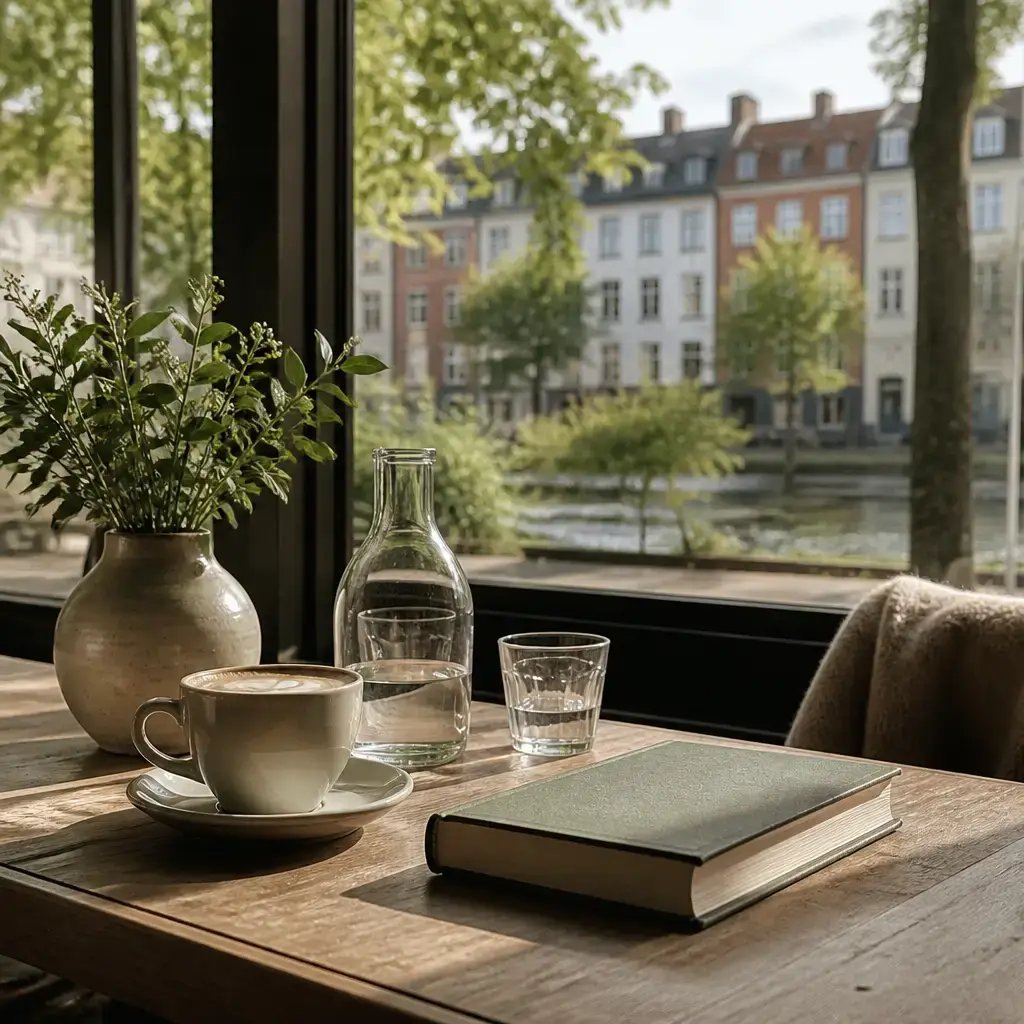
Café means “café” in “en café”. It names the place where the speakers would like to meet.
Det
In “Det lyder afslappende”, Det refers to the suggested meeting and means “that” or “it”. It is used at the start of the reply about how the suggestion sounds.
lyder
In “Det lyder afslappende”, lyder means “sounds”. It is used with Det to give an impression or evaluation of a suggestion.
afslappende
In “Det lyder afslappende”, afslappende describes the suggested plan as relaxing. It follows lyder to say what impression the plan gives.
Hvilken
In “Hvilken café kan du lide?”, Hvilken means “which” and asks the listener to choose one café. It comes directly before café.
kan
In “Hvilken café kan du lide?”, kan is part of “kan lide”, the expression used for liking something. It comes before lide in this question.
lide
In “Hvilken café kan du lide?”, lide completes “kan lide”, meaning “like”. The object of this expression is the café being asked about.
Jeg
In “Jeg kan lide den stille café nær parken”, Jeg means “I”. It is the subject identifying who likes the café.
den
In “den stille café”, den is the definite article meaning “the”. It comes before the adjective stille and the noun café.
stille
In “den stille café”, stille means “quiet” and describes the café. It is placed before the noun it describes.
nær
In “nær parken”, nær means “near” and gives the café’s location. It is followed here by the place parken.
parken
In “nær parken”, parken means “the park”. It is the place used to locate the café; the related noun form is park.
Lad
In “Lad os mødes der”, Lad helps make a suggestion meaning “let’s meet there”. It is used at the beginning of the suggestion before os.
os
In “Lad os mødes der”, os means “us” and refers to the speakers together. It follows Lad in the suggestion pattern “Lad os ...”.
der
In “Lad os mødes der”, der means “there” and points to the café already being discussed. It tells where the speakers should meet.
og
In “mødes der og nyde roen”, og means “and”. It links the suggested actions mødes and nyde.
nyde
In “nyde roen”, nyde means “enjoy”. It is the second action in the suggestion “Lad os mødes der og nyde roen”.
roen
In “nyde roen”, roen means “the quiet” or “the calm”. It is the thing the speakers plan to enjoy; the related noun form is ro.
tage
In “tage en bog med”, tage means to take or bring something along. The object en bog comes after tage, with med completing the idea of bringing it along.
bog
In “en bog”, bog means “book”. It is the object of tage in “tage en bog med”.
med
In “tage en bog med”, med means “along” and completes the expression for bringing something with you. The object appears between tage and med in this dialogue.
Vi
In “Vi kan læse der et stykke tid”, Vi means “we”. It refers to both speakers as the people who can read there.
læse
In “Vi kan læse der et stykke tid”, læse means “read”. It follows kan and names the activity the speakers can do.
et
In “et stykke tid”, et is the indefinite article “a”. It introduces stykke as part of the time expression meaning “for a while”.
stykke
In “et stykke tid”, stykke literally means “piece”, but together with et and tid it forms the expression “for a while”. Keep it with tid when reusing this time expression.
tid
In “et stykke tid”, tid means “time”. Together with et stykke, it expresses a period lasting for a while.
ville
In “Det ville være en god pause”, ville gives the idea of “would”. It presents the break as a possible or imagined result of the plan.
være
In “Det ville være en god pause”, være means “be”. It follows ville in the pattern “ville være” meaning “would be”.
god
In “en god pause”, god means “good” or “nice” and describes the pause positively. It comes before the noun pause.
pause
In “en god pause”, pause means “break”. It names the relaxing period the speakers think their café plan would provide.