Hvad
Hvad means “what” in the question Hvad skal vi købe i dag? It asks which thing or things the speakers should buy. A reusable pattern is Hvad skal vi ...? for asking what someone should do.
skal
Skal expresses “should” or “need to” in Hvad skal vi købe i dag? and Vi skal bruge ting til morgenmaden i morgen. Here it is followed by an infinitive such as købe or bruge. Use skal when discussing a plan, necessity, or what someone is expected to do.
vi
Vi means “we” and refers to the two people making the shopping plan. It appears before skal in vi skal bruge and skal vi købe. Use vi when the speaker includes themself and at least one other person.
købe
Købe means “to buy” in Hvad skal vi købe i dag? and Så lad os købe yoghurt og syltetøj. It follows skal or lad os in these sentences. A reusable pattern is købe noget, meaning “buy something.”
i
I contributes the meaning “on” in the time expression i dag, “today.” It is also used in the dialogue in i morgen, “tomorrow.” Use i dag and i morgen as complete time expressions.
dag
Dag means “day” in the expression i dag, which means “today.” The word refers to the current day because it is used with i in this fixed time expression. A common pattern is i dag when saying when something happens.
bruge
The Danish word bruge means “need” in skal bruge ting til morgenmaden i morgen. In this dialogue, the construction skal bruge expresses needing something for a purpose. A reusable pattern is bruge noget til noget, meaning “need something for something.”
ting
Ting means “things” in ting til morgenmaden i morgen, referring generally to the items needed for breakfast. It is followed by til to show the purpose of the things. Use ting when referring to unspecified objects or items.
til
Til means “for” in ting til morgenmaden, showing that the things are intended for breakfast. It can connect an item with its purpose or intended use. A reusable pattern is noget til morgenmad, “something for breakfast.”
morgenmaden
Morgenmaden means “the breakfast” in ting til morgenmaden i morgen. The form refers to a specific breakfast being planned for tomorrow; the related citation form is morgenmad. Use morgenmaden when referring to the particular breakfast in the conversation.
morgen
Morgen means “tomorrow” in the expression i morgen. Together, i morgen identifies when the breakfast will take place. A common reusable pattern is i morgen for talking about the following day.
Så
Så means “then” in Så skal vi have brød og smør and Så lad os købe yoghurt og syltetøj. It links the next decision to what was just said. Use så to introduce a consequence, response, or next step.
have
Have means “have” in skal vi have brød og smør and Skal vi også have yoghurt? In these shopping questions and plans, have refers to obtaining or having an item available. A reusable pattern is have noget, “have something.”
brød
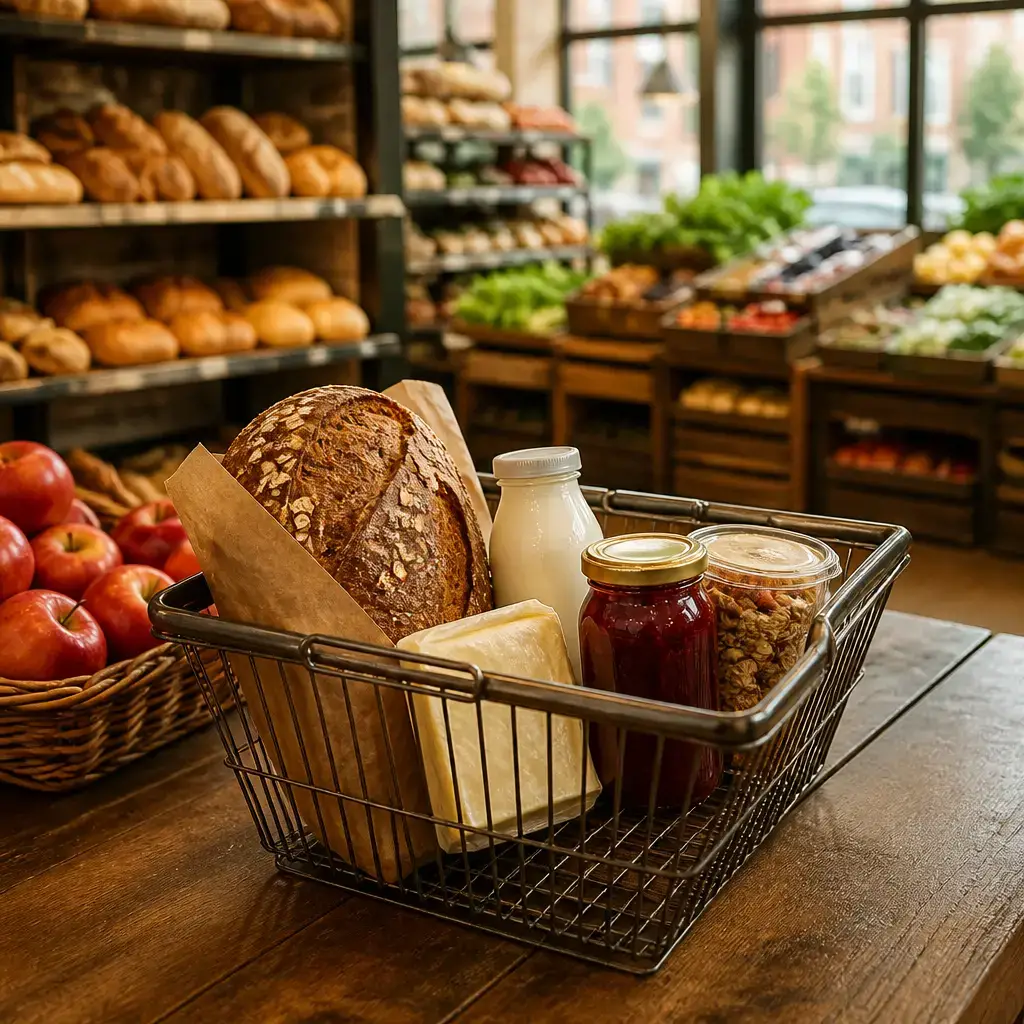
Brød means “bread” and names one of the breakfast items to buy. It appears in brød og smør after skal vi have. Use brød when asking for or talking about bread.
og
Og means “and” and joins items in brød og smør and yoghurt og syltetøj. It connects two elements of equal importance in the list. Use og to add another item or idea.
smør
Smør means “butter” and names the second item in brød og smør. It is joined to brød with og in the shopping list. Use smør when talking about buying or serving butter.
også
Også means “also” or “too” in Skal vi også have yoghurt? It adds yogurt to the items already being considered. Use også when including an additional person, item, or action.
yoghurt
Yoghurt means “yogurt” and is the item being considered in Skal vi også have yoghurt? and Så lad os købe yoghurt og syltetøj. It can follow have when asking whether to get it and købe when deciding to buy it. Use yoghurt when discussing this food item.
Jeg
Jeg means “I” and identifies the speaker in Jeg vil spise den med jordbærsyltetøj. It comes before vil to introduce the speaker’s wish. Use jeg when speaking about yourself.
vil
Vil means “want to” in Jeg vil spise den med jordbærsyltetøj. It is followed by the infinitive spise and expresses the speaker’s intention or wish. A reusable pattern is Jeg vil + infinitive, meaning “I want to ...”
spise
Spise means “eat” in Jeg vil spise den med jordbærsyltetøj. It follows vil as the action the speaker wants to perform. A reusable pattern is spise noget med noget, “eat something with something.”
den
Den means “it” or “that one” in Jeg vil spise den med jordbærsyltetøj. It is the item being eaten, without needing to repeat its name. Use den to refer to a specific item in this kind of object position.
med
Med means “with” in spise den med jordbærsyltetøj. It shows what the food is eaten together with. A reusable pattern is spise noget med noget, “eat something with something.”
jordbærsyltetøj
Jordbærsyltetøj means “strawberry jam” and identifies what the speaker wants to eat with the item. It is used after med in med jordbærsyltetøj. Use it when specifying strawberry jam as an accompaniment.
lad
Lad contributes to the suggestion “let’s” in lad os købe yoghurt og syltetøj. The full expression lad os + infinitive proposes that the speakers do something together. Use lad os when making a joint suggestion.
os
Os means “us” in lad os købe yoghurt og syltetøj. Together with lad, it forms the suggestion “let’s buy,” including the speaker and the other person. The reusable pattern is lad os + infinitive.
syltetøj
Syltetøj means “jam” in Så lad os købe yoghurt og syltetøj. It names the jam to add to the shopping list, while jordbærsyltetøj specifies strawberry jam earlier in the dialogue. Use syltetøj when referring to jam generally.