Disse
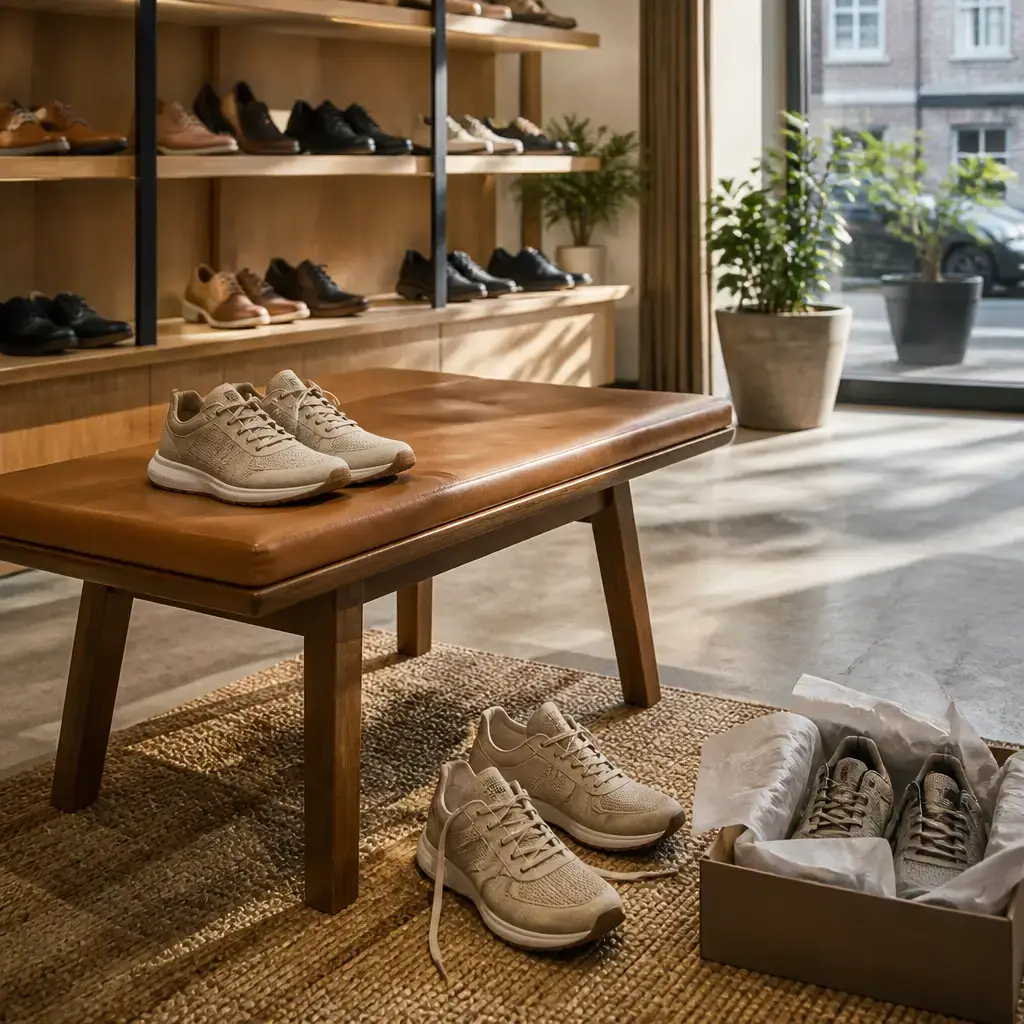
“Disse” means “these” and points to the shoes being discussed. It is used before the plural noun “sko”, as in the dialogue phrase “Disse sko”. Use “disse” when indicating nearby or currently discussed items.
sko
“Sko” means “shoes” in this dialogue. It is the item referred to by “Disse” and “dem”. A useful expression from the dialogue is “Disse sko” for “these shoes”.
ser
“Ser” means “look” or “appear” in “ser behagelige ud”. Together with “ud”, it describes how the shoes appear rather than what someone directly sees. The reusable pattern is “ser + adjective + ud”, as in “ser behagelige ud”.
behagelige
“Behagelige” means “comfortable” here and describes the shoes. It appears in the construction “ser behagelige ud”, meaning that the shoes look comfortable. Use this form after “ser” when describing a comfortable appearance in this construction.
ud
“Ud” completes the meaning of “ser” in “ser behagelige ud”, giving the sense “look” or “appear”. It belongs to the whole expression rather than meaning “out” on its own here. The pattern “ser ... ud” is useful for describing how something appears.
De
“De” means “they” and refers back to the shoes. In “De er lavet til lange gåture”, it introduces information about those shoes. A useful reuse pattern is “De er ...” when continuing to describe items already mentioned.
er
“Er” means “are” in “De er lavet til lange gåture”. It is the present form of “være” and links the shoes to their description. The pattern “De er + description” can be reused for things already being discussed.
lavet
“Lavet” means “made” in “er lavet til lange gåture”. With “er”, it describes what the shoes are designed or intended for. The useful pattern is “er lavet til + purpose”, as in the dialogue.
til
“Til” means “for” here and introduces the purpose of the shoes. In “er lavet til lange gåture”, it connects the shoes with the activity they are intended for. Use “til” before a purpose or intended use.
lange
“Lange” means “long” and describes “gåture” in “lange gåture”. It helps specify that the walks have a long duration. The phrase “lange gåture” is a useful way to talk about long walks.
gåture
“Gåture” means “walks” in “lange gåture”. It names the activity that the shoes are made for. The expression “til lange gåture” can be reused when describing something intended for long walks.
Må
“Må” means “may” or “can” when asking for permission in “Må jeg prøve dem her?”. It is placed before “jeg” and the action verb. Use the pattern “Må jeg + verb?” to ask politely whether you are allowed to do something.
jeg
“Jeg” means “I” and identifies the person asking permission in “Må jeg prøve dem her?”. It comes after “Må” in this question. The pattern “Må jeg ...?” is used when asking whether you may do something.
prøve
“Prøve” means “try” in “Må jeg prøve dem her?”. With “dem”, it means trying the shoes on in this shop context. Use “Må jeg prøve dem?” when asking to try an item.
dem
“Dem” means “them” and refers to the shoes the customer wants to try. It appears after “prøve” in “prøve dem”. This object form is useful when referring to items already mentioned.
her
“Her” means “here” and asks whether the shoes may be tried on at this location. In “Må jeg prøve dem her?”, it comes at the end of the question. Use “her” to refer to the place where the conversation or action is taking place.
Brug
“Brug” means “use” and gives a direct instruction in “Brug denne bænk”. It is the command used by the shop assistant. The pattern “Brug + object” is useful when telling someone to use a particular thing.
denne
“Denne” means “this” and points to the bench near the speaker. It appears before “bænk” in “denne bænk”. Use “denne” when identifying a specific nearby item.
bænk
“Bænk” means “bench” and names the seat the customer should use while putting on the shoes. It appears in the phrase “Brug denne bænk”. This phrase can be reused when directing someone to use a particular bench.
mens
“Mens” means “while” and introduces an action happening at the same time as another action. In “mens du tager dem på”, it links sitting or using the bench with putting on the shoes. Use “mens” before a clause describing a simultaneous action.
du
“Du” means “you” and refers to the customer in “mens du tager dem på”. It identifies the person carrying out the action. The pattern “mens du ...” is useful for describing what someone does at the same time as something else.
tager
“Tager” contributes the verb in “tager dem på”, which means “put them on” in this context. It is the present form of “tage”, but its exact meaning here comes from the full construction with “dem” and “på”. Use the same construction when describing putting on an item.
på
“På” means “on” in the construction “tager dem på”. Together with the verb and the object, it expresses putting the shoes on. Keep the item being put on between “tager” and “på”, as in the dialogue.
føles
“Føles” means “feel” when describing the customer’s experience of the shoes in “De føles lidt små”. It tells how the shoes feel when worn. The reusable pattern is “føles + adjective”, as in “føles lidt små”.
lidt
“Lidt” means “a little” and softens the description in “lidt små”. It shows that the shoes feel small to some degree, rather than strongly or completely. Use “lidt” before an adjective when expressing a small degree.
små
“Små” means “small” and describes how the shoes feel to the customer. It appears in “føles lidt små”. The phrase “føles lidt små” is useful when an item seems slightly too small.
Prøv
“Prøv” means “try” and is a direct suggestion or instruction in “Prøv dette større par”. It tells the customer to try another pair. Use “Prøv + object” when suggesting that someone try something.
dette
“Dette” means “this” and points to the particular pair being offered. It appears in “dette større par”. Use “dette” to identify a specific item for someone to consider or use.
større
“Større” means “larger” and indicates that this pair has a bigger size than the first pair. It describes “par” in “dette større par”. The pattern “større + noun” is useful when comparing an item with an earlier one.
par
“Par” means “pair” in “dette større par”. It refers to the two shoes considered together as one item for the customer. A new example is “et par sko”, meaning “a pair of shoes”.
bedre
“Bedre” means “better” and compares the feeling of this pair with the first pair. In “Dette par føles bedre”, it says that the new pair feels more comfortable or suitable. Use “føles bedre” when comparing how two things feel.
Den
“Den” means “that” in “Den størrelse passer dig”. It points to the particular size the customer is wearing. Use “den” before a noun when identifying a specific item or choice.
størrelse
“Størrelse” means “size” and identifies the size being evaluated in “Den størrelse passer dig”. It is the thing that fits the customer. The complete dialogue pattern is “Den størrelse passer dig”, meaning “That size fits you”.
passer
“Passer” means “fits” in “passer dig”. It expresses that the selected size is suitable for the customer. With a person after it, this verb can describe whether clothing or shoes fit that person.
dig
“Dig” means “you” and refers to the customer in “passer dig”. It identifies the person for whom the size is suitable. The expression “passer dig” is useful for saying that something fits you.