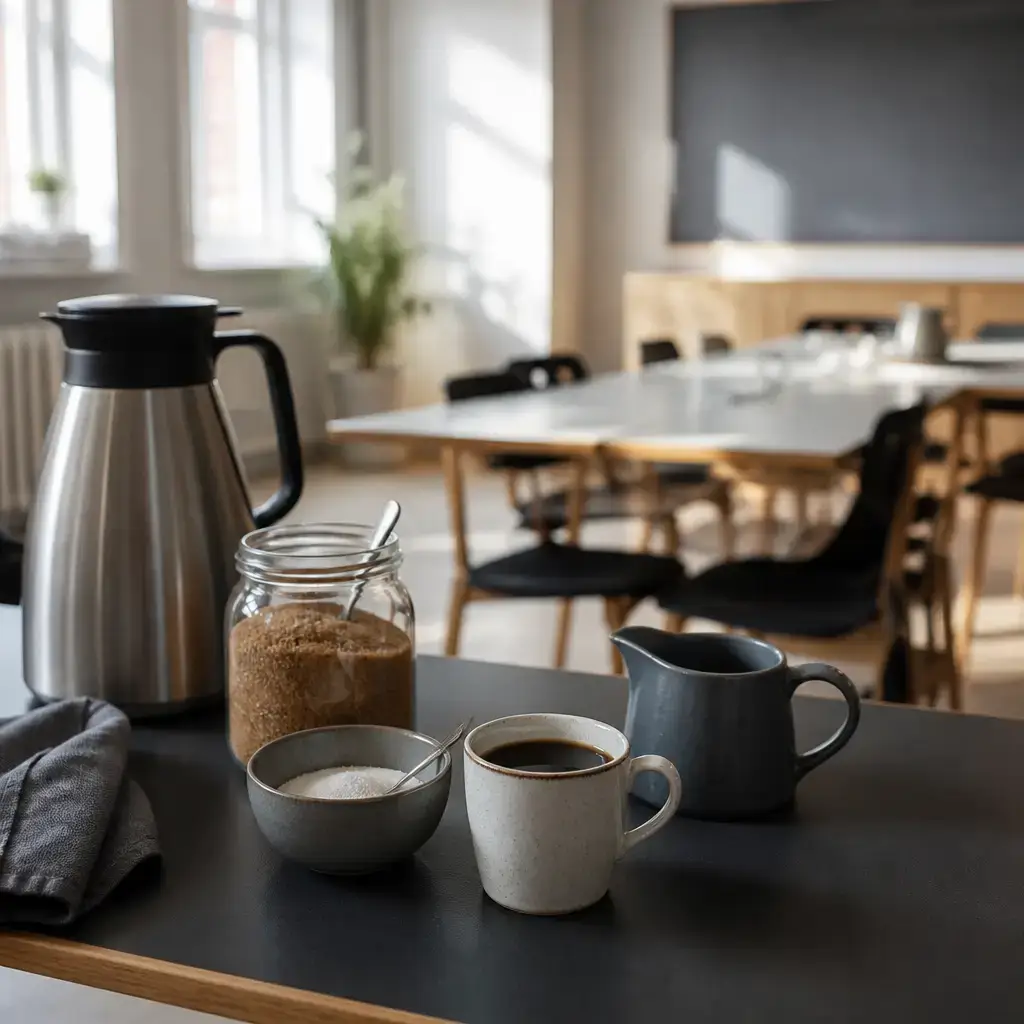
About This Lesson
Use Coffee during a break to practice Danish conversation, pronunciation, vocabulary, grammar, and quizzes.
Dialogue
A
Vil du have kaffe?
vel doo HEH-wuh KAH-fuh? Do you want coffee?
B
Ja tak. Bare en lille kop.
YAH TAHG. BAH-uh un LEH-luh KOHB. Yes, please. Just a small cup.
A
Værsgo.
VAIR-sgoh. Here you are.
B
Det dufter godt.
deh DOOF-tuh GOHT. It smells nice.
A
Har du brug for sukker?
HAH doo BROO foh SAW-guh? Do you need sugar?
B
Nej, bare mælk, tak.
NIGH, BAH-uh MELK, TAHG. No, just milk, please.
A
Undskyld, der er ingen mælk.
AWN-SGOOL, dair AIR ENG-un MELK. Sorry, there is no milk.
B
Det er okay.
deh AIR oh-KAY. That is okay.Word by Word
Vil
In “Vil du have kaffe?” this means “want” and starts a question about whether someone wants something. It comes before the person being addressed in this question pattern. Use it when offering something or asking about someone’s wishes.
du
In “Vil du have kaffe?” this means “you,” the person being addressed. It follows “Vil” in this question. Use it when speaking directly to one person.
have
In “Vil du have kaffe?” this means “have” or “get” as part of asking whether someone wants coffee. It comes after the subject in this question. Use it before the thing that someone may want to receive or have.
kaffe
Here “kaffe” means “coffee,” the drink being offered. It is the thing that follows “have” in the question. Use it when talking about having, offering, or asking for coffee.
Ja
Here “Ja” means “yes” and confirms that the speaker wants coffee. It begins the polite reply “Ja tak.” Use it to give a positive answer.
tak
Here “tak” is a polite “please” in “Ja tak” and a polite “thanks” after the request for milk. It makes a reply or request courteous. Use it with a positive reply or after asking for something.
Bare
Here “Bare” means “just” or “only,” limiting the request to a small cup or milk. It comes before the requested item or quantity. Use it to make a request narrower or simpler.
en
In “en lille kop,” “en” means “a” or “one” and introduces the cup being requested. It comes before the adjective and noun. Use it before one non-specific item.
lille
Here “lille” means “small” and describes the requested cup. It comes between “en” and “kop.” Use it before a noun when specifying that the item is small.
kop
Here “kop” means “cup,” the container requested by the speaker. It is the noun at the end of “en lille kop.” Use it when ordering or offering a cup of a drink.
Værsgo
“Værsgo” is a fixed expression meaning “here you are” when handing something to another person. It signals that the offered item is being given to the listener. Use it while offering or handing over an item.
Det
In “Det dufter godt” and “Det er okay,” “Det” means “it” or “that” and refers to the coffee or the situation. It comes at the beginning of both statements. Use it to refer to something already understood from the context.
dufter
Here “dufter” means “smells” and describes the smell of the coffee. It is followed by “godt” in “Det dufter godt.” Use it to describe how something smells.
godt
Here “godt” means “nicely” or “well” and gives a positive evaluation of the smell. Together with “dufter,” it says that the coffee smells nice. Use it after “dufter” when describing a pleasant smell.
Har
In “Har du brug for sukker?” this means “have” as part of asking whether someone needs something. It begins the question and comes before “du.” Use this question structure when asking whether someone needs an item.
brug
In “Har du brug for sukker?” “brug” contributes the meaning of “need” within the expression for needing something. It is followed by “for” and the item needed. Use it in the pattern for asking whether someone needs something.
for
Here “for” is part of the expression “brug for,” which identifies the thing someone needs. It comes directly after “brug.” Use it before the needed item in this construction.
sukker
Here “sukker” means “sugar,” the item being offered. It follows the expression asking whether the listener needs something. Use it when talking about adding or offering sugar.
Nej
Here “Nej” means “no” and rejects the offer of sugar. It begins the reply before the speaker asks for milk instead. Use it to give a negative answer.
mælk
Here “mælk” means “milk,” first as the item requested and then as the item that is unavailable. It appears after “bare” in the request and after “ingen” in the explanation. Use it when talking about milk as a drink or addition to coffee.
Undskyld
Here “Undskyld” means “sorry” and introduces an apology for not having milk. It comes at the beginning of the sentence before the explanation. Use it to apologize or politely draw attention to a problem.
der
In “der er ingen mælk,” “der” is part of the expression meaning that something exists or is available, rather than pointing to a physical place. It comes before “er.” Use the same expression to say that something is or is not present.
er
Here “er” means “is” in “der er ingen mælk” and “Det er okay.” In the first expression it states what is available; in the second it describes the situation as acceptable. Use it in statements about existence or a state.
ingen
Here “ingen” means “no” or “none” and says that there is no milk available. It comes directly before “mælk.” Use it before a noun when saying that none of something is present.
okay
Here “okay” means “okay” or “all right” and accepts the fact that there is no milk. It follows “Det er” in the response. Use it to show that a situation is acceptable.
Grammar Points
har brug for + noun
Du har brug for kaffe.
Doo HAH BROO foh KAH-fuh.You need coffee.
The fixed expression har brug for means “need” and is followed directly by the thing needed.
dufter godt
Kaffe dufter godt.
KAH-fuh DOOF-tuh GOHT.Coffee smells nice.
After dufter, godt describes how something smells and functions adverbially, meaning “nicely” or “pleasantly”.
Danish Vocabulary
bare
adv
BEH-uh
just
du
pron
DOO
you
dufter
verb
DOOF-tuh
smells
godt
adj
GOHT
nice
har brug for
phrase
HAH BROO foh
need
have
verb
HEH-wuh
have
ja tak
phrase
YAH TAHG
yes, please
kaffe
noun
KAH-fuh
coffee
- Gender
- common
kop
noun
KOHB
cup
- Gender
- common
lille
adj
LEH-luh
small
sukker
noun
SAW-guh
sugar
- Gender
- neuter
værsgo
intj
VAIR-sgoh
here you are
Quiz
Word Order
Arrange the words in the correct order.
Do you want coffee?
Show Answer
Vil du have kaffe?Yes, please. Just a small cup.
Show Answer
Ja tak. Bare en lille kop.It smells nice.
Show Answer
Det dufter godt.Spelling
Tap the letters to spell the word.
coffee
Show Answer
kaffesmall
Show Answer
lillesmells
Show Answer
dufterjust