Denne
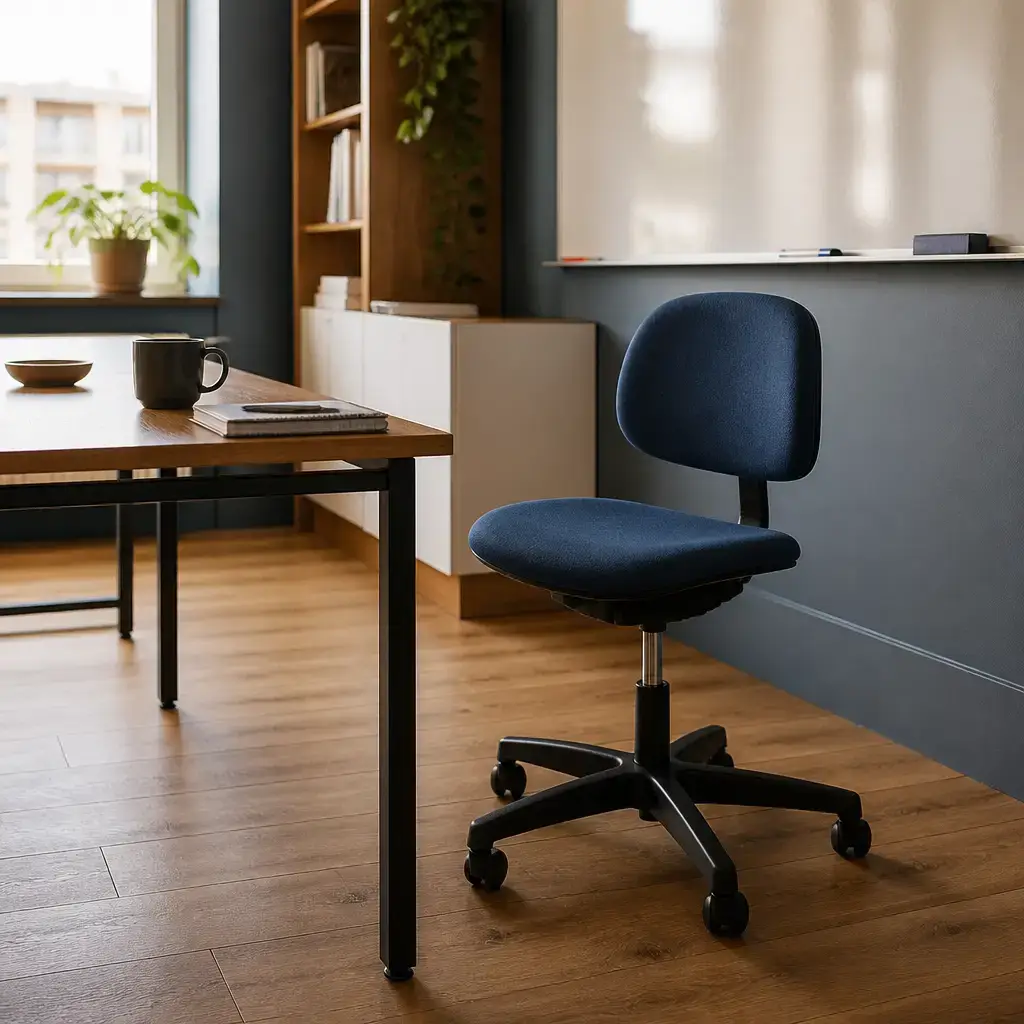
Denne means “this” in Denne stol and points to the particular chair being discussed. It is useful when identifying one specific nearby or known thing.
stol
Stol means “chair” in Denne stol. It names the piece of furniture whose height is being discussed. You can reuse it when talking about a chair as the subject or object of a sentence.
er
Er means “is” in Denne stol er for lav and connects the chair with its description. It is used in statements such as Denne stol er for lav and Det er bedre.
for
For means “too” in for lav, showing that the chair’s low height is a problem. The full expression for lav means “too low.” It can be reused before a description when something exceeds an acceptable limit.
lav
Lav means “low” in Denne stol er for lav and describes the chair’s height. Together, for lav means that the height is lower than desired. It can be reused to describe the position or height of something.
Du
Du means “you” in Du kan ændre højden and addresses the other person directly. It is used when giving information or instructions to one person.
kan
Kan means “can” in Du kan ændre højden and expresses that the person has the possibility or ability to change the height. It is followed here by ændre in kan ændre. A reusable pattern is kan + an action.
ændre
Ændre means “change” in kan ændre and refers to modifying the chair’s height. It appears after kan and is followed by the object højden in ændre højden. This pattern can be reused for changing a specific thing.
højden
Højden means “the height” in ændre højden and refers to the specific height of the chair. The related dictionary form is højde; højden is the form used here for that specific height. It can be reused after an action such as ændre.
Hvordan
Hvordan means “how” in Hvordan gør jeg det? and asks about the method for doing something. It is useful when asking how to complete an action or use something.
gør
Gør means “do” in Hvordan gør jeg det? and asks what action is needed. The related dictionary form is gøre. It is used here with det in the pattern gør jeg det.
jeg
Jeg means “I” in Hvordan gør jeg det? and identifies the person who will do the action. It is used as the speaker’s subject when asking about or describing their own action.
det
Det means “it” or “that” in Hvordan gør jeg det? and refers to the adjustment just mentioned. The capitalized form Det in Det er bedre refers to the result after the button is pressed; the capitalization changes because it begins a sentence.
Tryk
Tryk means “press” in Tryk på knappen under sædet and gives a direct instruction. It is useful when telling someone how to operate a button or control.
på
På means “on” in Tryk på knappen, and with Tryk it marks the button that should be pressed. The full pattern Tryk på + thing gives an instruction to press that thing.
knappen
Knappen means “the button” in Tryk på knappen under sædet and identifies the specific button to press. The related form is knap; knappen is the form used for the particular button here. It can be reused after Tryk på.
under
Under means “under” in knappen under sædet and describes the button’s location in relation to the seat. It can be reused to locate one object beneath another.
sædet
Sædet means “the seat” in under sædet and identifies the specific part beneath which the button is located. The related form is sæde; sædet is the form used for this particular seat. It can be reused after under when describing a location.
bedre
Bedre means “better” in Det er bedre and says that the situation has improved. It is used here after the chair’s height has been changed. It can be reused to evaluate a result after an adjustment.
Tak
Tak means “thank you” in Tak and expresses thanks. It can be used on its own after someone has helped, explained something, or followed an instruction.
Sig til
Sig til means “let me know” in Sig til, hvis den stadig ikke er i orden. Sig gives the instruction to tell or say something, while til completes the expression by directing that information to the other person. It is useful when asking someone to report a problem or change.
hvis
Hvis means “if” in Sig til, hvis den stadig ikke er i orden and introduces the condition for telling the speaker. It can be reused to connect an instruction with a possible situation.
den
Den means “it” or “the one” in hvis den stadig ikke er i orden and refers back to the chair. It avoids repeating stol when the object is already known. It can be reused when referring to the same known thing later in a conversation.
stadig
Stadig means “still” in den stadig ikke er i orden and shows that the problem may continue after the adjustment. It is useful when checking whether a condition remains unchanged.
ikke
Ikke means “not” in ikke er i orden and marks that the chair is not in an acceptable condition. It is used here with er i orden to make the expression negative.
i orden
I orden means “right,” “okay,” or “in order” in ikke er i orden. I contributes the idea of “in,” and orden contributes “order,” but together i orden describes something as acceptable or working properly. The reusable expression er i orden means that something is okay.