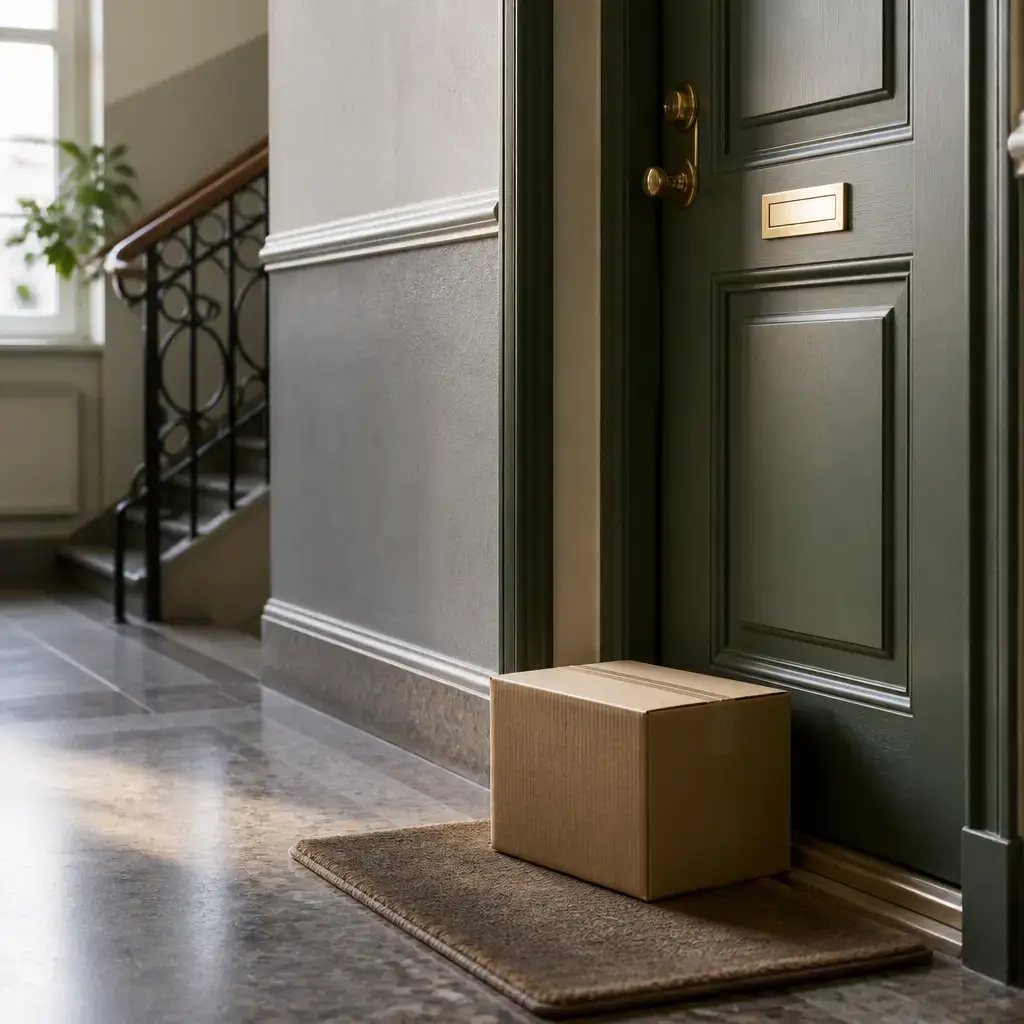
Ein
In “Ein Paket” this means “a” and introduces the package. In “ein paar Minuten” it is part of the fixed expression meaning “a few minutes”; this pattern is useful for small, indefinite quantities.
Paket
“Paket” means “package,” here the delivery intended for the speaker’s apartment. It commonly appears with a purpose or recipient phrase, as in “Paket für …”.
für
In “für meine Wohnung,” “für” marks what the package is intended for; in “für dich,” it marks the person who benefits. It commonly introduces a destination, purpose, or recipient.
meine
“Meine” means “my” and identifies the apartment as belonging to the speaker in “meine Wohnung.” It comes directly before the noun it describes.
Wohnung
“Wohnung” means “apartment” or “flat,” here the speaker’s home. It is used in the phrase “für meine Wohnung” to identify the intended destination of the package.
wurde
In this sentence, “wurde” helps form the passive statement that the package was placed somewhere. It is used with “abgestellt” to describe an action done to the package rather than naming the person who did it.
vor
In “vor deiner Tür,” “vor” means “outside” or “in front of,” locating the package at the door. This pattern is useful for describing the position of an object relative to a door or other place.
deiner
“Deiner” means “your” in “deiner Tür,” identifying the door as belonging to the other person. It appears before the noun it describes in this location phrase.
Tür
“Tür” means “door,” here the neighbor’s door. The phrase “vor deiner Tür” is a reusable way to describe something placed outside or in front of someone’s door.
abgestellt
“Abgestellt” means “left” or “placed,” here describing the package being put down outside the door. With “wurde,” it forms the passive placement statement in the first line.
Ich
“Ich” means “I” and identifies the speaker as the person noticing, hoping, arranging, and leaving the package. It commonly appears as the subject at the beginning of a statement.
habe
In “habe es bemerkt,” “habe” is the auxiliary used to describe a completed action: noticing the package. It combines with the completed-action form at the end of the clause.
es
“Es” means “it” and refers to the package already mentioned. In “habe es bemerkt” and “lasse es … liegen,” it functions as the object of the action.
bemerkt
“Bemerkt” means “noticed” or “recognized,” here referring to noticing the package by the door. It commonly takes the thing that was noticed as its object.
und
“Und” means “and” and links the two actions in “bemerkt und … gelassen.” It is useful for joining related actions without starting a new sentence.
dich
In “für dich,” “dich” refers to “you” as the person for whom the package was kept. This form is used after “für” when addressing one person informally.
neben
In “neben der Tür,” “neben” means “beside” or “next to,” describing where the package was left. It commonly introduces the position of one object beside another.
der
In “der Tür,” “der” means “the” and belongs with “Tür” in the location phrase “neben der Tür.” Articles such as this appear directly before the noun they determine.
gelassen
“Gelassen” means “left” in the sense of leaving the package in a place for someone. In “für dich neben der Tür gelassen,” it describes what was done with the package.
hatte
In “hatte gehofft,” “hatte” is the auxiliary that places the hoping before another past point. It combines with “gehofft” to express the earlier hope.
gehofft
“Gehofft” means “hoped,” here describing the speaker’s earlier hope that the package had not disappeared. It commonly introduces the hoped-for situation through a following clause.
dass
“Dass” means “that” and introduces the content of the hope in “dass es nicht verschwunden war.” It begins a subordinate clause in which the verb comes at the end.
nicht
“Nicht” means “not” and negates “verschwunden war,” so the speaker hoped the package had not gone missing. It is placed before the part of the clause being negated here.
verschwunden
“Verschwunden” means “gone missing” or “disappeared,” describing the feared status of the package. In “nicht verschwunden war,” it refers to the package no longer being where it should be.
war
In “verschwunden war,” “war” helps describe an earlier state in which the package might have been missing. It appears at the end of the subordinate clause after “dass.”
Das
“Das” means “that” or “it” and refers to the situation just discussed: the delivery problem. In “Das war wahrscheinlich …,” it presents the explanation for that situation.
wahrscheinlich
“Wahrscheinlich” means “probably,” showing that the label mix-up is a likely explanation rather than a confirmed fact. It can be placed before the main explanation in a sentence.
nur
“Nur” means “just” or “only” in “nur eine Verwechslung,” making the problem sound limited to a label mix-up. It is useful for reducing the apparent seriousness of an explanation.
eine
“Eine” means “a” and introduces the single mix-up in “eine Verwechslung.” It appears directly before the noun it determines.
Verwechslung
“Verwechslung” means “mix-up” or “confusion,” here referring specifically to the labels being mixed up. It is useful for describing an accidental mistake between similar names, labels, or items.
Etiketten
“Etiketten” means “labels,” here the labels involved in the delivery mistake. In “Verwechslung der Etiketten,” it identifies what was mixed up.
kann
“Kann” means “can” and expresses the speaker’s ability or willingness to come by or bring the package. It is followed by an infinitive in “kann … vorbeikommen” and “kann … bringen.”
in
In “in ein paar Minuten,” “in” means “in” with a future time period, indicating when the speaker can come. This pattern is useful for saying that something will happen after a short amount of time.
paar
In “ein paar Minuten,” “paar” means “few,” referring to a small, non-exact number of minutes. This expression is commonly used for approximate short periods.
Minuten
“Minuten” means “minutes,” the time unit in “in ein paar Minuten.” It is used after a quantity expression to state the length of the short wait.
vorbeikommen
“Vorbeikommen” means “come by,” here referring to making a short visit to collect the package. With “kann,” it appears as the infinitive in the phrase “kann … vorbeikommen.”
um
In “um es abzuholen,” “um” introduces the purpose of coming by. It works together with the following purpose-infinitive construction rather than expressing the meaning of the whole construction by itself.
abzuholen
“Abzuholen” means “to pick it up,” referring to collecting the package. It is the purpose-infinitive form used in “um es abzuholen”; its base verb is abholen.
dir
In “es dir bringen,” “dir” means “to you” and identifies the recipient of the package. It commonly appears with verbs of giving or bringing when stating who receives something.
bringen
“Bringen” means “bring,” here meaning to deliver the package to the other person. The reusable pattern in this dialogue is “es dir bringen,” with the object followed by the recipient.
wenn
“Wenn” means “if” in “wenn das für dich einfacher ist,” introducing a condition for bringing the package. It can introduce a subordinate clause that gives the circumstance under which an action is offered.
einfacher
“Einfacher” means “easier,” describing the proposed arrangement from the other person’s point of view. The pattern “für dich einfacher” is useful when comparing how convenient an option is for someone.
ist
“Ist” means “is” and links the arrangement with the description “einfacher” in the conditional clause. It appears at the end of the clause introduced by “wenn.”
weiß
In “weiß das zu schätzen,” the whole expression means “appreciate” or “value,” not simply “know.” “Weiß” is the verb form used within this polite expression for showing gratitude.
zu
In “zu schätzen,” “zu” marks the infinitive within the expression “weiß das zu schätzen.” Together with “schätzen,” it helps express that the speaker values the other person’s offer.
schätzen
In “weiß das zu schätzen,” “schätzen” contributes the idea of valuing or appreciating something. The object “das” refers to the helpful offer just mentioned, so the full expression is a polite way to show gratitude.
aber
“Aber” means “but” and introduces the contrast between appreciating the offer and already being nearby. It commonly connects a positive acknowledgment with a different response or limitation.
bin
“Bin” means “am” and states the speaker’s current location in “bin schon in der Nähe.” It is used with a place expression to say where someone is.
schon
“Schon” means “already,” indicating that the speaker is nearby at this point in the conversation. It is useful for showing that a situation is true sooner or earlier than might have been expected.
Nähe
“Nähe” means “nearby area” or “vicinity,” here referring to the area close to the neighbor. The fixed phrase “in der Nähe” is a common way to say that someone or something is nearby.
lasse
In “lasse es neben meiner Tür liegen,” “lasse” means “leave” and describes keeping the package in a place. The full construction combines it with “liegen” to state that the package will remain there.
liegen
In “lasse es neben meiner Tür liegen,” “liegen” describes the package remaining in a lying or placed position. Together with “lasse,” it expresses leaving something where it is until a later time.
bis
“Bis” means “until” and introduces the time limit in “bis du hier bist.” It is useful for stating that an action or situation continues up to another event.
du
“Du” means “you” and is the person expected to arrive in “bis du hier bist.” It commonly functions as the subject of a clause addressed informally to one person.
hier
“Hier” means “here,” referring to the speaker’s location or the place where the package has been left. In “bis du hier bist,” it identifies the destination the other person is expected to reach.
bist
“Bist” means “are” and completes the location statement “hier bist,” meaning that the other person has reached this place. It appears at the end of the clause introduced by “bis.”