Ich
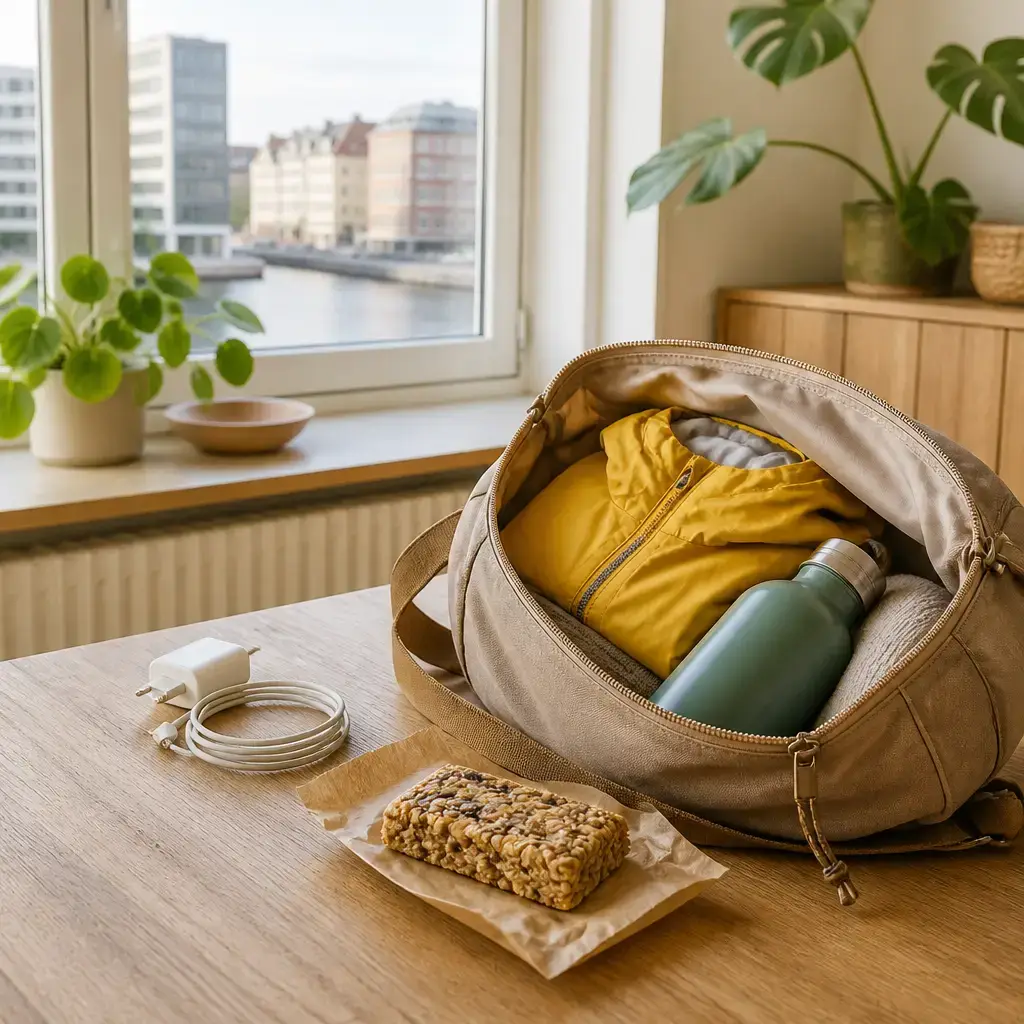
“Ich” means “I” here and is the speaker who is packing the bag. It is used as the subject before “packe” in “Ich packe meine Tasche”; use it when talking about your own action or state.
packe
“packe” means “pack” in this dialogue: the speaker is putting things into the bag. It is the form used with “Ich” in “Ich packe meine Tasche”; this pattern is useful for describing what you are packing.
meine
“meine” means “my” in “meine Tasche” and shows that the bag belongs to the speaker. The related citation form is “mein”; use “meine” directly before the feminine noun “Tasche” here.
Tasche
“Tasche” means “bag” here, the container being packed for the outing. It appears as the object of “packe” in “meine Tasche”; use it when naming the bag you carry.
für
“für” means “for” and identifies the purpose or occasion of the bag: “für den Ausflug.” It is followed here by a noun phrase, so “für den Ausflug” is a reusable way to say that something is intended for the outing.
den
“den” means “the” in “den Ausflug.” It is the article used here with the masculine noun “Ausflug” after “für”; keep the article together with the noun in the phrase “für den Ausflug.”
Ausflug
“Ausflug” means “outing” or “trip” here. In “für den Ausflug,” it names the activity the bag is being prepared for; use it when referring to a planned outing.
Was
“Was” means “what” and asks which item is still needed. In “Was musst du noch mitbringen?”, it begins the question about what the other person should bring; use it to ask for an unspecified thing or set of things.
musst
“musst” means “must” or “need to” in the question about bringing something. It is used with “du” in “musst du” and is followed by the infinitive “mitbringen”; this pattern asks what someone needs to do.
du
“du” means informal singular “you,” referring to the person being asked. It appears after “musst” in “musst du noch mitbringen?”; use it when addressing one person informally.
noch
“noch” means “still” or “yet” here and asks what remains to be brought. In “noch mitbringen,” it marks an additional action that has not been completed; use it when something remains to do.
mitbringen
“mitbringen” means “bring along,” specifically bringing something to the outing. It remains as a complete infinitive after “musst” in “musst du noch mitbringen?”; use the pattern “etwas mitbringen” for bringing an item with you.
habe
“habe” means “have” in “Ich habe ein Ladegerät” and states that the speaker already has the listed items. It is the form of “haben” used with “Ich”; use “Ich habe ...” to say what you possess or have with you.
ein
“ein” means “a” or “an” before “Ladegerät” in the list of things already packed. It is the indefinite article used here with that noun; the pattern “ein Ladegerät haben” names one charger someone has.
Ladegerät
“Ladegerät” means “charger,” the device included in the bag. It appears after “ein” in “ein Ladegerät”; use it when identifying a charger as one of the items you have or bring.
einen
“einen” means “a” or “an” before “Snack” in the list “einen Snack.” It is the article form used here with this masculine object after “habe”; keep it before the noun when naming one snack.
Snack
“Snack” means “snack,” a small item of food included in the bag. In “einen Snack,” it is one of the things the speaker has; use the same noun when listing food to bring.
und
“und” means “and” and joins the items in the list. In “ein Ladegerät, einen Snack und einen Regenmantel,” it connects the final item to the earlier items; use it to link words or phrases of equal importance.
Regenmantel
“Regenmantel” means “raincoat,” an item that can protect the person from rain. It is the final item in “einen Snack und einen Regenmantel”; use it when naming rain clothing to pack or wear.
Damit
“Damit” means “with that” or “with those things,” referring to the charger, snack, and raincoat just mentioned. In “Damit solltest du gut versorgt sein,” it introduces the result of having those items; use it to refer back to something already discussed.
solltest
“solltest” expresses “should” as advice to the person addressed. In “Damit solltest du gut versorgt sein,” it gives a recommendation about being prepared; use “solltest du” when advising one informal person.
gut
“gut” means “well” in the expression “gut versorgt sein.” It strengthens the idea that the person has what is needed; use it before “versorgt” in this expression to describe being well provided for.
versorgt
“versorgt” means “provided for” or “covered” in “gut versorgt sein,” referring to having suitable supplies. The whole expression describes being prepared with what is needed; use “gut versorgt sein” for a person whose needs are taken care of.
sein
“sein” means “be” in “solltest du gut versorgt sein.” It is the infinitive used after “solltest” and completes the idea of being provided for; use it after a modal verb when describing the recommended state.
wenn
“wenn” means “if” here and introduces the possible condition that the weather changes. In “wenn sich das Wetter ändert,” it starts a subordinate clause with the verb at the end; use “wenn” to connect advice with a condition.
sich
“sich” is the reflexive element in the exact construction “sich ändert.” Together, “sich ändert” means that the weather changes; use this construction when describing a change in something such as the weather.
das
“das” means “the” before “Wetter” in “das Wetter.” It is the definite article used with this neuter noun; keep it with “Wetter” when referring to the weather in this sentence.
Wetter
“Wetter” means “weather,” the thing that may change during the outing. In “das Wetter ändert,” it is the subject of the change; use it when discussing outdoor conditions.
ändert
“ändert” means “changes” in “sich das Wetter ändert.” It is the form used for “das Wetter” in this clause; use it in the construction “sich ... ändert” when saying that something changes.
Soll
“Soll” asks “Should I ...?” in “Soll ich noch eine Flasche Wasser mitbringen?” It is the question form used to ask for advice or permission about an action; the pattern “Soll ich ... mitbringen?” is useful when offering to bring something.
eine
“eine” has two functions in this dialogue. In “eine Flasche Wasser” it means “a” before the noun, while in “Bring eine mit” it means “one” and refers back to the bottle; the surrounding words show which use is intended.
Flasche
“Flasche” means “bottle,” specifically the bottle of water the speaker may bring. It appears in “eine Flasche Wasser”; use this noun when naming a bottle and place the contents after it as in the dialogue.
Wasser
“Wasser” means “water” and identifies what is in the bottle. In “eine Flasche Wasser,” it follows “Flasche” to name the contents; use this phrase when asking about or packing a bottle of water.
Bring
“Bring” means “bring” as a direct instruction to the person addressed. It begins “Bring eine mit,” an imperative used to recommend bringing the bottle; use it at the start of a command to one informal person.
mit
“mit” is the separable part of “mitbringen” in “Bring eine mit” and adds the meaning “along.” Together, “Bring ... mit” means “bring ... along,” with “mit” placed at the end of this imperative clause.
falls
“falls” means “in case” or “if” and introduces a possible reason for bringing extra water. In “falls der Spaziergang länger dauert als erwartet,” it starts a subordinate clause with the verb at the end; use it for a precaution.
der
“der” means “the” before “Spaziergang” in “der Spaziergang.” It is the article used here with this masculine noun as the subject of “dauert”; keep it with the noun in this phrase.
Spaziergang
“Spaziergang” means “walk,” referring to the walk during the outing. In “der Spaziergang länger dauert,” it is the activity whose duration may exceed expectations; use it when talking about a walk.
länger
“länger” means “longer” and compares the possible duration of the walk with what was expected. In “länger dauert als erwartet,” it describes a duration that exceeds the comparison point; use it with “als” for this kind of comparison.
dauert
“dauert” means “takes” or “lasts” in “der Spaziergang länger dauert.” It describes the amount of time the walk requires; use it with an activity or event when discussing its duration.
als
“als” means “than” in the comparison “länger ... als erwartet.” It introduces the point used for comparison; use the pattern “länger als ...” when saying that something lasts or is longer than another reference.
erwartet
“erwartet” means “expected” in “als erwartet,” which supplies the comparison point for the walk’s duration. The phrase means “than expected”; use “als erwartet” when an actual result differs from what was anticipated.
ist
“ist” means “is” in “Sie ist nicht zu schwer” and links the bag to the description “nicht zu schwer.” It is the form of “sein” used with “Sie” here; use “ist” to describe one thing or person.
voll
“voll” means “full,” describing the amount of space used in the bag. In “Meine Tasche ist voll,” it follows “ist” as the description of the bag; use the pattern “etwas ist voll” for a container with no room left or little room remaining.
Sie
“Sie” means “it” here and refers back to the feminine noun “Tasche.” In “Sie ist nicht zu schwer,” it avoids repeating the noun; use it when referring again to that already-mentioned bag.
nicht
“nicht” means “not” and negates the description “zu schwer.” In “Sie ist nicht zu schwer,” it says that the bag is not excessively heavy; place it before the description being negated.
zu
“zu” means “too” in “zu schwer” and marks an excessive degree of heaviness. The pattern “nicht zu + adjective” means “not too ...”; use it when saying that something stays within an acceptable limit.
schwer
“schwer” means “heavy” and describes the weight of the bag. In “nicht zu schwer,” it is the adjective being limited by “zu”; use it when describing how difficult something is to carry because of its weight.
Dann
“Dann” means “then” and marks the consequence of the bag being full but manageable. In “Dann bist du bereit,” it connects the situation just described with readiness to leave; use it to introduce a resulting action or state.
bist
“bist” means “are” in “bist du bereit” and is used with the informal subject “du.” It is the form of “sein” used to describe that person’s state; use the pattern “du bist + adjective” for one informal person.
bereit
“bereit” means “ready” in “bereit, loszugehen.” It describes being prepared to perform the following action; use “bereit sein” with a zu-infinitive when someone is ready to do something.
loszugehen
“loszugehen” means “to head out” or “to set off” in “bereit, loszugehen.” It names the action the person is ready to do and is the zu-form of “losgehen”; use it after “bereit sein” when the next action is leaving.