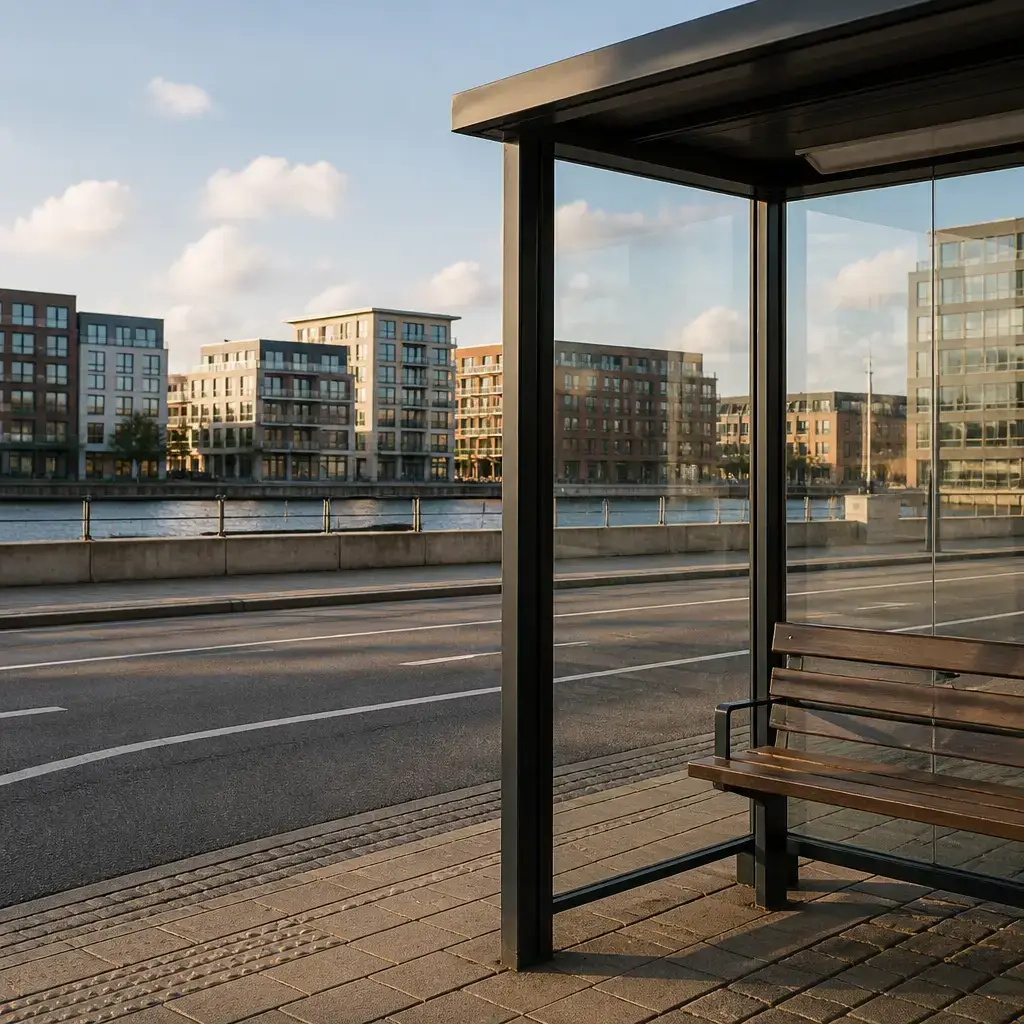
Entschuldigung
In “Entschuldigung, hat der Bus Verspätung?” this is a polite way to say “Excuse me” before asking a stranger a question. It is useful as an opening when you need someone’s attention politely.
hat
In “hat der Bus Verspätung?” this means “has” and links the bus with its delay; the whole expression asks whether the bus is delayed. Reuse it in a question such as “Hat der Zug Verspätung?” when asking about a delayed vehicle.
der
In “der Bus,” this is the word for “the” before the bus being discussed. It helps form the noun phrase “the bus,” which can be reused with a specific bus or other masculine-noun phrase.
Bus
“Bus” means “bus” in this dialogue. It is used for the vehicle the speakers are waiting for, as in “der Bus” or “diesen Bus.”
Verspätung
In “hat der Bus Verspätung?” “Verspätung” means “delay.” The expression “Verspätung haben” is used to ask or say that a bus, train, or similar service is delayed.
In
In “In der Nähe ist viel Verkehr,” “In” helps indicate the nearby area. It is used here at the start of the phrase “in the vicinity,” and can introduce a place or area.
Nähe
In “In der Nähe,” “Nähe” refers to the nearby area or vicinity. The complete phrase means “nearby” and is useful when describing where something is located.
ist
In “In der Nähe ist viel Verkehr,” “ist” means “is” and states what is present in the nearby area. It is also used in “Er ist noch unterwegs” to describe the bus’s current situation.
viel
Before “Verkehr” in “viel Verkehr,” “viel” means “a lot of” and describes the large amount of traffic. It can be placed before an uncounted quantity such as traffic or waiting time.
Verkehr
“Verkehr” means “traffic” in “viel Verkehr.” The phrase “viel Verkehr” explains why movement may be slow near the bus stop.
Wissen
In “Wissen Sie, wann er ankommt?” “Wissen” means “know” and begins a polite question asking for information. “Wissen Sie, ...?” is a reusable way to ask whether someone knows something.
Sie
In “Wissen Sie” and “wenn Sie warten können,” “Sie” means formal “you.” It is used when speaking politely to an adult whose name or familiar form of address is not being used.
wann
In “wann er ankommt,” “wann” means “when” and introduces the time the bus will arrive. It is useful for asking about the time of an event, as in “wann ...?”.
er
In “wann er ankommt” and “Er ist noch unterwegs,” “er” refers back to the bus, so it means “it” here. At the beginning of “Er ist noch unterwegs,” the same word is capitalized because it starts the sentence.
ankommt
In “wann er ankommt,” “ankommt” means “arrives.” It appears at the end of this clause, so “wann er ankommt” asks when the bus will arrive.
noch
In “Er ist noch unterwegs,” “noch” means “still”; in “noch einen anderen Bus,” it adds the sense of “another” or “additional.” The surrounding words show which meaning is intended.
unterwegs
In “Er ist noch unterwegs,” “unterwegs” means “on the way” or “in transit.” The expression “noch unterwegs” is useful when a person or vehicle has not arrived yet.
Dann
At the start of “Dann kann die Wartezeit länger sein,” “Dann” means “then” or “so” and introduces the consequence of the bus still being on the way. It can connect a situation with its result.
kann
In “kann die Wartezeit länger sein,” “kann” presents the longer waiting time as possible, meaning “can” or “may.” It is useful for expressing a possible result before the action or state that may occur.
die
In “die Wartezeit,” “die” is the word for “the” before the waiting time being discussed. Together with the noun, it forms “the waiting time.”
Wartezeit
“Wartezeit” means “waiting time” in “die Wartezeit.” It names the time spent waiting for the bus and can be used when discussing how long a wait may be.
länger
In “die Wartezeit länger sein,” “länger” means “longer,” describing a wait that may exceed the expected or current duration. It is useful when comparing the length of a wait or journey.
sein
In “kann die Wartezeit länger sein,” “sein” means “be” and completes the statement that the waiting time may be longer. The pattern “kann ... sein” expresses a possible state or condition.
Gibt
In “Gibt es noch einen anderen Bus?” “Gibt” is part of the question asking whether another bus exists or is available. “Gibt es ...?” is a reusable way to ask whether something is there.
es
In “Gibt es noch einen anderen Bus?” “es” is part of the expression used to ask whether something exists or is available, corresponding to “there” in English. The reusable pattern is “Gibt es ...?”.
einen
In “einen anderen Bus,” “einen” contributes the meaning “a” or “one” for the bus being asked about. It helps introduce one possible additional bus in the question.
anderen
In “einen anderen Bus,” “anderen” means “another” or “different” and identifies a bus other than the one already being discussed. This full phrase is useful when asking about an alternative option.
für
In “für dieselbe Strecke,” “für” means “for” and connects the bus with the route it serves. It is useful for saying what a transport option or service is intended for.
dieselbe
In “dieselbe Strecke,” “dieselbe” means “the same” and shows that the route is unchanged. It is useful when referring back to an option or route already mentioned.
Strecke
“Strecke” means “route” in “dieselbe Strecke.” It refers to the route served by the bus, especially when comparing different buses.
Ja
“Ja” means “yes” and confirms that another bus is available. It is used here as a direct answer before adding the limitation introduced by “aber.”
aber
In “Ja, aber mit diesem Bus dauert es länger,” “aber” means “but” and contrasts the available alternative with its longer travel time. It is useful for adding a restriction or opposing point after a confirmation.
mit
In “mit diesem Bus,” “mit” means “with” or “by” and introduces the bus used for the journey. In transport contexts, it can identify the vehicle someone travels by.
diesem
In “mit diesem Bus,” “diesem” means “this” and points to the particular alternative bus being discussed. The phrase identifies which bus would take longer.
dauert
In “mit diesem Bus dauert es länger,” “dauert” means “takes” or “lasts.” With “länger,” it says that using this bus takes longer.
Ich
“Ich” means “I” in “Ich warte hier auf diesen Bus.” It identifies the speaker as the person who will wait, and it commonly begins a statement about the speaker’s action.
warte
In “Ich warte hier auf diesen Bus,” “warte” means “wait.” The pattern “Ich warte auf ...” is used to say that the speaker is waiting for a person, vehicle, or thing.
hier
In “Ich warte hier,” “hier” means “here” and identifies the speaker’s location while waiting. It is useful for specifying where an action is taking place.
auf
In “auf diesen Bus warten,” “auf” is the preposition used with “wait for.” The reusable pattern is “warten auf [person or thing],” as in the dialogue’s “auf diesen Bus.”
diesen
In “diesen Bus,” “diesen” means “this” and points to the particular bus the speaker has chosen to wait for. It helps identify a specific option among the buses being discussed.
Das
In “Das ist wahrscheinlich am besten,” “Das” refers to the choice just described and means “that” or “it.” The pattern “Das ist ...” is useful for evaluating a situation or option.
wahrscheinlich
In “Das ist wahrscheinlich am besten,” “wahrscheinlich” means “probably” and shows that the speaker is making a likely judgment rather than stating absolute certainty. It can modify an opinion or prediction.
am
In “am besten,” “am” is part of the expression meaning “the best” or “best.” The complete expression is used when evaluating one option as the most suitable.
besten
In “am besten,” “besten” contributes the meaning “best.” Together, “am besten” evaluates the choice to wait as the most suitable option in this situation.
wenn
In “wenn Sie warten können,” “wenn” means “if” and introduces the condition that the person is able to wait. It is useful for giving advice that depends on a condition.
warten
In “wenn Sie warten können,” “warten” names the action of waiting. It follows “können” in this clause and can be reused for the action someone is able or willing to do.
können
In “wenn Sie warten können,” “können” means “can” or “be able to” and expresses the person’s ability or possibility to wait. The pattern “können + action” is used to talk about what someone is able to do.