Es
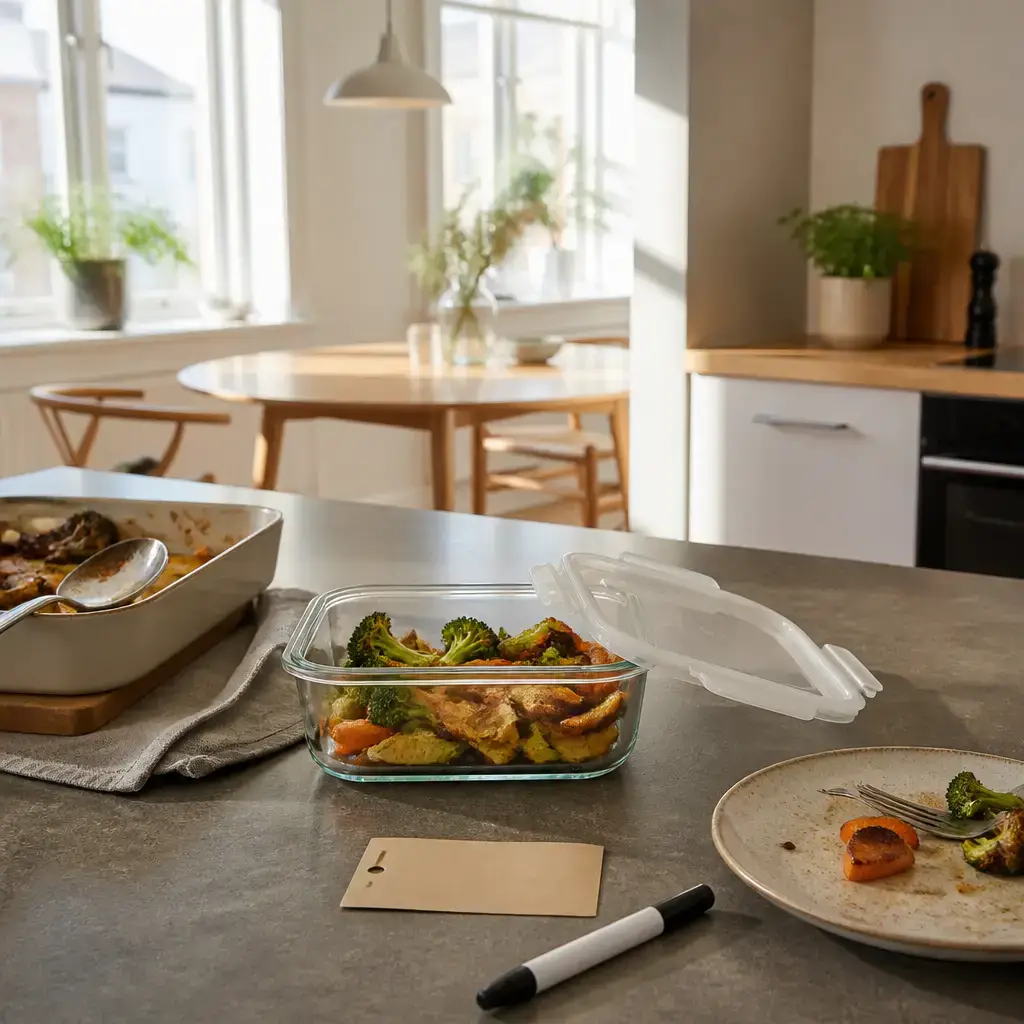
“Es” means “there” in the impersonal statement “Es sind viele Reste vom Abendessen übrig.” It introduces the statement that leftovers remain and is useful in similar statements about what is present or remaining.
sind
“Sind” means “are” in “Es sind viele Reste vom Abendessen übrig.” It is the form of “sein” used with the plural noun “Reste”; use it when saying that plural things are or remain somewhere.
viele
“Viele” means “many” in “viele Reste.” It describes a large number of plural things and is placed directly before the plural noun it describes.
Reste
“Reste” means “leftovers” in “viele Reste vom Abendessen.” It refers here to food remaining after dinner; use it for food saved for another meal.
vom
“Vom” means “from the” in “vom Abendessen.” It is the contraction of “von dem” and connects the leftovers with the meal they came from.
Abendessen
“Abendessen” means “dinner” in “vom Abendessen.” It identifies the meal that produced the leftovers and can be used after “vom” in this kind of source relationship.
übrig
“Übrig” means “left over” in “sind viele Reste vom Abendessen übrig.” It describes something that remains after the main activity, and it is commonly used with “übrig sein.”
Lass
“Lass” helps form the suggestion “Lass sie uns in einen sauberen Behälter tun,” meaning “Let’s put them in a clean container.” It is used here to invite another person to do something together.
sie
“Sie” means “them” in “Lass sie uns in einen sauberen Behälter tun.” It refers to the leftovers already mentioned and comes before the other parts of this suggestion.
uns
“Uns” means “us” in “Lass sie uns in einen sauberen Behälter tun.” Together with “Lass” and the infinitive, it shows that the speaker is suggesting a joint action.
in
“In” means “into” in “in einen sauberen Behälter,” because the leftovers are being moved into the container. It is used before a place or container that receives something.
einen
“Einen” means “a” in “einen sauberen Behälter.” It introduces the particular container receiving the leftovers and appears before the masculine noun “Behälter” in this expression.
sauberen
“Sauberen” means “clean” in “einen sauberen Behälter.” It describes the container and takes this form directly before the noun after “einen.”
Behälter
“Behälter” means “container” in “einen sauberen Behälter.” It names the object used to hold the leftovers and can follow a description such as “sauberen.”
tun
“Tun” means “put” in “Lass sie uns in einen sauberen Behälter tun.” It is the infinitive used after “Lass” in this suggestion to describe placing something somewhere.
Kann
“Kann” means “can” in “Kann ich sie morgen zum Mittagessen aufwärmen?” It starts a question about whether the speaker is allowed or able to reheat the leftovers.
ich
“Ich” means “I” in “Kann ich sie morgen zum Mittagessen aufwärmen?” It identifies the person asking about reheating the leftovers and is placed after “Kann” in this question.
morgen
“Morgen” means “tomorrow” in “morgen zum Mittagessen.” It specifies when the action will happen and is useful before or near a phrase describing a future activity.
zum
“Zum” means “for the” in “zum Mittagessen.” It is the contraction of “zu dem” and introduces the meal or purpose connected with the action.
Mittagessen
“Mittagessen” means “lunch” in “zum Mittagessen.” It identifies the meal for which the leftovers will be reheated and follows “zum” in this purpose expression.
aufwärmen
“Aufwärmen” means “reheat” in “sie morgen zum Mittagessen aufwärmen.” It is the infinitive after the modal verb “Kann” and describes heating prepared food again.
Das
“Das” means “that” in “Das kannst du.” It refers to the possibility of reheating the leftovers mentioned in the previous question and can refer back to a whole action.
kannst
“Kannst” means “can” in “Das kannst du.” It is the form of “können” used with “du” and gives permission or confirms that the action is possible.
du
“Du” means “you” in “Das kannst du.” It identifies the person who may reheat the leftovers and is used here after the modal verb.
wenn
“Wenn” means “if” in “wenn wir sie bis dahin im Kühlschrank aufbewahren.” It introduces the condition under which reheating is possible and begins a subordinate clause.
wir
“Wir” means “we” in “wenn wir sie bis dahin im Kühlschrank aufbewahren.” It identifies the people responsible for keeping the leftovers and is followed by the verb at the end of the subordinate clause.
bis
“Bis” means “until” in “bis dahin.” It marks the endpoint of the time period during which the leftovers are kept.
dahin
“Dahin” means “then” or “by that time” in “bis dahin.” It refers back to the future time when the leftovers will be reheated and commonly completes the expression “bis dahin.”
im
“Im” means “in the” in “im Kühlschrank.” It is the contraction of “in dem” and identifies the place where the leftovers are stored.
Kühlschrank
“Kühlschrank” means “fridge” in “im Kühlschrank.” It names the storage place for the leftovers and follows “im” in this location expression.
aufbewahren
“Aufbewahren” means “keep” or “store” in “sie bis dahin im Kühlschrank aufbewahren.” It is the infinitive at the end of the subordinate clause and describes storing the leftovers until a later time.
Soll
“Soll” means “should” in “Soll ich ein Etikett auf den Behälter kleben?” It starts a question asking whether the speaker ought to attach a label.
ein
“Ein” means “a” in “ein Etikett.” It introduces one label and comes directly before the neuter noun “Etikett.”
Etikett
“Etikett” means “label” in “ein Etikett auf den Behälter kleben.” It names the piece of information attached to the container so its contents can be identified.
auf
“Auf” means “onto” in “auf den Behälter kleben,” because the label is being attached to a surface. It is used with an object or surface that receives something.
den
“Den” means “the” in “auf den Behälter.” It introduces the specific container already being discussed and appears before “Behälter” in this placement expression.
kleben
“Kleben” means “stick” or “attach” in “ein Etikett auf den Behälter kleben.” It describes fixing the label to the container and is the infinitive used after “Soll.”
Dann
“Dann” means “then” or “in that way” in “Dann wissen wir morgen, was drin ist.” It connects attaching the label with the helpful result that follows.
wissen
“Wissen” means “know” in “wissen wir morgen, was drin ist.” It describes having information about the contents and is placed before the subject in this statement.
was
“Was” means “what” in “was drin ist.” It introduces the information that the speakers will know, namely the contents of the container.
drin
“Drin” means “inside” in “was drin ist.” It refers to the contents being inside the container and is a concise way to describe an interior location.
ist
“Ist” means “is” in “was drin ist.” It links the contents with their location inside the container and appears at the end of the subordinate clause.
klebe
“Klebe” means “stick” or “attach” in “Ich klebe ein deutliches Etikett darauf.” It is the speaker’s form of “kleben” and describes attaching the label to the container.
deutliches
“Deutliches” means “clear” in “ein deutliches Etikett.” It describes a label whose information can be understood easily and is placed directly before “Etikett.”
darauf
“Darauf” means “on it” in “Ich klebe ein deutliches Etikett darauf.” It refers back to the container and replaces repeating the surface where the label is attached.
macht
“Macht” means “makes” in “Das macht das Mittagessen einfacher.” It describes the result that the labeled leftovers make lunch easier and is the form used with “Das.”
einfacher
“Einfacher” means “easier” in “Das macht das Mittagessen einfacher.” It describes lunch as requiring less effort because the contents are clearly labeled and follows “macht” in this result pattern.