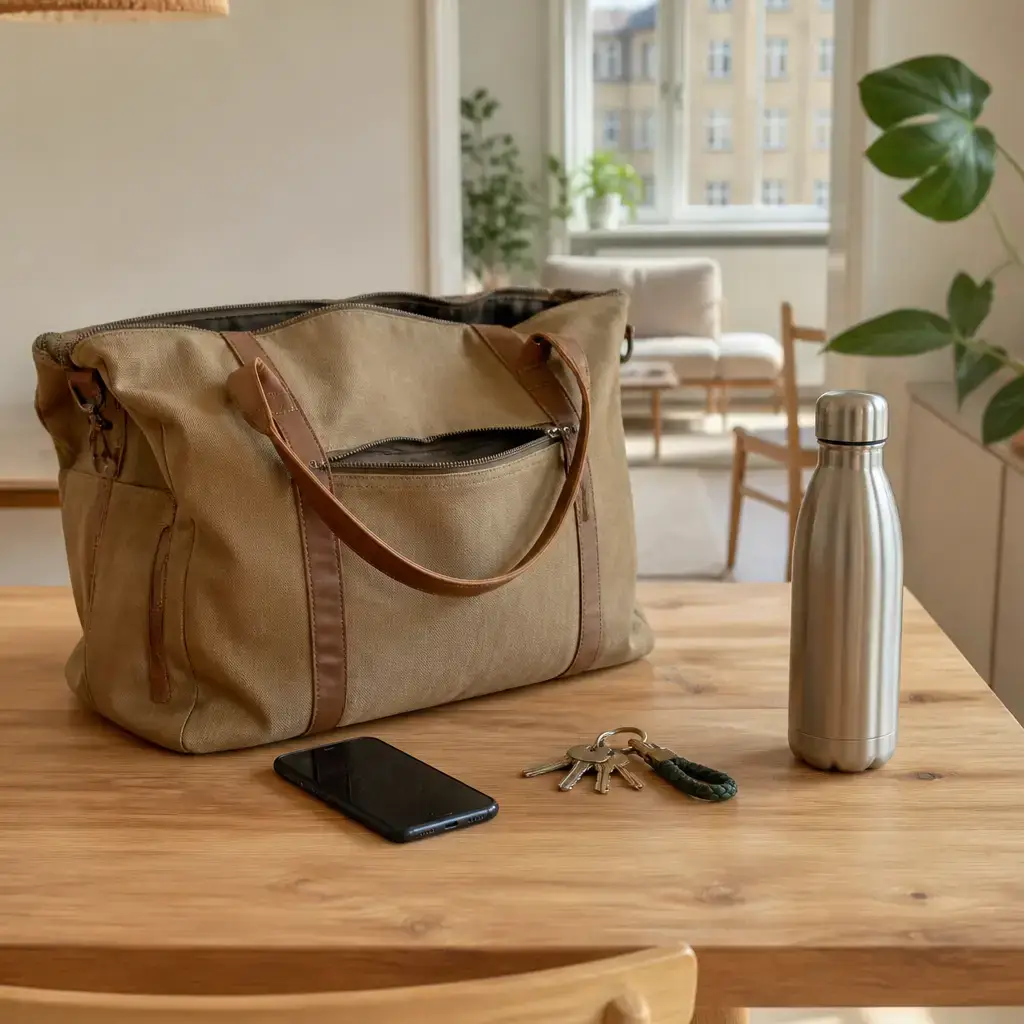
Können
“Können” means “can” here and asks whether the speakers are able to do something together. It is the form of können used with “wir” in “Können wir schauen, ob meine Tasche fertig ist?”. This is useful when asking whether you and another person can do something.
wir
“wir” means “we” and refers to the speaker together with the other person. In “Können wir schauen, ob meine Tasche fertig ist?”, it is the subject of the shared action. Use it when describing an action done by yourself and at least one other person.
schauen
“schauen” means “look” or “check” here: the speakers want to check the bag. In “Können wir schauen, ob meine Tasche fertig ist?”, it is followed by “ob” and the question being checked. A useful pattern is “schauen, ob …” when checking whether something is so.
ob
“ob” means “whether” and introduces the question being checked in “schauen, ob meine Tasche fertig ist”. It connects the checking action with the information the speakers want to confirm. Use it before an indirect yes-or-no question.
meine
“meine” means “my” and refers to the speaker’s bag in “meine Tasche”. It shows who the bag belongs to and comes directly before “Tasche”. Use it before a feminine noun when identifying something as belonging to you.
Tasche
“Tasche” means “bag” in “meine Tasche”. It is the item whose readiness the speakers are checking. Use it for a bag or pocket-like container in a practical situation such as preparing to leave.
fertig
“fertig” means “ready” here, describing the condition of the bag in “meine Tasche fertig ist”. It appears with “ist” to say that the bag is ready. Use “fertig sein” when something has been prepared and is ready for use.
ist
“ist” means “is” and links “meine Tasche” with its condition “fertig”. In “meine Tasche fertig ist”, it completes the statement about the bag’s readiness. Use it to describe what something is or how it is.
Leg
“Leg” tells one person to put something down, here in “Leg zuerst die wichtigen Sachen auf den Tisch”. It is a direct instruction to the person addressed as “du”. Use it when telling someone to place an object somewhere.
zuerst
“zuerst” means “first” and tells the listener that this action should happen before the other bag-checking steps. In “Leg zuerst die wichtigen Sachen auf den Tisch”, it comes after the instruction. Use it to order actions.
die
“die” means “the” and introduces the plural group “die wichtigen Sachen”. It marks the things that should be put on the table. Use it before a plural noun phrase when referring to specific things.
wichtigen
“wichtigen” means “important” and identifies which things are meant in “die wichtigen Sachen”. It describes the items that need to be checked or placed first. Use it before a noun when selecting items that matter for the situation.
Sachen
“Sachen” means “things” and refers here to the important belongings being prepared. In “die wichtigen Sachen”, it is the noun at the center of the object being placed on the table. Use it for a group of unspecified physical items.
auf
“auf” means “onto” here and shows the destination in “auf den Tisch”. It is used because the things are being moved to the table’s surface. Use “auf” with a destination when placing something on a surface.
den
“den” means “the” in “auf den Tisch” and introduces the specific table that receives the things. Its form belongs with the destination phrase after “auf” here. Reuse the pattern “auf den …” when saying that something is put onto a masculine noun.
Tisch
“Tisch” means “table” in “auf den Tisch”. It is the surface where the important things should be placed. Use it when describing where objects are put during preparation or checking.
Mein
“Mein” means “my” and identifies the phone as belonging to the speaker in “Mein Handy”. It comes before the noun and begins the statement about the phone’s location. Use it to identify a masculine or neuter item as yours in this kind of phrase.
Handy
“Handy” means “mobile phone” in “Mein Handy”. The phone is one of the items being checked in the bag. Use it when referring to a mobile phone in everyday German.
in
“in” means “in” and shows the phone’s location in “in der vorderen Tasche”. It introduces the container where the phone is located. Use “in” when saying that something is inside a place or container.
der
“der” means “the” in “in der vorderen Tasche” and introduces the specific front pocket. It belongs to the location phrase describing where the phone is. Use it before a feminine noun in a phrase describing a fixed location.
vorderen
“vorderen” means “front” here and distinguishes the front pocket from other parts of the bag. In “der vorderen Tasche”, it describes which pocket contains the phone. Use it to identify the front part of an object or space.
Wo
“Wo” means “where” and asks for the location of the keys in “Wo hast du deine Schlüssel hingelegt?”. It opens a question about where an object was placed. Use it at the beginning of a question asking for a location.
hast
“hast” means “have” here as part of the question “Wo hast du deine Schlüssel hingelegt?”. Together with “hingelegt”, it asks about the placement of the keys. It is the form of haben used with “du”; a useful pattern is “Wo hast du … hingelegt?”.
du
“du” means “you” and refers to the person being asked about the keys. In “Wo hast du deine Schlüssel hingelegt?”, it is the person who placed them. Use it when addressing one person informally.
deine
“deine” means “your” and refers to the keys belonging to the person addressed as “du”. In “deine Schlüssel”, it comes directly before the noun. Use it to identify something as belonging to one person you are addressing informally.
Schlüssel
“Schlüssel” means “keys” here and names the items whose location is being asked about. In “deine Schlüssel”, the word refers to the keys the listener placed somewhere. Use it when talking about keys as belongings or objects to locate.
hingelegt
“hingelegt” means “put down” or “placed” and describes what happened to the keys in “hast du deine Schlüssel hingelegt?”. It focuses on placing the keys somewhere, while “Wo” asks for the location. Use it in the pattern “hast du … hingelegt?” when asking where someone placed something.
Sie
“Sie” means “they” here and refers back to “deine Schlüssel”, not to a person. In “Sie liegen neben meinem Handy”, it is the subject of the statement about where the keys are. Use it to refer back to plural objects that have just been mentioned.
liegen
“liegen” means “are lying” or “are located” here and describes the keys’ position in “Sie liegen neben meinem Handy”. It presents the keys as being in a place rather than describing the act of putting them there. Use it to state where objects are located.
neben
“neben” means “next to” and shows the keys’ position in relation to the phone in “neben meinem Handy”. It introduces the nearby reference object. Use it when describing one object as being beside another.
meinem
“meinem” means “my” and identifies the phone as belonging to the speaker in “neben meinem Handy”. It comes before “Handy” inside the location phrase. Use it to mark a nearby object as belonging to you in this construction.
Brauchst
“Brauchst” means “need” and asks whether the listener needs the water bottle in “Brauchst du auch deine Wasserflasche?”. It is the form of brauchen used with “du” and appears at the start because this is a question. Use “Brauchst du …?” to ask whether one person needs something.
auch
“auch” means “also” and adds the water bottle to the other things being considered in “Brauchst du auch deine Wasserflasche?”. It shows that this is an additional item. Use it before the item or information being added.
Wasserflasche
“Wasserflasche” means “water bottle” and names the additional item being checked. In “deine Wasserflasche”, it is the thing the listener may need. Use it for a bottle intended to hold water.
Ja
“Ja” means “yes” and confirms the question about the water bottle. In “Ja, sie ist schon im Hauptfach”, it introduces the confirmation before giving its location. Use it to answer affirmatively and then add information if needed.
schon
“schon” means “already” and says that the water bottle is in the main compartment now. In “sie ist schon im Hauptfach”, it emphasizes that no further placing is needed. Use it when something has happened or is true earlier than the current check might suggest.
im
“im” means “in the” in “im Hauptfach”. It is the contracted form of “in dem”, used here for the location of the water bottle. Use “im” before a masculine or neuter place or container when saying that something is inside it.
Hauptfach
“Hauptfach” means “main compartment” and identifies the part of the bag containing the water bottle. In “im Hauptfach”, it follows the location word “im”. Use it when referring to the largest or primary compartment of a bag.
Dann
“Dann” means “then” and introduces the conclusion drawn from the bag check in “Dann hast du alles, was du brauchst”. It links the confirmed items with the result that the listener is prepared. Use it to state a result that follows from what was just established.
alles
“alles” means “everything” here, referring to all the things needed for leaving. In “alles, was du brauchst”, it is clarified by the following clause. Use the pattern “alles, was du brauchst” for “everything you need” while keeping the object slot in the clause.
was
“was” introduces the clause “was du brauchst”, which specifies what “alles” includes. Together, “alles, was du brauchst” means “everything you need”. Use “was” in this pattern to connect “alles” with the needed items.