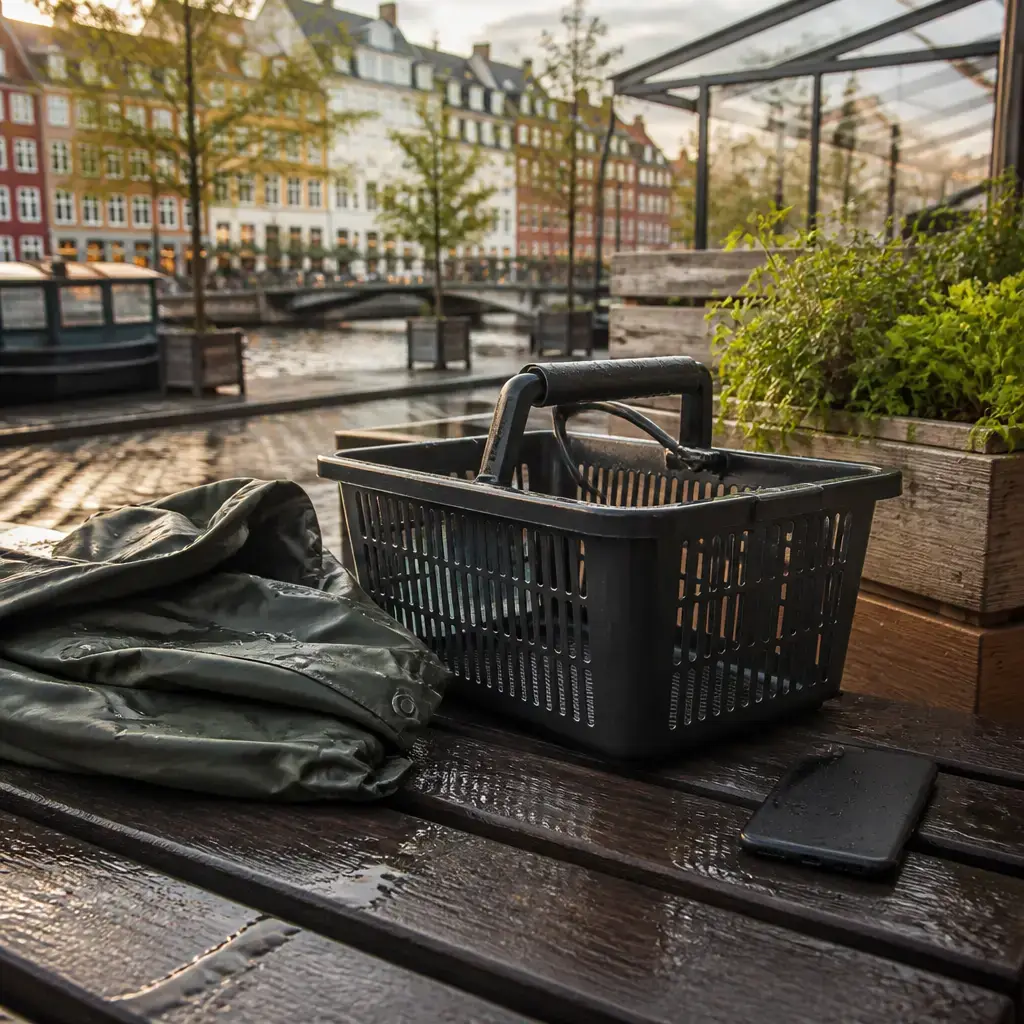
About This Lesson
Use Prices, weather, and discoveries to practice German conversation, pronunciation, vocabulary, grammar, and quizzes.
Dialogue
A
Wie viel kostet das?
vee FEEL KOSS-tuht dahss How much is this?
B
Wo wohnst du?
voh VOHNTST doo Where do you live?
A
Das Wetter ist schön.
dahss VET-tuh ihst shurn The weather is nice.
B
Jetzt regnet es.
yetst RAYG-nuht ess It is raining now.
A
Ich habe mein Handy vergessen.
ikh HAH-buh mine HEN-dee fuh-GESS-un I forgot my phone.
B
Ich habe es gefunden.
ikh HAH-buh ess guh-FOON-den I found it.Word by Word
Wie
Wie means “how” in Wie viel kostet das? and helps form the question asking for an amount. It is used together with viel when asking how much of something there is or what something costs. Use it when asking about a quantity or price, such as in this price question.
viel
viel means “much” in Wie viel kostet das? and contributes to the question about the amount or price. Together with Wie, it asks for a quantity rather than naming the item itself. Use Wie viel when asking how much something costs or how much of something there is.
kostet
kostet means “costs” in Wie viel kostet das? It is the form of kosten used with das in this question. Use it in a price question with the item being asked about, as in Wie viel kostet das?
das
das has two uses in this dialogue. In Wie viel kostet das? it means “this” or “that” item, while capitalized Das in Das Wetter ist schön. means “the” before Wetter. Use the first form to point to an item being discussed and the second form as part of Das Wetter.
Wo
Wo means “where” at the beginning of Wo wohnst du? It asks about a place or location. Use it at the start of a question when asking where someone lives or where something is.
wohnst
wohnst means “live” in Wo wohnst du? It is the form of wohnen used with du. Use it to ask one person about their place of residence, as in Wo wohnst du?
du
du means “you” when one person is addressed directly in Wo wohnst du? It identifies the person whose place of residence is being asked about. Use du in direct conversation with one person, as in this question.
Wetter
Wetter means “weather” in Das Wetter ist schön. It names the weather being described as nice. Use it with Das Wetter when talking about current weather, such as in this sentence.
ist
ist means “is” in Das Wetter ist schön. It links Wetter with the description schön. It is the form of sein used with the subject here. Use it to connect a subject with a description, as in Das Wetter ist schön.
schön
schön means “nice” or “pleasant” in Das Wetter ist schön. It describes the weather positively after ist. Use it when giving a positive description, especially in a statement about the weather.
Jetzt
Jetzt means “now” in Jetzt regnet es. It places the weather event in the present moment. Use it when reporting what is happening at the current time, as in this weather statement.
regnet
regnet means “is raining” in Jetzt regnet es. It describes rain happening at the time indicated by Jetzt. Use it with es in a weather statement when reporting rain, as in Jetzt regnet es.
es
es means “it” in Jetzt regnet es. Here it does not refer to a particular object; it accompanies regnet in the weather statement. Use this form when reporting rain with regnet, as in Jetzt regnet es.
Ich
Ich means “I” in Ich habe mein Handy vergessen. and Ich habe es gefunden. It identifies the speaker as the person who forgot or found something. Use it at the beginning when talking about your own action or experience.
habe
habe means “have” in Ich habe mein Handy vergessen. and Ich habe es gefunden. Here it works with the later forms vergessen and gefunden to describe completed events. Reuse Ich habe with an object and the completed-action form, as in Ich habe mein Handy vergessen or Ich habe es gefunden.
mein
mein means “my” in mein Handy. It shows that the phone belongs to or is connected with the speaker Ich. Use it directly before a noun when identifying something as your own, as in mein Handy.
Handy
Handy means “phone” in Ich habe mein Handy vergessen. In this context it refers to the speaker’s mobile phone. Use it with mein when talking about your own phone, as in mein Handy.
vergessen
vergessen means “forgot” in Ich habe mein Handy vergessen. It names the completed action involving mein Handy after habe. Use Ich habe with an object before vergessen when saying that you forgot something, as in Ich habe mein Handy vergessen.
gefunden
gefunden means “found” in Ich habe es gefunden. It names the completed action of locating es after habe. It is the form of finden used in this completed-action expression. Use Ich habe with the thing found before gefunden, as in Ich habe es gefunden.
Grammar Points
W-Frage: Fragewort + Verb + Subjekt
Wo wohnst du?
voh VOHNTST dooWhere do you live?
In German, the conjugated verb comes before the subject in a question beginning with a question word.
Possessivartikel: mein + Nomen
mein Handy
mine HEN-deemy mobile phone
mein means “my” and comes before the noun; the noun is capitalized in German.
German Vocabulary
du
pron
doo
you
ich
pron
ikh
I
jetzt
adv
yetst
now
kosten
verb
KOSS-tun
to cost
kostet
mein
det
mine
my
regnen
verb
RAYG-nun
to rain
regnet
schön
adj
shurn
nice; beautiful
Wetter
noun
VET-tuh
weather
Wie viel kostet das?
phrase
vee FEEL KOSS-tuht dahss
How much is this?
How much is this?
wo
adv
voh
where
Wo wohnst du?
phrase
voh VOHNTST doo
Where do you live?
Where do you live?
wohnen
verb
VOH-nun
to live
wohnst
Quiz
Word Order
Arrange the words in the correct order.
How much is this?
Show Answer
Wie viel kostet das?Where do you live?
Show Answer
Wo wohnst du?The weather is nice.
Show Answer
Das Wetter ist schön.Spelling
Tap the letters to spell the word.
now
Show Answer
jetztweather
Show Answer
Wetterto cost
Show Answer
kostetto live