Jeg
“Jeg” means “I” and identifies the speaker as the person who noticed something. It commonly appears before the verb in a statement, as in “Jeg lagde mærke til ...”. You can use it whenever you describe your own action, opinion, or experience.
lagde mærke til
“lagde mærke til” means “noticed” in “Jeg lagde mærke til, at flere maskiner blev reserveret ...”. The whole expression is used for becoming aware of something; “lagde”, “mærke”, and “til” work together as this fixed expression. A reusable pattern is “Jeg lagde mærke til, at ...” when reporting an observation.
at
Here “at” means “that” and introduces the clause “at flere maskiner blev reserveret med håndklæder i lang tid”. It connects “lagde mærke til” with what was noticed. In this dialogue, it introduces a clause rather than an infinitive.
flere
“flere” means “several” here and describes more than one machine in “flere maskiner”. It is placed before the plural noun it describes. A common reusable pattern is “flere + plural noun” when referring to several items or people.
maskiner
“maskiner” means “machines” and refers here to the gym machines being reserved. The form is plural, as shown by “flere maskiner”. You can use it after a quantity word or when discussing machines in general.
blev
“blev” helps express “were” in the passive construction “blev reserveret”, meaning that the machines were reserved. It is used together with “reserveret” rather than carrying the full passive meaning alone. A reusable pattern is “blev + past participle” when describing something that was done to an object.
reserveret
“reserveret” means “reserved” in “maskiner blev reserveret”. It describes the status or action applied to the machines and combines with “blev” to form the passive expression. You can reuse “blive reserveret” when something is reserved by someone.
med
Here “med” means “with” and shows what was used to reserve the machines: “med håndklæder”. It introduces the accompanying object or means. A common pattern is “med + noun” when describing what something is used with or accompanied by.
håndklæder
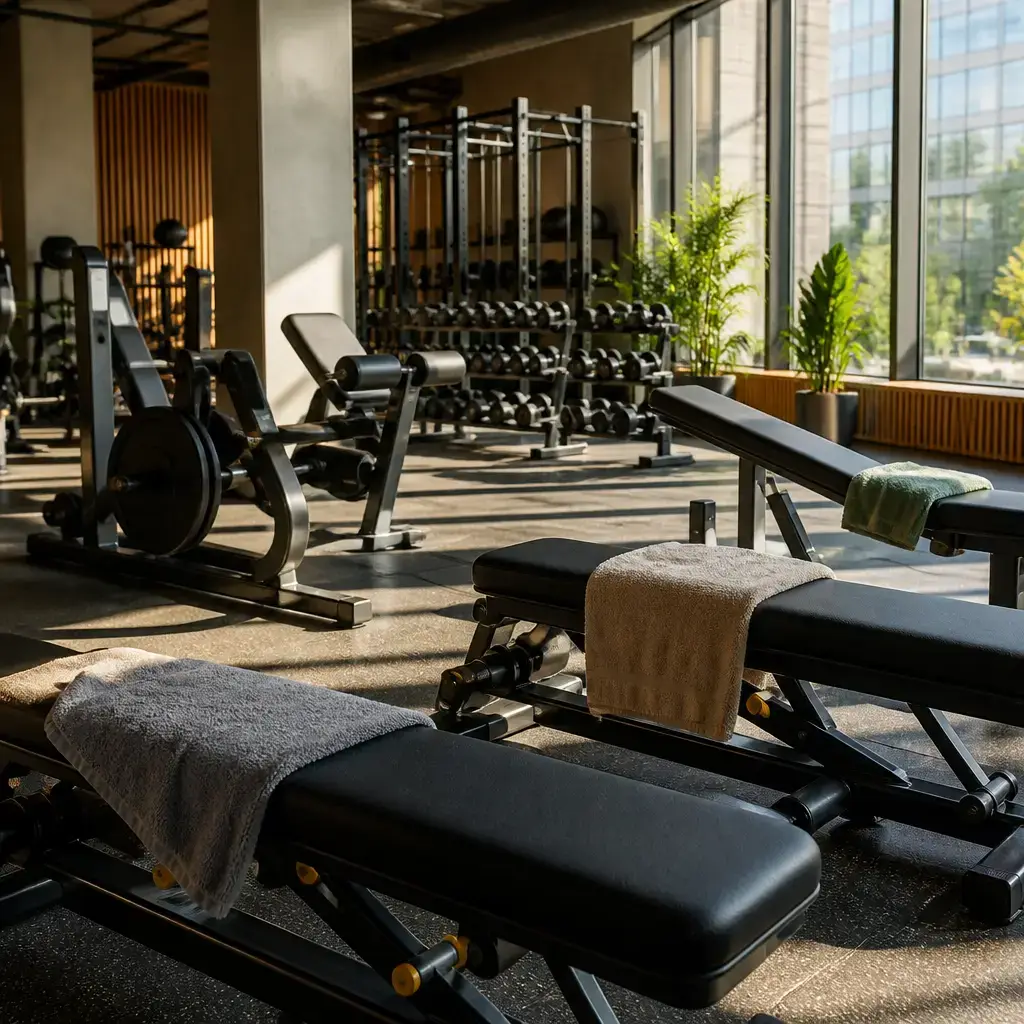
“håndklæder” means “towels” and refers to the towels placed on the machines. The form is plural, matching the meaning of several towels. You can use it when talking about towels as objects or equipment in a shared facility.
i
Here “i” means “for” in the duration expression “i lang tid”. It introduces the period during which the machines remained reserved. A reusable pattern is “i + time expression” for saying how long something lasts.
lang
“lang” means “long” in “lang tid” and describes the duration as extended. It appears directly before the noun “tid”. The pattern “lang + time expression” can describe a long period.
tid
“tid” means “time” in the duration expression “i lang tid”. Together with “i” and “lang”, it specifies how long the machines were reserved. You can use it in expressions that describe a period or duration.
Det
“Det” means “that” or “it” here and refers back to the situation just described: machines being reserved for a long time. It functions as the subject of “kan være frustrerende”. You can use “Det” to comment on a previously mentioned situation.
kan
“kan” means “can” and expresses that the situation is capable of being frustrating in “Det kan være frustrerende”. It is followed by the infinitive “være”. A reusable pattern is “Det kan være + adjective” when describing a possible reaction or quality.
være
“være” means “be” after the modal verb “kan” in “kan være frustrerende”. It links the subject “Det” with the description “frustrerende”. You can reuse the pattern “kan være + adjective” to describe what something can be like.
frustrerende
“frustrerende” means “frustrating” and describes the effect of the situation on people at the gym. It follows “være” in “Det kan være frustrerende”. You can use it after “være” to describe an experience, situation, or event that causes frustration.
især
“især” means “especially” and emphasizes the condition “når fitnesscentret er travlt”. It introduces a point that makes the situation particularly frustrating. You can place it before the condition or point you want to emphasize.
når
“når” means “when” and introduces the situation in which the frustration is especially strong: “når fitnesscentret er travlt”. It connects the main comment with a time or situation clause. A reusable pattern is “når + clause” when explaining when something happens.
fitnesscentret
“fitnesscentret” means “the gym” or “the fitness center” and refers to the specific facility being discussed. It is the subject of “er travlt”. You can use it when talking about activities, rules, or conditions at a gym.
er
“er” means “is” in “fitnesscentret er travlt”. It links the gym with the description “travlt”. A common pattern is “noun + er + adjective” when describing a current condition.
travlt
“travlt” means “busy” in “fitnesscentret er travlt”. It describes the gym as having many people or activities at that time. You can use it after “er” to describe how busy a place is.
ville
“ville” expresses “wanted to” in “Jeg ville ikke konfrontere nogen direkte”. It is followed by the infinitive “konfrontere” and describes the speaker’s intention. A reusable pattern is “Jeg ville ikke + infinitive” when explaining what you did not want to do.
ikke
“ikke” means “not” and negates the intention in “ville ikke konfrontere”. It appears after “ville” and before the infinitive. You can use “ikke” in this position to say that someone did not want or did not plan to do something.
konfrontere
“konfrontere” means “confront” and is the action the speaker did not want to take directly. It follows “ville” in “ville ikke konfrontere nogen”. A reusable pattern is “konfrontere nogen” when describing confronting a person.
nogen
“nogen” means “anyone” here and refers to any person the speaker might have confronted. It appears as the object after “konfrontere” and within the negative expression “ikke ... nogen”. You can use it when referring generally to an unspecified person.
direkte
“direkte” means “directly” and describes the manner of confronting someone. It comes after “konfrontere nogen” in “konfrontere nogen direkte”. You can use it to describe an action carried out personally or without an intermediary.
Personalet
“Personalet” means “the staff” and refers to the employees responsible for the gym. It is the subject of “kan give”. You can use it when talking about staff taking action or communicating with visitors.
give
“give” means “give” in “give en generel påmindelse”. Here it describes providing or delivering a reminder to gym users. A reusable pattern is “give + en + noun” when describing giving someone an announcement, reminder, or other message.
en
“en” is the indefinite article meaning “a” or “an” before the singular noun “påmindelse”. It introduces one general reminder in “en generel påmindelse”. You can use it before a singular noun when referring to one non-specific item.
generel
“generel” means “general” and describes the reminder as applying broadly rather than to one named person. It appears before “påmindelse”. You can use it before a noun when something applies to a whole group or situation.
påmindelse
“påmindelse” means “reminder” and is the message that staff can give to gym users. It is the object of “give” in “give en generel påmindelse”. You can use it for a message intended to remind someone of a rule, task, or expectation.
uden
“uden” means “without” and introduces the action that is avoided in “uden at udpege nogen”. It is followed here by “at” and an infinitive. A reusable pattern is “uden at + infinitive” for describing an action that does not take place.
udpege
“udpege” means “single out” in “uden at udpege nogen”. It describes identifying one person for attention or blame, which the staff want to avoid. You can use “udpege nogen” when referring to singling out a person.
føles
“føles” means “feels” in “Det ville føles mindre aggressivt”. It describes how the proposed approach would seem or be experienced, rather than what it physically does. A reusable pattern is “Det føles + adjective” when describing how a situation comes across.
mindre
“mindre” means “less” in “mindre aggressivt”. It reduces the degree of the description that follows. You can use it before an adjective when comparing how strongly something has a particular quality.
aggressivt
“aggressivt” means “aggressive” in “føles mindre aggressivt”. It describes the proposed reminder as less forceful or confrontational in tone. It is used after “føles” to describe how the approach would come across.
komme
In “komme med en meddelelse”, “komme” contributes to the expression meaning to make or give an announcement. The meaning comes from the construction with “med en meddelelse”, not from “komme” alone. You can reuse “komme med + noun” for presenting or delivering something.
meddelelse
“meddelelse” means “announcement” in “komme med en meddelelse”. It is the message that the staff member can deliver to the gym users. You can use it when referring to an official or public message.
og
“og” means “and” and connects the two actions “komme med en meddelelse” and “holde øje med træningsområdet”. It shows that both actions are part of the proposed response. You can use it to join words, phrases, or complete actions.
holde øje med
“holde øje med” means “keep an eye on” or “monitor” in “holde øje med træningsområdet”. The components “holde”, “øje”, and “med” form the whole expression: keeping an eye on something. A reusable pattern is “holde øje med + noun” when monitoring a person, place, or situation.
træningsområdet
“træningsområdet” means “the training area” or “the gym floor” and is the place being monitored. It follows “holde øje med” as the object of the expression. You can use it when referring to the area where people exercise.
oftere
“oftere” means “more often” and describes an increased frequency of monitoring. It modifies the action “holde øje med træningsområdet”. You can place it after an action when saying that something should happen more frequently.
burde
“burde” means “should” or “ought to” in “Det burde forbedre adgangen”. It presents an expected or reasonable result of the proposed actions. It is followed by the infinitive “forbedre”, giving the pattern “burde + infinitive”.
forbedre
“forbedre” means “improve” and describes the expected effect on access. It follows “burde” in “burde forbedre adgangen”. A reusable pattern is “forbedre + object” when describing making a situation, service, or result better.
adgangen
“adgangen” means “access” and refers here to access to the gym equipment. It is the object of “forbedre”. You can use it when discussing whether people can use or reach a service, place, or resource.
skabe
“skabe” means “create” in “uden at skabe spændinger”. It describes causing a result that the proposed approach should avoid. A reusable pattern is “uden at skabe + noun” when saying that an action should not produce a particular effect.
spændinger
“spændinger” means “tensions” and refers here to interpersonal tension among gym users or between users and staff. It is the object of “skabe” in “skabe spændinger”. You can use it when describing strained relations or an uncomfortable atmosphere.
Meld
“Meld” means “report” and is used as a direct request at the start of the sentence “Meld det venligst igen ...”. It is the command form used to ask someone to report the problem. A reusable pattern is “Meld det, hvis ...” when asking someone to report an issue under a condition.
venligst
“venligst” means “please” and makes the request “Meld det ...” more polite. It is placed after the command in this sentence. You can use it in direct requests when you want to keep a formal or courteous tone.
igen
“igen” means “again” and asks the person to report the problem another time if it continues. It modifies the action “Meld”. You can use it when an action should be repeated.
hvis
“hvis” means “if” and introduces the condition “hvis det samme bliver ved med at ske”. It connects the request with the situation that would justify reporting again. A reusable pattern is “hvis + clause” when stating a condition.
samme
“samme” means “same” in “det samme” and refers back to the previously described problem. It identifies the problem as recurring rather than new. You can use “det samme” when referring to the same situation or thing mentioned earlier.
bliver
In “bliver ved med at ske”, “bliver” begins the construction meaning “keeps happening”. Its meaning here depends on the full expression together with “ved med at ske”. You can reuse “bliver ved med at + infinitive” when saying that an action or situation continues.
ved
In “bliver ved med at ske”, “ved” is part of the expression that marks continuation. Together with “bliver”, “med”, and “at ske”, it means that something keeps happening. Use it within the pattern “bliver ved med at + infinitive”, rather than translating it separately in this construction.
ske
“ske” means “happen” in “bliver ved med at ske”. It is the action that continues in this sentence: the same thing keeps happening. A reusable pattern is “at ske” after an expression describing whether or when something happens.