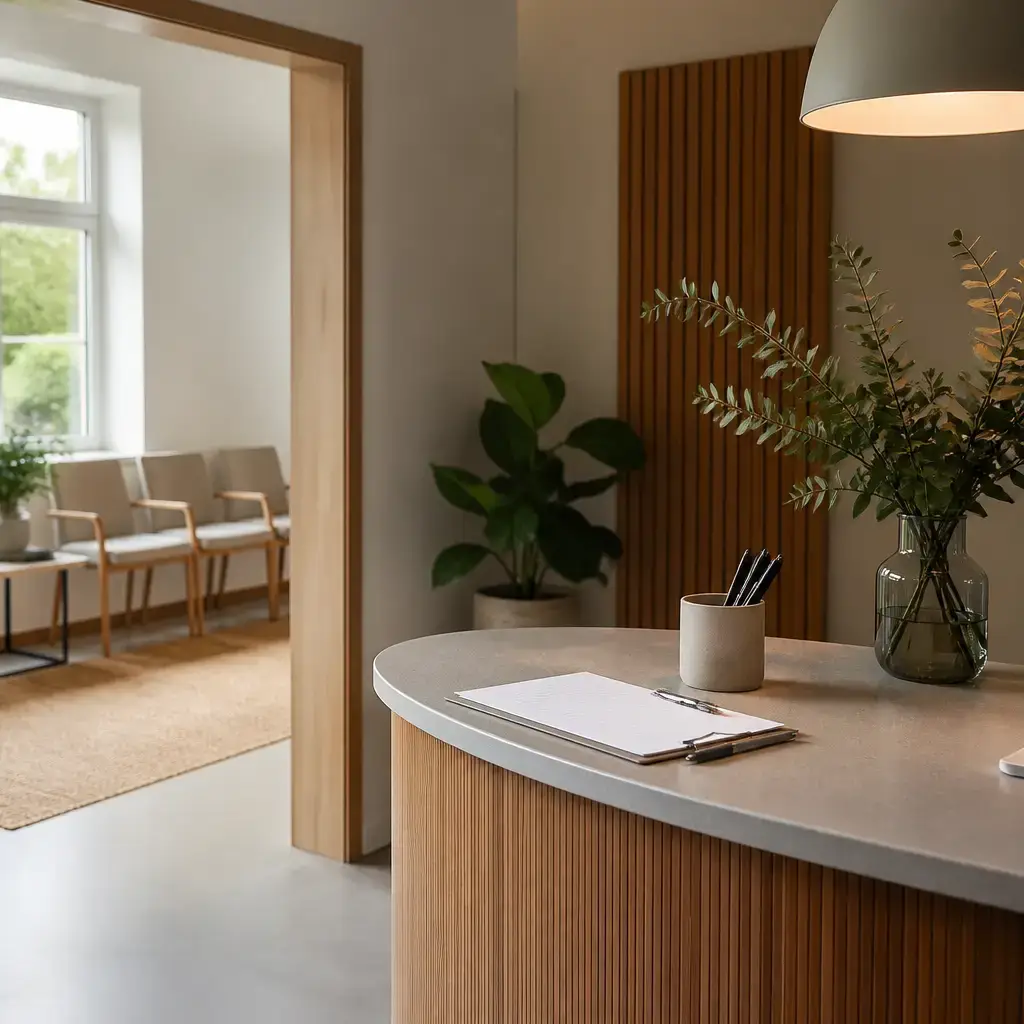
Jeg
‘Jeg’ means ‘I’ and is the speaker referring to themself in ‘Jeg er ikke tryg’. It is used before the verb when stating the speaker’s own state or action.
er
‘Er’ expresses the speaker’s state in ‘Jeg er ikke tryg’: ‘I am not comfortable’. It is used with an adjective or other description after the subject.
ikke
‘Ikke’ makes ‘Jeg er ikke tryg’ negative, meaning that the speaker is not comfortable. It normally comes after the finite verb, as in ‘er ikke’.
tryg
‘Tryg’ describes feeling comfortable or secure, here in ‘ikke tryg ved at tale om følsomme detaljer’. The pattern ‘tryg ved at’ is useful when describing comfort with an activity.
ved
In ‘tryg ved at tale’, ‘ved’ introduces the activity that the speaker is or is not comfortable with. The reusable pattern is ‘tryg ved at’ followed by an infinitive activity.
at
‘At’ marks the infinitive in ‘at tale om følsomme detaljer’, so the phrase means ‘to talk about sensitive details’. It is placed directly before the verb in this infinitive construction.
tale
‘Tale’ means ‘talk’ or ‘speak’ in ‘at tale om følsomme detaljer’. The pattern ‘tale om’ is used when naming the subject being discussed.
om
In ‘tale om følsomme detaljer’, ‘om’ means ‘about’ and connects ‘tale’ with the topic. The same exact form also appears in ‘selv om’, where it contributes to the conjunction explained there.
følsomme
‘Følsomme’ describes the details as sensitive in ‘følsomme detaljer’. It appears directly before the noun it describes, as in the reusable combination ‘følsomme detaljer’.
detaljer
‘Detaljer’ means ‘details’, specifically the sensitive information discussed in ‘følsomme detaljer’. It can be used after a describing word to identify the particular information being discussed.
receptionsskranken
‘Receptionsskranken’ means ‘the reception desk’, the place where the sensitive discussion is taking place. The form refers to a specific desk in the clinic, not to reception in general.
Vi
‘Vi’ means ‘we’ in ‘Vi kan gå til et privat område’. It identifies the speaker and the other person together as the people who can move.
kan
‘Kan’ expresses ability or permission in ‘Vi kan gå til et privat område’: ‘We can go to a private area’. It is followed here by the infinitive ‘gå’ without ‘at’.
gå
‘Gå’ means ‘go’ or ‘move’ in ‘Vi kan gå til et privat område’. The pattern ‘gå til’ is used to name the destination.
til
‘Til’ introduces the destination in ‘gå til et privat område’, meaning ‘go to a private area’. It commonly comes before a place or destination.
et
‘Et’ is the indefinite article before ‘privat område’ in ‘et privat område’, meaning ‘a private area’. It introduces one non-specific area in this phrase.
privat
‘Privat’ describes the area as private in ‘et privat område’. It comes before the noun and identifies the kind of area being offered.
område
‘Område’ means ‘area’ in ‘et privat område’. It names the destination introduced by ‘gå til’.
hvis
‘Hvis’ introduces the condition in ‘hvis der er noget personligt’, meaning ‘if there is anything personal’. It is used to begin a conditional clause.
der
In ‘der er noget personligt’, ‘der’ introduces the existence of something, giving the meaning ‘there is something personal’. The pattern ‘der er’ is used to say that something exists or is present.
noget
‘Noget’ means ‘something’ or, in this context, ‘anything’ in ‘noget personligt’. It is used before ‘personligt’ to refer generally to personal information or matters.
personligt
‘Personligt’ means ‘personal’ in ‘noget personligt’, referring to anything of a personal nature. The expression ‘noget personligt’ is a reusable way to refer generally to a personal matter.
Det
‘Det’ refers back to the proposed move to a private area in ‘Det ville hjælpe’, meaning ‘That would help’. It can refer to a situation, action, or idea already understood from the conversation.
ville
‘Ville’ presents the result as hypothetical or conditional in ‘Det ville hjælpe’: ‘That would help’. It is useful when describing what an imagined or proposed action would achieve.
hjælpe
‘Hjælpe’ means ‘help’ in ‘Det ville hjælpe’. After ‘ville’, it appears as the infinitive without ‘at’, and the pattern can describe the effect of a proposed solution.
fordi
‘Fordi’ introduces the reason in ‘fordi venteværelset ligger meget tæt på’, meaning ‘because the waiting room is very close’. It connects an explanation to the statement it explains.
venteværelset
‘Vent eværelset’ means ‘the waiting room’ in ‘venteværelset ligger meget tæt på’. It names the specific clinic room whose location makes privacy difficult.
ligger
‘Ligger’ describes the location of the waiting room in ‘venteværelset ligger meget tæt på’. The pattern ‘ligger’ followed by a location phrase is used to say where a place is situated.
meget
‘Meget’ intensifies ‘tæt’ in ‘meget tæt på’, meaning ‘very close’. It is placed before the adjective or adverbial description it strengthens.
tæt
‘Tæt’ means ‘close’ in ‘ligger meget tæt på’, describing the short distance to the waiting room. The full pattern ‘tæt på’ identifies what something is close to.
på
In ‘tæt på’, ‘på’ completes the expression meaning ‘close to’; in ‘på formularerne’, it introduces the forms where information is written. Its contribution depends on the construction it forms with the surrounding words.
Dit
‘Dit’ means ‘your’ in ‘Dit privatliv er vigtigt’, referring to the privacy belonging to the person being addressed. It appears before the noun it identifies.
privatliv
‘Privatliv’ means ‘privacy’ in ‘Dit privatliv er vigtigt’. It names the personal boundary that the clinic is acknowledging and protecting.
vigtigt
‘Vigtigt’ means ‘important’ in ‘Dit privatliv er vigtigt’. It describes the value assigned to ‘dit privatliv’ in the statement.
og
‘Og’ means ‘and’ and links the two statements in ‘Dit privatliv er vigtigt, og de detaljer bør ikke diskuteres offentligt’. It joins related information without introducing a contrast.
de
‘De’ means ‘the’ in ‘de detaljer’, referring to the specific details already under discussion. It comes before the plural noun phrase it identifies.
bør
‘Bør’ expresses what ought to happen in ‘de detaljer bør ikke diskuteres offentligt’: the details should not be discussed publicly. It is followed by the verb ‘diskuteres’ and works with ‘ikke’ to state the recommendation negatively.
diskuteres
‘Diskuteres’ means ‘be discussed’ in ‘bør ikke diskuteres offentligt’. The form presents the details as the subject of the discussion without naming who would discuss them.
offentligt
‘Offentligt’ means ‘publicly’ in ‘diskuteres offentligt’, describing where the discussion should not take place. It modifies the action ‘diskuteres’.
Kunne
‘Kunne’ makes ‘Kunne jeg ...?’ a polite request about possibility: ‘Could I ...?’ It comes before the subject ‘jeg’ in this question pattern.
i
In ‘i stedet’, ‘i’ is part of the fixed expression meaning ‘instead’. The whole expression presents an alternative to discussing the information aloud.
stedet
In ‘i stedet’, ‘stedet’ contributes to the expression meaning ‘instead’, as in ‘write it on the forms instead’. It should be understood together with ‘i’ here rather than as a literal physical place.
skrive
‘Skrive’ means ‘write’ in ‘skrive de fleste baggrundsoplysninger på formularerne’. It is the infinitive after ‘Kunne jeg’ and describes putting the information in written form.
fleste
‘Fleste’ means ‘most’ in ‘de fleste baggrundsoplysninger’, referring to the larger part of the background information. The reusable pattern is ‘de fleste’ followed by the relevant plural noun.
baggrundsoplysninger
‘Baggrundsoplysninger’ means ‘background information’ in ‘de fleste baggrundsoplysninger’. It names the information the speaker wants to provide on the forms.
formularerne
‘Formularerne’ means ‘the forms’ in ‘på formularerne’, referring to the specific written forms available at the clinic. The phrase ‘skrive ... på formularerne’ identifies where the information is entered.
du
‘Du’ means ‘you’ in ‘Det kan du godt’, referring to the person who is allowed to put the information on the forms. It is the subject of the clause.
godt
In ‘Det kan du godt’, ‘godt’ strengthens the confirmation, giving the sense ‘you can indeed’ or ‘that is all right’. The full expression is a natural way to confirm that a request is acceptable.
selv om
‘Selv om’ is the conjunction ‘although’ or ‘even though’ in ‘selv om behandleren stadig kan stille spørgsmål privat’. ‘Selv’ adds the sense of concession, while ‘om’ completes the conjunction; together they introduce a fact that does not cancel the preceding permission.
behandleren
‘Behandleren’ means ‘the clinician’ in ‘behandleren stadig kan stille spørgsmål privat’, referring to the specific professional who may ask questions. The form identifies that person as a definite role in the situation.
stadig
‘Stadig’ means ‘still’ in ‘stadig kan stille spørgsmål’, showing that the clinician may ask questions despite the information being written on forms. It is placed before the modal verb phrase here.
stille
‘Stille’ means ‘ask’ in the expression ‘stille spørgsmål privat’. Danish uses this verb with ‘spørgsmål’ when referring to asking questions.
spørgsmål
‘Spørgsmål’ means ‘questions’ in ‘stille spørgsmål privat’. The reusable combination is ‘stille spørgsmål’, followed here by information about the private setting.
gøre
‘Gøre’ means ‘make’ in ‘gøre samtalen meget nemmere for mig’, describing the proposed effect on the conversation. After ‘ville’, it appears as the infinitive without ‘at’.
samtalen
‘Samtalen’ means ‘the conversation’ in ‘gøre samtalen meget nemmere’. It refers to the sensitive discussion that will become easier for the speaker.
nemmere
‘Nemmere’ means ‘easier’ in ‘gøre samtalen meget nemmere for mig’. The construction ‘gøre ... nemmere’ describes making something less difficult.
for
‘For’ introduces the person who experiences the result in ‘nemmere for mig’, meaning ‘easier for me’. It is used before the person affected by the described change.
mig
‘Mig’ means ‘me’ in ‘for mig’, identifying the person who would find the conversation easier. It follows the preposition ‘for’ in this phrase.
noterer
‘Noterer’ means ‘note’ or ‘record’ in ‘Jeg noterer dit ønske’, where the staff member records the person’s preference. It describes an action being carried out in the current service context.
ønske
‘Ønske’ means ‘wish’ or ‘preference’ in ‘dit ønske’, referring to the person’s request for privacy. The pattern ‘dit ønske’ names someone’s stated preference.
før
‘Før’ means ‘before’ in ‘før du bliver kaldt ind’, introducing the time at which the preference will be noted. It connects the main action with the later event.
bliver
‘Bliver’ helps form ‘du bliver kaldt ind’, meaning ‘you are called in’. It places the person being addressed as the one who will undergo the calling-in action.
kaldt
‘Kaldt’ means ‘called’ in ‘bliver kaldt ind’, referring to being summoned for the appointment or conversation. Together with ‘bliver’ and ‘ind’, it forms the expression for being called in.
ind
‘Ind’ means ‘in’ in ‘bliver kaldt ind’, completing the expression ‘be called in’. It indicates movement into the clinic area where the person will be seen.