Undskyld
“Undskyld” means “excuse me” here and is used to get someone’s attention politely before speaking. You can reuse it when addressing a stranger or politely interrupting someone.
jeg
“jeg” means “I” and identifies the speaker as the subject of the sentence. It is commonly placed before the verb, as in “jeg tror” for “I think”.
tror
“tror” means “think” here and introduces the speaker’s belief rather than a definite statement. A common pattern is “jeg tror, at …” followed by what the speaker believes.
køen
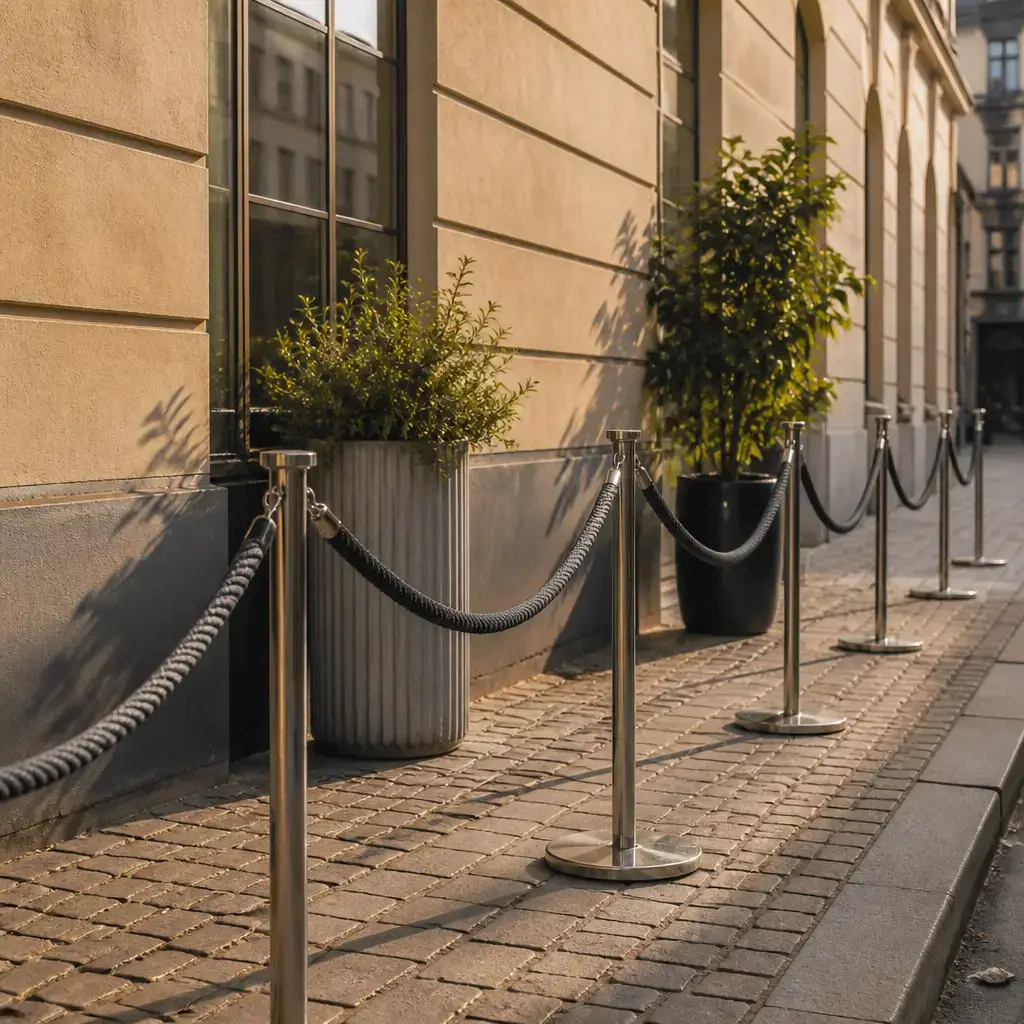
“køen” means “the line” in this dialogue. It is the form of “kø” used for the specific line being discussed, as in “køen starter” or “køen slutter”.
starter
“starter” means “starts” and describes where the line begins. It follows the subject in “køen starter”; you can use the same pattern to say where something starts.
bag
“bag” means “behind” and places the beginning of the line relative to the woman. It is followed here by “den kvinde”, and it can commonly be used before a person or object to describe location.
den
“den” points to the specific woman referred to as “that woman” in “den kvinde”. It comes directly before “kvinde” to identify which woman is meant.
kvinde
“kvinde” means “woman” and names the person used as the location reference in the sentence. It appears after “den” in the phrase “den kvinde”.
var
“var” means “was” in “var ikke klar over”, describing the person’s earlier state of awareness. It is used with “ikke klar over” to say that someone was not aware of something.
ikke
“ikke” means “not” and negates the statement “var klar over”. It is placed before the expression it negates: “var ikke klar over”.
klar
“klar” contributes the idea of being aware in the expression “var ikke klar over”. Together with “over”, it describes whether someone realized or knew about something.
over
“over” is part of the expression “klar over”, which means “aware of” in this dialogue. The expression is followed by what the person was aware of, here “at alle stod i kø”.
at
“at” means “that” and introduces the clause explaining what the person did not realize. It connects “var ikke klar over” with “alle stod i kø”.
alle
“alle” means “everyone” here and is the subject of “stod i kø”. It can be used before a verb when referring to all the people in a group.
stod
“stod” means “stood” in “alle stod i kø”, describing everyone’s position in the line. It is used with “i kø” to express standing in a queue.
i
“i” means “in” in the fixed expression “i kø”, meaning “in line”. It is placed before “kø” in this expression.
kø
“kø” means “line” or “queue” in the expression “stod i kø”. The form “i kø” is a common way to say that people are waiting in line.
Det
“Det” means “it” in “Det er lidt uklart” and refers to the situation just described. It is used as the subject of the statement that the situation is unclear.
er
“er” means “is” and links “Det” with the description “lidt uklart”. It is the present form used to describe the situation as unclear now.
lidt
“lidt” means “a bit” and softens the description “uklart”. It is placed before the adjective in “lidt uklart”.
uklart
“uklart” means “unclear” and describes the situation in “Det er lidt uklart”. It explains why the line may be difficult to recognize.
fordi
“fordi” means “because” and introduces the reason for the situation being unclear. It is followed here by the clause “folk står spredt”.
folk
“folk” means “people” and is the subject of “står spredt”. It refers collectively to the people who are waiting.
står
“står” means “are standing” here and describes the people’s current position. In “folk står spredt”, it is followed by “spredt” to explain that the people are not close together.
spredt
“spredt” means “spread out” and describes how the people are positioned. The pattern “står spredt” can be reused when people or objects are distributed over an area.
Skal
“Skal” asks whether something should happen in the question “Skal jeg så gå om bag i køen?” It is followed by the subject “jeg” and the infinitive “gå”.
så
“så” means “then” and connects the information just given with the next action. In this question, it asks whether going to the back is the appropriate response.
gå
“gå” means “go” in “gå om bag i køen”. It is the infinitive used after “Skal” and describes moving to another place.
om
“om” is part of “gå om bag i køen”, which means “go to the back of the line”. Together with “bag”, it expresses movement toward the back.
Ja
“Ja” means “yes” and confirms the other person’s question. It is followed by the encouraging instruction “gør endelig det”.
gør
“gør” means “do” in the instruction “gør endelig det”. It refers back to the proposed action and is used to tell the person to go ahead with it.
endelig
“endelig” contributes the meaning “please” or “go ahead” in “gør endelig det”. With an instruction, it makes the encouragement sound welcoming rather than reluctant.
har
“har” is used with “ventet” in “Alle har ventet på deres tur” to say that everyone has waited for their turn. It comes before the form “ventet” in this construction.
ventet
“ventet” means “waited” in “har ventet på deres tur”. Together with “har”, it describes the waiting that the people have done.
på
“på” is the preposition used after “ventet” in “ventet på deres tur”. The pattern “vente på” is used when saying what or whom someone is waiting for.
deres
“deres” means “their” and shows that the turn belongs to the people who are waiting. It comes before the noun “tur” in “deres tur”.
tur
“tur” means “turn” in “deres tur”, referring to the point when each person is served or allowed to proceed. The common pattern is “vente på sin or deres tur” when waiting for one’s turn.
går
“går” means “go” or “move” in “Jeg går om bag i køen”. It describes the speaker’s movement to the back of the line.
overså
“overså” means “overlooked” or “missed” in “Jeg overså …”, referring to failing to notice where the line began. It is followed by “hvor køen begyndte”, which states what was missed.
bare
“bare” means “just” here and makes the explanation sound limited or less serious: the speaker simply missed the starting point. It is placed before the clause explaining what happened.
hvor
“hvor” means “where” and introduces the clause describing the location of the line’s beginning. It appears before “køen begyndte” in “hvor køen begyndte”.
begyndte
“begyndte” means “began” in “hvor køen begyndte”. It describes the point at which the line started and is used inside the clause introduced by “hvor”.
slutter
“slutter” means “ends” and tells where the line finishes. It follows “køen” in “Køen slutter”, a useful pattern for describing the endpoint of a line or route.
lige
“lige” means “just” here and indicates that the end of the line is only a short distance past the people. It modifies the location phrase “efter de mennesker”.
efter
“efter” means “after” or “past” and gives the position of the end of the line relative to the people. It is followed by “de mennesker” in this location expression.
de
“de” points to the specific people being indicated as “those people”. It comes before “mennesker” to identify the group.
mennesker
“mennesker” means “people” and refers to the group just past which the line ends. It follows “de” in “de mennesker”.
kan
“kan” means “can” and expresses the speaker’s ability to see the line now. It is followed by the infinitive “se” in “kan se”.
se
“se” means “see” and is the infinitive used after “kan”. In “Jeg kan se det nu”, it describes recognizing or visually noticing something.
nu
“nu” means “now” and marks the current moment when the speaker can see the line. It is placed after “det” in “Jeg kan se det nu”.
venter
“venter” means “wait” or “am waiting” in “Jeg venter der”. It describes the speaker’s current action and is followed by “der” to state the place.
der
“der” means “there” and refers to the location just identified as the end of the line. It is used after “venter” to say where the speaker will wait.
burde
“burde” means “should” or “ought to” and expresses an expected result in “Det burde gøre rækkefølgen tydelig”. It is followed by the infinitive “gøre”.
gøre
“gøre” means “make” in the construction “gøre rækkefølgen tydelig”. The construction means to make the order clear and keeps the object “rækkefølgen” before the description “tydelig”.
rækkefølgen
“rækkefølgen” means “the order” of the people in the line. It is the object of “gøre” in “gøre rækkefølgen tydelig”, the order that becomes clear.
tydelig
“tydelig” means “clear” and describes the order after it has been made clear. It follows the object in the construction “gøre rækkefølgen tydelig”.
misforstod
“misforstod” means “misunderstood” in “Jeg misforstod situationen”. It describes the speaker’s earlier incorrect understanding and is followed by the thing misunderstood.
situationen
“situationen” means “the situation” and is the thing the speaker misunderstood. It is the definite form used for the particular situation in the line.
men
“men” means “but” and connects the admission of misunderstanding with the speaker’s ability to correct it. It introduces a contrast between the two statements.
rette op på
“rette op på” means “fix” or “put right” as a complete expression in “rette op på det”. “rette” contributes correcting, “op” helps form the expression, and “på” connects it to what is being corrected; the reusable pattern is “rette op på” plus the problem or situation.