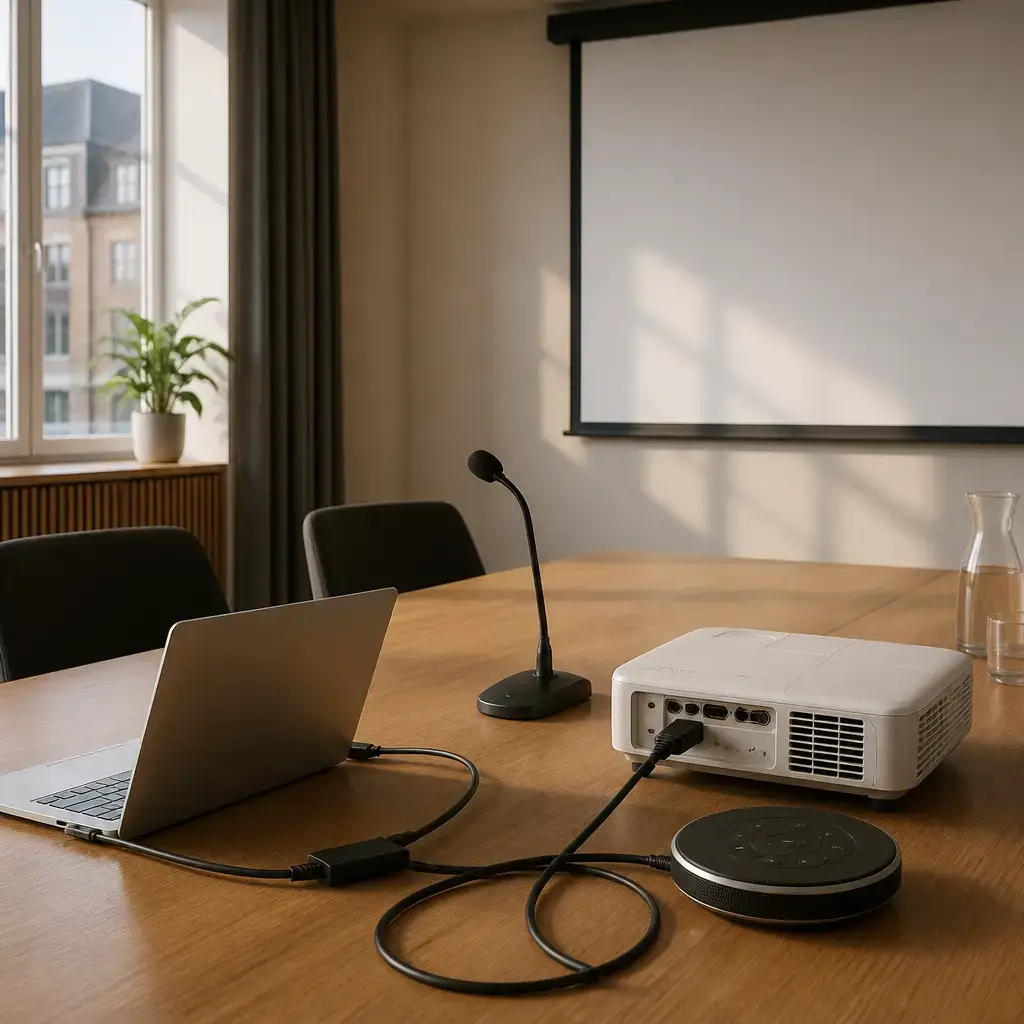
Vi
“Vi” means “we” here: the speaker includes themself and the other person in checking the equipment. It is used as the subject in “Vi bør tjekke udstyret i mødelokalet”. Use “vi” when describing an action done by a group including yourself.
bør
“Bør” expresses that they should check the equipment. It is followed by the infinitive “tjekke” in “Vi bør tjekke udstyret i mødelokalet”. Use “bør” before an action when giving advice or saying what is advisable.
tjekke
“Tjekke” means “to check” in “Vi bør tjekke udstyret i mødelokalet”. It follows “bør” and names the action they should perform. Use “tjekke” before the thing being checked, such as “tjekke udstyret”.
udstyret
“Udstyret” means “the equipment” being checked in the meeting room. The exact form appears in “tjekke udstyret”, where it is the object of the checking action. Use “udstyret” when referring to the relevant equipment as a known group.
i
“I” means “in” and places the equipment in the meeting room in “udstyret i mødelokalet”. It commonly comes before a place or container, as in “i mødelokalet”.
mødelokalet
“Mødelokalet” means “the meeting room” in “i mødelokalet”. It identifies the place where the equipment is located. Use it after “i” when saying that something is in the meeting room.
Mødet
“Mødet” means “the meeting” that will begin soon. It is the subject of “Mødet begynder snart”. Use “mødet” when referring to a specific meeting known from the situation.
begynder
“Begynder” means “starts” or “begins” in “Mødet begynder snart”. It describes the beginning of the meeting. Use “begynder” with an event or activity that is starting.
snart
“Snart” means “soon” in “Mødet begynder snart”. It says that the meeting will begin after only a short time. Use “snart” to indicate that something is expected in the near future.
Lad
“Lad” helps form the suggestion “Lad os gøre det nu”, meaning “Let’s do it now”. Together with “os” and an infinitive, it invites or proposes an action. Use “Lad os” before an action you suggest doing together.
os
“Os” means “us” in “Lad os gøre det nu” and identifies the group invited to do the action. It works with “Lad” in the reusable expression “Lad os” followed by an infinitive. Use it when including yourself and other people in a suggestion.
gøre
“Gøre” means “do” in “Lad os gøre det nu”. It names the action proposed after “Lad os”. Use “Lad os” followed by “gøre” and the thing or action to be done.
det
“Det” means “it” in “Lad os gøre det nu”, referring to the task they are about to carry out. It is also used in “Det er den” in the next line. Use “det” when referring to a thing or action already understood from the context.
nu
“Nu” means “now” in “Lad os gøre det nu”. It makes the suggestion immediate rather than later. Use “nu” to say that an action should happen at this moment.
Er
“Er” means “is” in the question “Er projektoren tilsluttet den bærbare computer?”. At the start of a question, it comes before the subject “projektoren”. Use “er” in questions about a current state or condition.
projektoren
“Projektoren” means “the projector” in “Er projektoren tilsluttet den bærbare computer?”. It is the equipment whose connection is being checked. Use “projektoren” when referring to a specific projector in the situation.
tilsluttet
“Tilsluttet” means “connected” in “projektoren tilsluttet den bærbare computer”. It describes the projector’s connection to the laptop. Use “tilsluttet” with the thing that something is connected to, as in “tilsluttet den bærbare computer”.
den
“Den” has two roles in this dialogue. In “den bærbare computer” it means “the”, while in “Det er den” it refers to “it” or “that one”, namely the projector. Use the surrounding words to identify which role “den” has.
bærbare
“Bærbare” identifies the computer as the portable one in “den bærbare computer”, meaning “the laptop”. It appears between “den” and “computer”. Use the pattern “den” plus an adjective plus a noun when identifying a specific item.
computer
“Computer” means “computer” in “den bærbare computer”. Here it refers specifically to the laptop connected to the projector. Use “computer” after a describing word such as “bærbare” when naming the device.
men
“Men” means “but” and introduces a contrast in “Det er den, men dette kabel sidder lidt løst”. The projector is connected, but the cable has a problem. Use “men” to link two statements with contrasting information.
dette
“Dette” means “this” in “dette kabel” and points to the particular cable being discussed. It is placed directly before “kabel”. Use “dette” plus a noun when pointing out a specific nearby or relevant thing.
kabel
“Kabel” means “cable” in “dette kabel sidder lidt løst”. It is the cable whose fit or position is being assessed. Use “kabel” when naming the connecting wire between equipment.
sidder
“Sidder” means that the cable is positioned or fitted in a certain way in “dette kabel sidder lidt løst”. Here it describes how securely the cable is in place, not a person sitting. Use “noget sidder løst” when an item does not fit tightly.
lidt
“Lidt” means “a little” or “slightly” in “sidder lidt løst”. It softens the description, showing that the cable is loose to a small degree. Use “lidt” before a describing word to express a small amount or degree.
løst
“Løst” describes the cable as loose in “dette kabel sidder lidt løst”. It completes the description of how securely the cable is fitted. Use the pattern “sidder lidt løst” when something is in place but not tight.
teste
“Teste” means “to test” in “Lad os teste mikrofonen, før folk kommer”. It is the action suggested before the people arrive. Use “Lad os” followed by “teste” and the equipment being tested.
mikrofonen
“Mikrofonen” means “the microphone” in “teste mikrofonen”. It is the device they test before the people arrive. Use “mikrofonen” when referring to a specific microphone relevant to the meeting.
før
“Før” means “before” in “før folk kommer”. It introduces the event that should happen later: the people arriving. Use “før” followed by a clause to say that one action happens earlier than another.
folk
“Folk” means “people” in “før folk kommer”. It refers to the people expected to arrive for the meeting. Use “folk” when speaking generally about a group of people.
kommer
“Kommer” means “come” or “arrive” in “før folk kommer”. It describes the people’s expected arrival. Use “folk kommer” as a clause after “før” when saying that people will arrive.
virker
“Virker” means “works” in “Den virker”. It says that the microphone functions correctly. Use “noget virker” to say that a device or other thing is functioning.
lydstyrken
“Lydstyrken” means “the volume” in “lydstyrken er lav”. It refers to the sound level of the microphone. Use “lydstyrken” when discussing or adjusting the volume of audio equipment.
lav
“Lav” means “low” in “lydstyrken er lav”. It describes the volume as being below the desired level. Use “X er lav” when describing a level or amount as low.
Jeg
“Jeg” means “I” in “Jeg skruer lidt op for den”. It marks the speaker as the person who will adjust the volume. Use “jeg” as the subject when talking about your own action.
skruer
“Skruer” means “turns” or “adjusts” in “Jeg skruer lidt op for den”. With “op” and “for den”, it describes increasing the volume. Use “skrue op for” when raising a setting such as the volume.
op
“Op” contributes the meaning of increasing the setting in “skruer lidt op”. It is part of the expression used for turning the volume higher. Use “skrue op” when increasing a setting.
for
“For” is the preposition used in “skruer lidt op for den” to identify what is being adjusted. Here “den” refers to the volume. Use the pattern “skrue op for” followed by the thing whose level is raised.
lyder
“Lyder” means “sounds” in “Det lyder bedre”. It describes how the adjusted sound seems to the speaker. Use “det lyder” before an evaluation of a sound or situation.
bedre
“Bedre” means “better” in “Det lyder bedre”. It compares the current sound with how it sounded before the adjustment. Use “lyder bedre” when saying that something sounds improved.
Rummet
“Rummet” means “the room” in “Rummet er klart”. It refers to the meeting room after the equipment check is complete. Use “rummet” when referring to a specific room already known from the situation.
klart
“Klart” means “ready” in “Rummet er klart”. It says that the room is prepared for the meeting. Use “rummet er klart” to say that the meeting room is ready for use.