Der
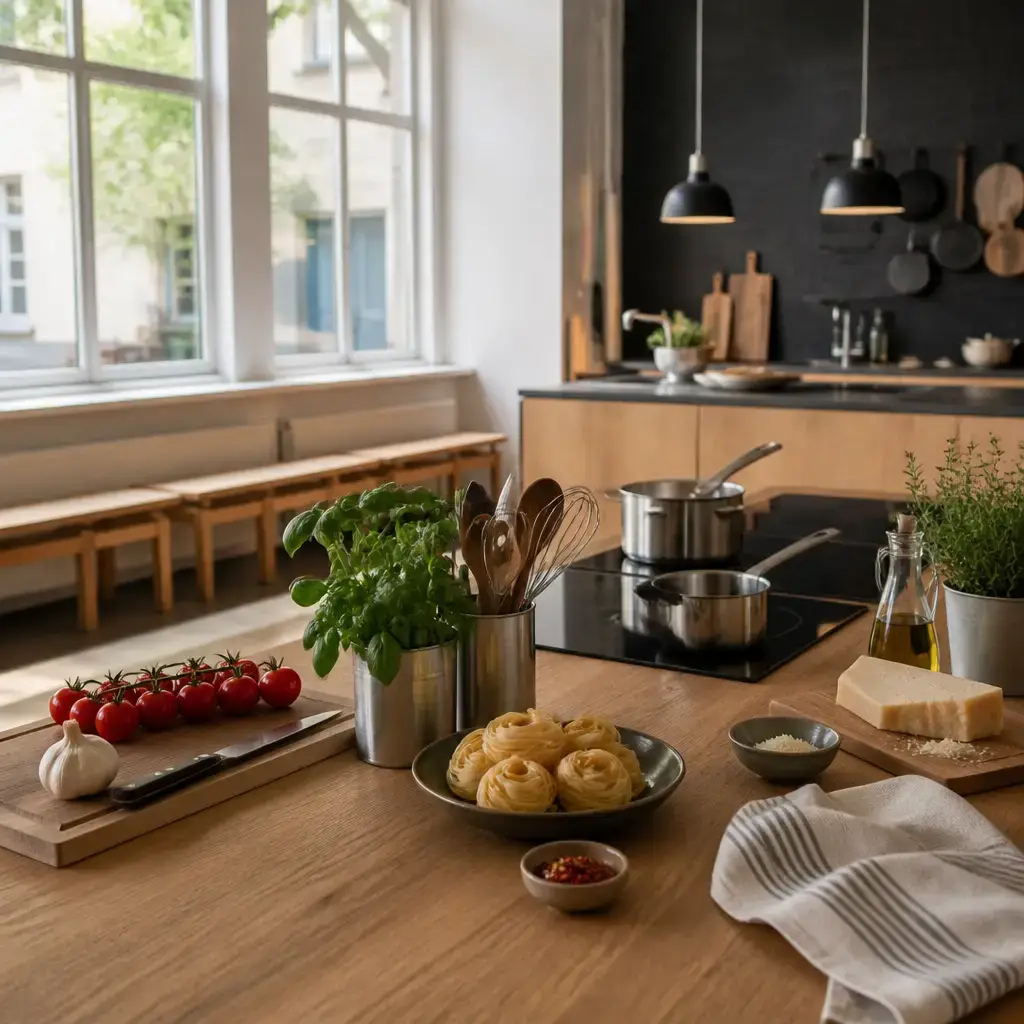
In "Der er et madlavningskursus", "Der" introduces the existence of something: there is a cooking class. It is commonly used at the beginning of the pattern "Der er ..." when saying that something exists or is present.
er
In "Der er et madlavningskursus", "er" helps say that something exists, giving "there is"; in "Er kurset åbent?", it means "is" in a question. Use "Der er ..." to introduce something and "Er ...?" to ask about it.
et
In "et madlavningskursus", "et" means "a" and introduces one cooking course. It comes directly before the noun in this expression, as in the reusable pattern "et + noun".
madlavningskursus
"Madlavningskursus" means a cooking class or cooking course. It is the activity being offered at the community center, and it can be used after "et" in "et madlavningskursus".
i
In "i medborgerhuset", "i" means "in" and indicates the place where the course takes place. Use it before a place when describing where something is or happens.
medborgerhuset
"Medborgerhuset" means "the community center" in this dialogue. The form refers to the specific place where the cooking course is held, as in "i medborgerhuset".
Hvilke
In "Hvilke slags retter", "Hvilke" asks which items or kinds are meant: what kind of dishes. It is used before the plural expression "slags retter" in this question pattern.
slags
In "Hvilke slags retter", "slags" contributes the meaning "kind" or "type". The reusable question pattern is "Hvilke slags + plural noun?" when asking what kinds of things someone means.
retter
"Retter" means dishes, referring here to prepared foods such as pasta dishes. It appears in the expression "slags retter" and in the compound "pastaretter".
lærer
In "lærer de dig at lave", "lærer" means "teach": the class teaches you how to make something. A useful pattern is "lærer nogen at + verb", as in "lærer de dig at lave".
de
In "lærer de dig", "de" means "they" and identifies the people who teach you. It is used as the subject before the verb in this question.
dig
In "lærer de dig at lave", "dig" means "you" as the person receiving the teaching. It follows the verb in the pattern "lærer nogen at + verb".
at
In "at lave", "at" marks the following verb as an infinitive, giving the meaning "to make" or "to cook". It commonly comes directly before an infinitive after a verb such as "lærer".
lave
"Lave" means "make" in "at lave" and "cook" in "lave den til os". It is used after "at" in the first expression and after "kan" in the second, with the object placed after it.
Enkle
In "Enkle pastaretter", "Enkle" means simple and describes the pasta dishes being taught. It comes directly before the noun it describes.
pastaretter
"Pastaretter" means pasta dishes. It names the food being taught and is described by "Enkle" in "Enkle pastaretter".
og
In "Enkle pastaretter og simple saucer", "og" means "and" and joins two types of food. Use it between items or groups that belong together in a list.
simple
In "simple saucer", "simple" means basic or uncomplicated and describes the sauces. It appears directly before the noun "saucer".
saucer
"Saucer" means sauces, the second type of food mentioned in the class. It follows the adjective in "simple saucer".
kurset
"Kurset" means "the course", referring to the cooking course already mentioned. It is used in both "Er kurset åbent?" and "Kurset starter ..." when talking about that specific course.
åbent
In "Er kurset åbent for begyndere?", "åbent" means open or available to beginners. It describes the course in the pattern "åbent for + group".
for
In "åbent for begyndere", "for" means "for" and introduces the people the course is intended for. Use it after "åbent" when specifying who may participate.
begyndere
"Begyndere" means beginners, the people with little or no previous experience who may join the course. It follows "for" in "åbent for begyndere".
starter
In "Kurset starter med de grundlæggende trin", "starter" means starts or begins. A useful pattern is "starter med + activity or thing" when describing what something begins with.
med
In "starter med de grundlæggende trin", "med" means "with" and introduces the first material or activity. Use "starter med + noun" to say what something begins with.
grundlæggende
In "de grundlæggende trin", "grundlæggende" means basic or fundamental. It describes the steps that form the starting point of the class.
trin
"Trin" means steps in "de grundlæggende trin", referring to the basic stages or instructions for cooking. It is used after an adjective in this noun phrase.
Du
In "Du bør melde dig til", "Du" means "you" and is the person being advised to register. It appears as the subject before "bør".
bør
In "Du bør melde dig til", "bør" expresses advice: you should or ought to do something. It is followed by the infinitive expression "melde dig til".
melde
In "melde dig til", "melde" contributes the meaning of registering or signing up. The reusable expression is "melde sig til" or, with a specific person, "melde dig til" for joining an activity.
til
In "melde dig til", "til" is part of the expression for registering or signing up for an activity. Keep it with "melde dig" when using this pattern.
Jeg
In "Jeg vil gerne lære", "Jeg" means "I" and identifies the speaker. It is used as the subject before the expression "vil gerne".
vil
In "vil gerne lære", "vil" contributes the meaning of wanting or intending to do something. Together with "gerne", it introduces a polite desire followed by an infinitive.
gerne
In "vil gerne lære", "gerne" helps express that the speaker would like to learn. The reusable pattern is "vil gerne + infinitive" for stating what you would like to do.
lære
In "vil gerne lære én nyttig opskrift", "lære" means learn. It follows "vil gerne" and takes the thing being learned after it, here "én nyttig opskrift".
én
In "én nyttig opskrift", "én" means one and emphasizes the quantity of recipes the speaker wants to learn. It comes directly before the adjective and noun in this phrase.
nyttig
In "én nyttig opskrift", "nyttig" means useful or practical and describes the recipe. It is placed before the noun "opskrift".
opskrift
"Opskrift" means recipe, the thing the speaker wants to learn and later cook. It appears in the phrase "én nyttig opskrift".
kan
In "Du kan lave den til os", "kan" means can and expresses the possibility or ability to cook it. It is followed by the infinitive "lave".
den
In "lave den til os", "den" means "it" and refers back to the recipe. It is the object of "lave" in the pattern "lave den til nogen".
os
In "lave den til os", "os" means "us" and identifies the people for whom the food will be cooked. It follows "til" in the expression "til os".
bagefter
In "lave den til os bagefter", "bagefter" means afterward or later, referring to the time after the class or learning activity. It is placed at the end here to say when the cooking will happen.