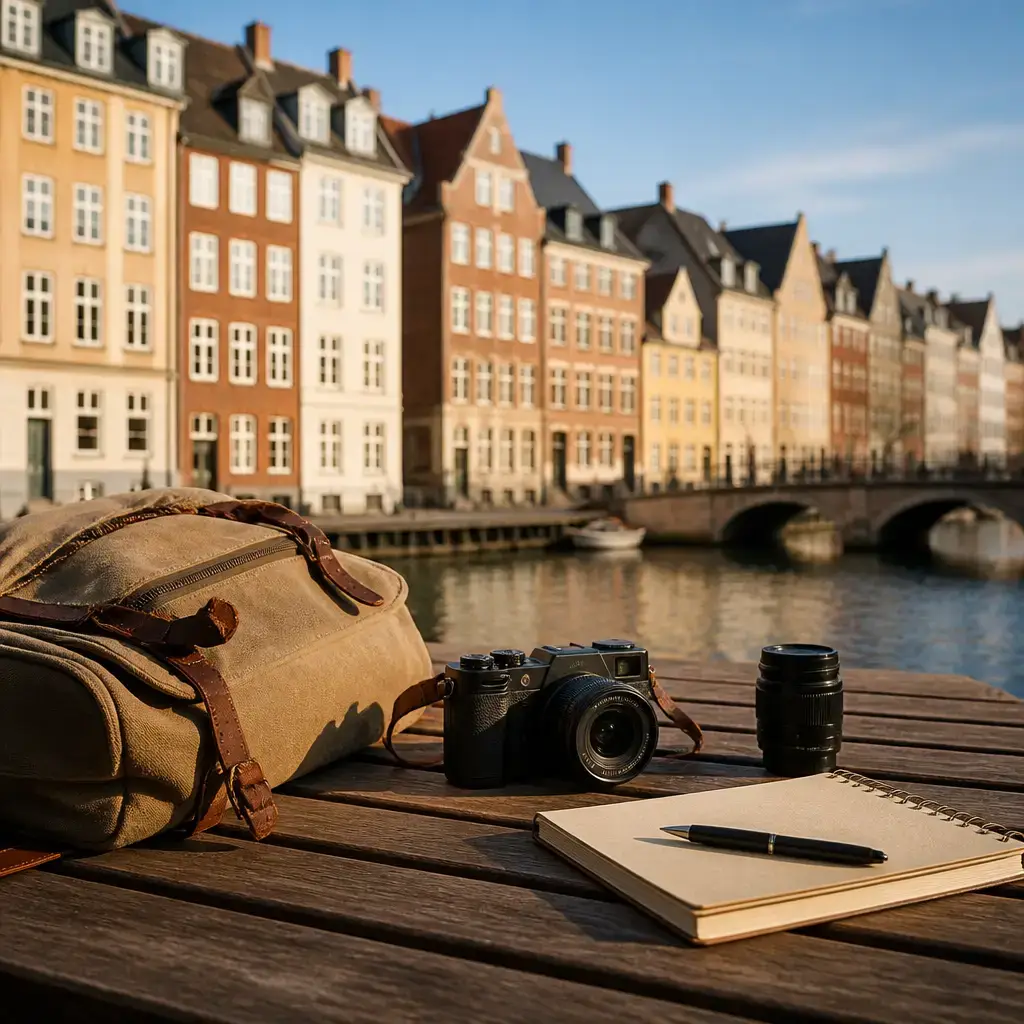
Vil
In “Vil du med på en fototur i morgen?”, “Vil” asks whether the listener wants to join. It is used at the beginning of this yes/no question.
du
“du” means “you” and refers to the person being invited. It is the person who may join the photo walk.
med
Here “med” means “along” in the invitation “Vil du med på en fototur i morgen?”. It is commonly used when asking whether someone will join an activity.
på
In “på en fototur”, “på” introduces the activity the person may join. It commonly occurs before an activity or event in this kind of invitation.
en
“en” means “a” in “en fototur”, introducing one unspecified photo walk. It comes directly before the noun.
fototur
“fototur” means “photo walk”, the planned activity in the dialogue. It is a compound word combining the idea of photos with a trip or walk.
i
In “i morgen”, “i” is part of the expression meaning “tomorrow”. This time expression tells when the photo walk will happen.
morgen
In “i morgen”, “morgen” contributes the meaning of tomorrow. The expression is used to refer to the day after today.
Jeg
“Jeg” means “I” and identifies the speaker in “Jeg kunne godt bruge mere øvelse i fotografering.”. It is used as the subject of the sentence.
kunne
In “Jeg kunne godt bruge mere øvelse i fotografering”, “kunne” gives the idea that the speaker could use or would benefit from something. It is followed by the action word “bruge”.
godt
In “Jeg kunne godt bruge mere øvelse i fotografering”, “godt” is part of the natural wording for saying that the speaker could use something. Here it helps express the speaker’s need for more practice rather than simply meaning “well”.
bruge
In “kunne godt bruge mere øvelse”, “bruge” means “use” in the sense of needing or benefiting from something. It follows “kunne” and is followed by the thing that would be useful.
mere
“mere” means “more” in “mere øvelse”, showing that the speaker wants additional practice. It comes directly before the thing being increased.
øvelse
“øvelse” means “practice” in the context of improving at photography. It can be used for practice in a skill or activity.
fotografering
“fotografering” means “photography” in “øvelse i fotografering”. It names the activity that the speaker wants more practice with.
Morgenlyset
“Morgenlyset” means “the morning light” and refers to the light available in the morning. The form names this particular light as the subject of the sentence.
burde
“burde” expresses an expectation or reasonable judgment: the morning light is expected to be better. It is followed by “være” in “burde være bedre”.
være
In “burde være bedre”, “være” means “be” and links the morning light with the quality “bedre”. It follows the modal word “burde”.
bedre
“bedre” means “better” and compares the morning light with another possible time or condition. It describes how suitable the light should be for street photos.
til
In “bedre til gadefotos”, “til” introduces what the light is suitable for. It commonly connects a quality with an activity or purpose.
gadefotos
“gadefotos” means “street photos”, the kind of pictures the speakers plan to take. It is a compound word referring to photos of or in the street.
Hvad
“Hvad” means “what” in “Hvad skal vi fotografere først?”. It asks the listener to identify the first subject of the photography plan.
skal
In “Hvad skal vi fotografere først?”, “skal” presents the planned action the speakers are deciding on. It is followed by the subject “vi” and the action word “fotografere”.
vi
“vi” means “we” and refers to both people planning the photo walk. It is the subject of the planned photography action.
fotografere
“fotografere” means “photograph” in “skal vi fotografere”. It names the action that the two speakers are deciding to do first.
først
“først” means “first” and asks which subject should be photographed before the others. It marks the order of the planned actions.
kan
In “Vi kan begynde med gamle bygninger”, “kan” expresses that the speakers are able or free to start there. It is followed by the action word “begynde”.
begynde
“begynde” means “begin” in “kan begynde med gamle bygninger”. It describes the first step of the photo walk and follows “kan”.
gamle
“gamle” describes the buildings as old in “gamle bygninger”. It comes before the noun it describes.
bygninger
“bygninger” means “buildings” and refers to the old buildings chosen as the first photography subject. The form refers to more than one building.
tager
In “Jeg tager mit lille kamera og et ekstra batteri med”, “tager” contributes the meaning of bringing or taking something along. The objects being brought appear before the final “med”.
mit
“mit” means “my” in “mit lille kamera” and shows that the camera belongs to the speaker. It comes before the noun phrase it identifies.
lille
“lille” means “small” and describes the speaker’s camera in “mit lille kamera”. It is placed before the noun.
kamera
“kamera” means “camera”, the item the speaker plans to bring. It is the main noun in “mit lille kamera”.
og
“og” means “and” and joins the camera with the extra battery in the list of things being brought. It connects two objects of the same action.
et
“et” means “an” in “et ekstra batteri”, introducing one unspecified battery. It comes before the adjective and noun.
ekstra
“ekstra” means “extra” and shows that the battery is an additional item. It comes before “batteri” in the noun phrase.
batteri
“batteri” means “battery”, the additional item the speaker will bring. It is the noun described by “ekstra”.
Lad
In “Lad os mødes, før der bliver travlt i gaderne”, “Lad” begins a suggestion to do something together. It is used with “os” before the suggested action.
os
“os” means “us” in “Lad os mødes” and refers to the speaker and listener together. It is part of the wording used to make a shared suggestion.
mødes
“mødes” means “meet” in “Lad os mødes”. It describes the shared action the speakers suggest doing before the streets become busy.
før
“før” means “before” and introduces the time condition “der bliver travlt i gaderne”. It shows that the meeting should happen earlier.
der
In “der bliver travlt i gaderne”, “der” introduces the situation that will become busy. Here it does not point to a specific place.
bliver
“bliver” means “becomes” or “gets” in “bliver travlt”. It describes a change to a busier situation.
travlt
“travlt” means “busy” in the expression “bliver travlt i gaderne”. It describes the situation in the streets as activity increases.
gaderne
“gaderne” means “the streets” and identifies where it will become busy. The form refers to the streets as a known group in the plan.
Så
“Så” means “then” and links the later comparison to the earlier photo walk. It introduces a consequence or next step in the plan.
sammenligne
“sammenligne” means “compare” in “kan vi sammenligne vores billeder senere”. It names the action the speakers can do after taking their photos.
vores
“vores” means “our” and shows that the pictures belong to both speakers in “vores billeder”. It comes before the noun it describes.
billeder
“billeder” means “pictures” or “photos” and refers to the images the speakers will take. The form refers to more than one picture.
senere
“senere” means “later” and places the comparison after the photo walk. It is useful for referring to a later time without specifying exactly when.