Må
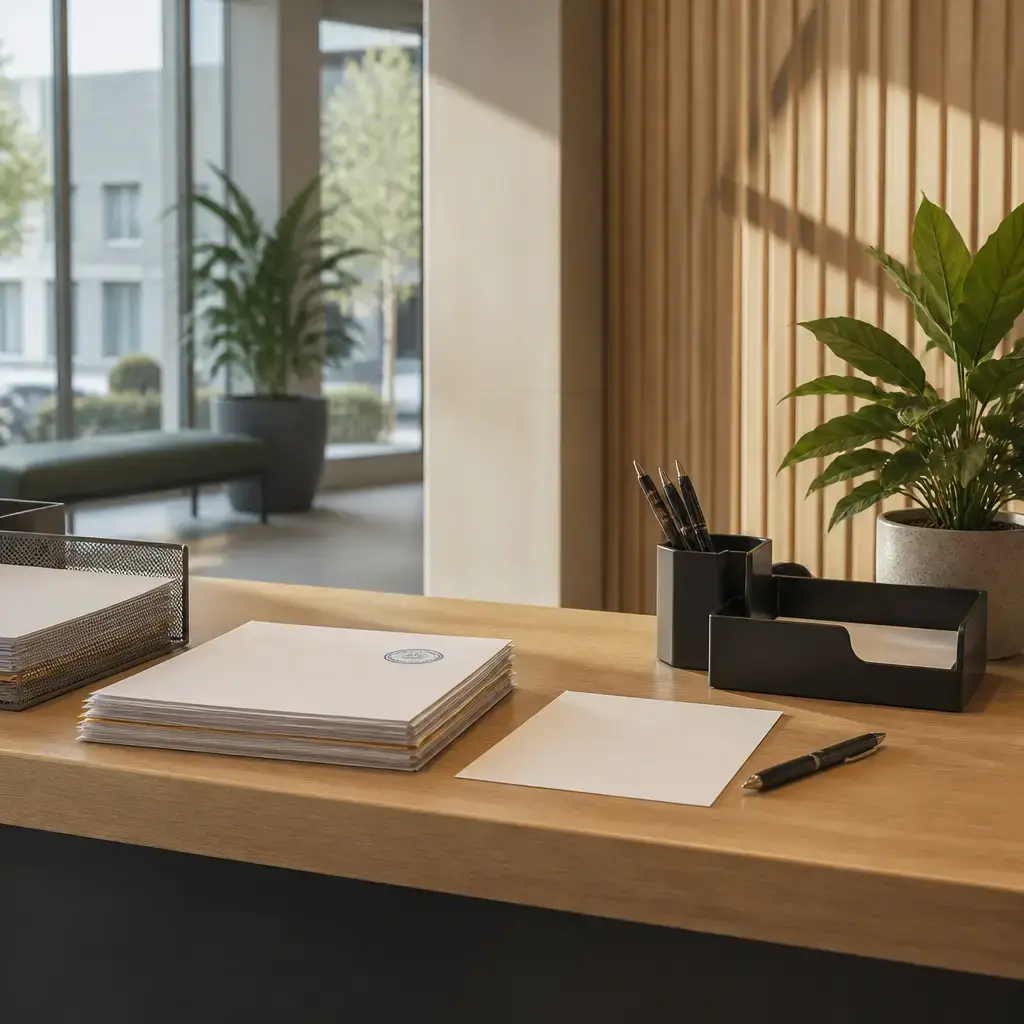
“Må” means “may” or “could” in the polite request “Må jeg få en kopi af dette dokument?”. It is used at the beginning of “Må jeg ...?” when asking permission or making a request at a service desk.
jeg
“jeg” means “I” and identifies the person making the request or describing what they need. It appears in patterns such as “Må jeg få ...?” and “Jeg skal se ...”, useful when speaking about your own action or need.
få
“få” means “get” or “receive” in “Må jeg få en kopi af dette dokument?”. After “Må jeg”, it describes what the speaker is requesting; reuse it with an item, as in “få en kopi”, when asking to receive something.
en
“en” introduces one unspecified item in “en kopi” and “en formular”. It comes directly before the noun, so “en + noun” is useful when referring to one form, copy, or other item.
kopi
“kopi” means “copy” in “en kopi af dette dokument”, the duplicate being requested. The pattern “en kopi af + source” identifies what the copy is made from, such as this document at a service desk.
af
“af” means “of” or “from” in “en kopi af dette dokument” and connects the copy with its source. Reuse “en kopi af + source” when saying what document or material has been copied.
dette
“dette” means “this” in “dette dokument” and points to the document present or being discussed. The reusable pattern “dette + noun” identifies a specific nearby item.
dokument
“dokument” means “document” in “dette dokument”. It names the paper being presented at the service desk; “dette dokument” is useful when pointing out the document in front of you.
skal
“skal” expresses a need or requirement in “Jeg skal se originalen først.”, while “Skal jeg udfylde en formular?” asks whether something is required. Use “jeg skal + verb” for your own necessary action and “skal jeg + verb?” to ask about the required action.
se
“se” means “see” or “inspect” in “se originalen først”. It follows “skal” and takes the item being inspected as its object, as in “skal se originalen” at a document desk.
originalen
“originalen” means “the original” and refers to the source document rather than the copy. It is the definite form related to “original”; reuse it in “se originalen” when asking to inspect the original document.
først
“først” means “first” or “before proceeding” in “se originalen først”. It is placed after the action and its object here; “... først” is useful for stating what must happen before the next step.
udfylde
“udfylde” means “fill out” in “Skal jeg udfylde en formular?”. It follows “skal” and takes “en formular” as its object, making “udfylde en formular” a useful pattern for administrative tasks.
en formular
The expression “en formular” means “a form”: “en” introduces one unspecified item, and “formular” names the form or document. Use it with “udfylde”, as in “udfylde en formular”, when asking or saying that a form must be completed.
Udfyld
“Udfyld” means “complete” or “fill out” as a direct instruction in “Udfyld venligst formularen.”. It is used with the object that should be completed, especially in a service-desk instruction.
venligst
“venligst” means “please” and makes the instruction polite in “Udfyld venligst formularen.”. It can appear between the instruction and its object, as also shown in “Håndter venligst originalen” when making a polite request.
formularen
“formularen” means “the form”, referring to the specific form already understood in the conversation. It is the definite form related to “formular”; “udfyld formularen” is useful when telling someone to complete a particular form.
Så
“Så” means “then” in “Så kan jeg lave kopien.” and introduces the consequence of completing the form. Use “Så kan ...” to connect a completed step with what can happen next.
kan
“kan” means “can” and expresses ability or possibility in “Så kan jeg lave kopien.”. After the initial “Så”, it is followed by the subject and the action; this pattern is useful for explaining what can happen next.
lave
“lave” means “make” in “kan jeg lave kopien” and describes producing the requested copy. It follows “kan” and takes the item being made as its object, as in “kan jeg lave kopien” at the service desk.
kopien
“kopien” means “the copy”, referring to the specific copy the staff member will make. It is the definite form related to “kopi”; reuse it in “lave kopien” when discussing that particular copy.
kun
“kun” means “only” and limits the request to one page in “Jeg skal kun bruge siden med stemplet.”. It is useful for specifying that no other pages or items are needed.
bruge
“bruge” means “need” in the context “skal kun bruge siden med stemplet”, although it can also refer to using something in other contexts. The pattern “skal bruge + object” states what someone requires, here the page with the stamp.
siden
“siden” means “the page” in “siden med stemplet” and refers to the specific page being requested. It is the definite form related to “side”; “siden med ...” helps identify a page by what it contains.
med
“med” means “with” in “siden med stemplet” and connects the page with the stamp that identifies it. The pattern “X med Y” is useful when selecting an item by an accompanying feature.
stemplet
“stemplet” means “the stamp” in “siden med stemplet”, referring to the mark on the page. In this expression it follows “med” and identifies which page is wanted; reuse “med stemplet” when referring to a page bearing that stamp.
kopierer
“kopierer” describes copying the specified page in “Jeg kopierer den side”. Its object is “den side”; use “kopierer + object” when stating what document page or item is being copied.
den
“den” means “that” in “den side” and points to the particular page just identified. The pattern “den + noun” is useful when referring to a specific item rather than an unspecified one.
side
“side” means “page” in “den side”. Here it refers to the page that will be copied; “den side” is a useful expression when pointing to a particular page.
og
“og” means “and” and joins the two actions in “Jeg kopierer den side og holder de andre sider samlet.”. Use it to connect two actions performed by the same person in one statement.
holder
“holder” means “keeps” or “holds” in “holder de andre sider samlet”. It describes keeping the remaining pages together; “holder ... samlet” is useful when stating that items will remain as one group.
de
“de” marks the known set of pages in “de andre sider”, meaning “the” in this plural expression. The pattern “de andre + plural noun” is useful for referring to the remaining items in a group.
andre
“andre” means “other” in “de andre sider” and distinguishes the remaining pages from the page being copied. Use it with a noun when identifying the rest of a group, as in “de andre sider”.
sider
“sider” means “pages” and refers to multiple pages in “de andre sider”. It is the plural form related to “side”; use it when talking about several pages together.
samlet
“samlet” means “together” or “as one group” in “holder de andre sider samlet”. The same idea appears in “afleverer det hele samlet igen”; use it when items should stay together as a bundle.
Håndter
“Håndter” means “handle” as an instruction in “Håndter venligst originalen forsigtigt.”. It is used with the item being handled and can be followed by a word describing how to handle it, especially when dealing with an important document.
forsigtigt
“forsigtigt” means “carefully” and describes the manner of handling in “Håndter venligst originalen forsigtigt.”. Use it after an action when asking someone to treat a document or object with care.
afleverer
“afleverer” means “returns” or “hands back” in “Jeg afleverer det hele samlet igen.”. It describes giving the complete set back; use it with the returned item and “igen” when explaining that something will be handed back.
det
“det” forms the expression “det hele” in “Jeg afleverer det hele samlet igen.” and refers to the document material as a whole. Use “det hele” when referring to everything in the relevant set rather than one individual item.
hele
“hele” means “whole” or “everything” in “det hele”. Together, “det hele” refers to the complete set of pages or documents; this expression is useful when nothing from the set should be left out.
igen
“igen” means “again” in “afleverer det hele samlet igen” and indicates that the items are being returned to the person or place they came from. It commonly follows the action or the returned item when describing a repeated or reversing action.