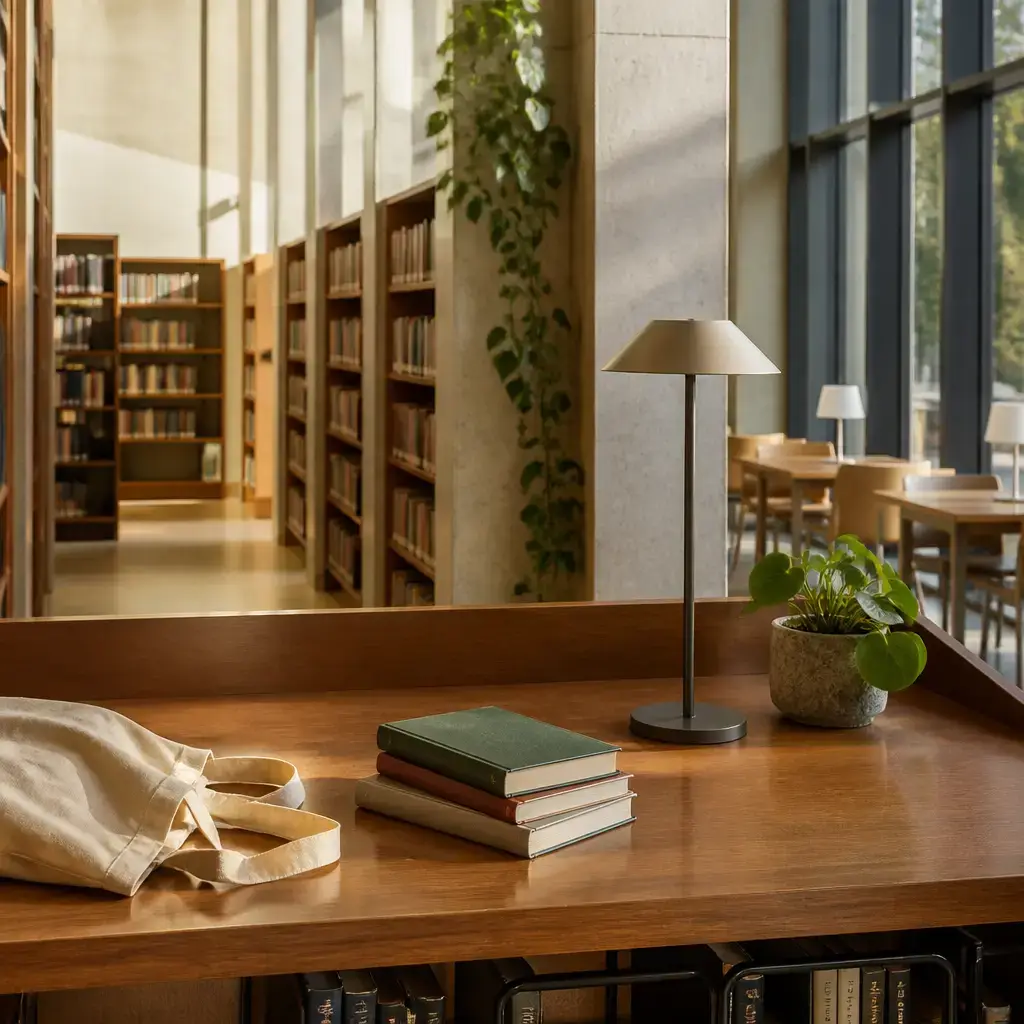
Dette
“Dette” means “this” in “Dette bibliotek” and points to the library being discussed. Use it directly before the noun it identifies when referring to one specific thing nearby or already known.
bibliotek
“bibliotek” means “library” in “Dette bibliotek”. It names the quiet place where people study and borrow books; use it for a library as a place or institution.
er
“er” means “is” and links “Dette bibliotek” with the description “meget stille”. It is used to describe what something is like or where it is; here it describes the library.
meget
“meget” means “very” and strengthens the description “stille”. Put it before an adjective when you want to make the description stronger, as in “meget stille”.
stille
“stille” means “quiet” in “Dette bibliotek er meget stille”. It describes the library’s low-noise atmosphere and can be used when describing a quiet place or situation.
Vi
“Vi” means “we” and refers to the people speaking on behalf of the library. Use it as the subject when the speaker includes themselves and at least one other person.
taler
“taler” means “speak” in “Vi taler lavt”, describing how the library staff or people present use their voices. It is the form used with “Vi” here; reuse it when talking about speaking in a particular way.
lavt
“lavt” means “quietly” or “at a low volume” in “Vi taler lavt”. It tells how the speaking happens, so it follows “taler” in this expression; use it when asking people to keep their voices down.
så
“så” means “so that” and introduces the purpose in “så folk kan studere”. It connects the quiet speaking with the result or purpose of allowing people to study.
folk
“folk” means “people” in “så folk kan studere”. It refers generally to the people using the library rather than to one named person; use it for a group of people in a general statement.
kan
“kan” means “can” in “folk kan studere”, expressing ability or possibility. It is followed by the action “studere”; use the same kind of pattern when saying that someone can do something.
studere
“studere” means “study” in “folk kan studere”. It follows “kan” as the action that people are able to do; use it when talking about studying, especially in an academic or library setting.
Jeg
“Jeg” means “I” and is the person who wants to borrow the book. Use it as the subject when speaking about yourself.
vil
“vil” contributes “want” in the polite request “Jeg vil gerne låne denne bog”. Together with “gerne”, it expresses the speaker’s wish; use it before an action when stating what you want to do.
gerne
“gerne” contributes a willing or polite tone to “Jeg vil gerne låne denne bog”. The whole expression “vil gerne” means that the speaker would like to do something; reuse it before an action when making a friendly request or stating a wish.
låne
“låne” means “borrow” in “vil gerne låne denne bog”. It is the action that follows “vil gerne”; use it when taking something for a time with the intention of returning it.
denne
“denne” means “this” in “denne bog” and identifies the particular book the speaker is pointing to or choosing. Use it directly before the noun when referring to one specific item.
bog
“bog” means “book” in “denne bog”. It is the item the visitor wants to borrow; use it when talking about a book as something to read or borrow.
den
“den” refers back to the book in “låne den til dig” and “aflevere den”. It avoids repeating the noun; use it when the item being discussed is already clear from the conversation.
til
“til” means “to” or “for” in “til dig”, showing who receives the service or benefit. In this dialogue it is part of “låne den til dig”; reuse it before a person who receives or benefits from an action.
dig
“dig” means “you” in “til dig”, referring to the visitor who receives the borrowed book. It follows “til” here; use it when addressing one person as the recipient or beneficiary.
ved
“ved” means “at” or “by” in “ved skranken” and locates the action at the desk. Use it before a place or point near which an action happens.
skranken
“skranken” means “the desk” or “the counter” in “ved skranken” and “til skranken”. It refers to the library service desk; the exact form is used when talking about that specific desk.
Hvor
“Hvor” means “where” in “Hvor skal jeg aflevere den?”. It asks for the place connected with returning the book; use it at the beginning of a question about location.
skal
“skal” expresses “should” in “Hvor skal jeg aflevere den?”, asking what the speaker is expected or meant to do. It is followed by “jeg” and the action “aflevere”; reuse it when asking about an instruction or obligation.
aflevere
“aflevere” means “return” or “hand in” in “aflevere den”. It describes giving the borrowed book back; use it with the item being returned, as in “aflevere den”.
Bring
“Bring” means “bring” in the instruction “Bring den tilbage til skranken”. It tells the visitor what action to take; use this form when directly instructing one person to bring something.
tilbage
“tilbage” means “back” in “Bring den tilbage”. It shows that the book should go back to the desk or its previous place; use it after an action when something is returned.
når
“når” means “when” in “når du er færdig”. It introduces the time or condition for bringing the book back; use it before a clause that says when something should happen.
du
“du” means “you” in “du er færdig”, referring to the visitor. Use it as the subject when addressing one person directly.
færdig
“færdig” means “finished” in “du er færdig”. The phrase “er færdig” describes the point when the visitor has finished using the book; use it with “er” to describe being finished with an activity.
Pladsen
“Pladsen” means “the seat” or “the place” in “Pladsen ved vinduet”. It refers to the particular place by the window; the exact form identifies a specific seat or place already being considered.
vinduet
“vinduet” means “the window” in “ved vinduet”. It identifies the window next to the seat; use the form when referring to a particular window in the setting.
ser
“ser” means “looks” in “ser behagelig ud”. It begins the expression used to describe how the seat appears; use it with a description when giving an impression based on appearance.
behagelig
“behagelig” means “comfortable” in “ser behagelig ud”. It describes the apparent comfort of the seat; use it for a place or thing that seems pleasant to sit in or use.
ud
“ud” completes the expression “ser behagelig ud”, which means “looks comfortable”. It belongs with “ser” and helps present the description as an appearance; reuse the full pattern “ser ... ud” when saying how something looks.
sidde
“sidde” means “sit” in “kan sidde der”. It follows “kan” and names the action the visitor is able to do in the seat; use it after “kan” when talking about being seated.
der
“der” means “there” in “sidde der” and points to the seat by the window. Use it to refer to a place that is clear from the situation or has just been mentioned.
og
“og” means “and” in “sidde der og læse”. It joins the actions of sitting there and reading; use it to connect two actions or pieces of information.
læse
“læse” means “read” in “kan sidde der og læse”. It is the second action joined to sitting; use it after “kan” or after “og” when talking about reading.
før
“før” means “before” in “før du går”. It places reading earlier than the visitor’s departure; use it before an action or clause that must happen first.
går
“går” means “leave” or “go” in “før du går”. It describes the visitor’s departure from the library; use it after “du” when saying that someone goes or leaves.