About This Lesson
Use Choosing a quiet break spot to practice Danish conversation, pronunciation, vocabulary, grammar, and quizzes.
Dialogue
A
Hvor kan vi holde pause?
VOHR kan VEE HOL-uh POW-suh? Where can we take a break?
B
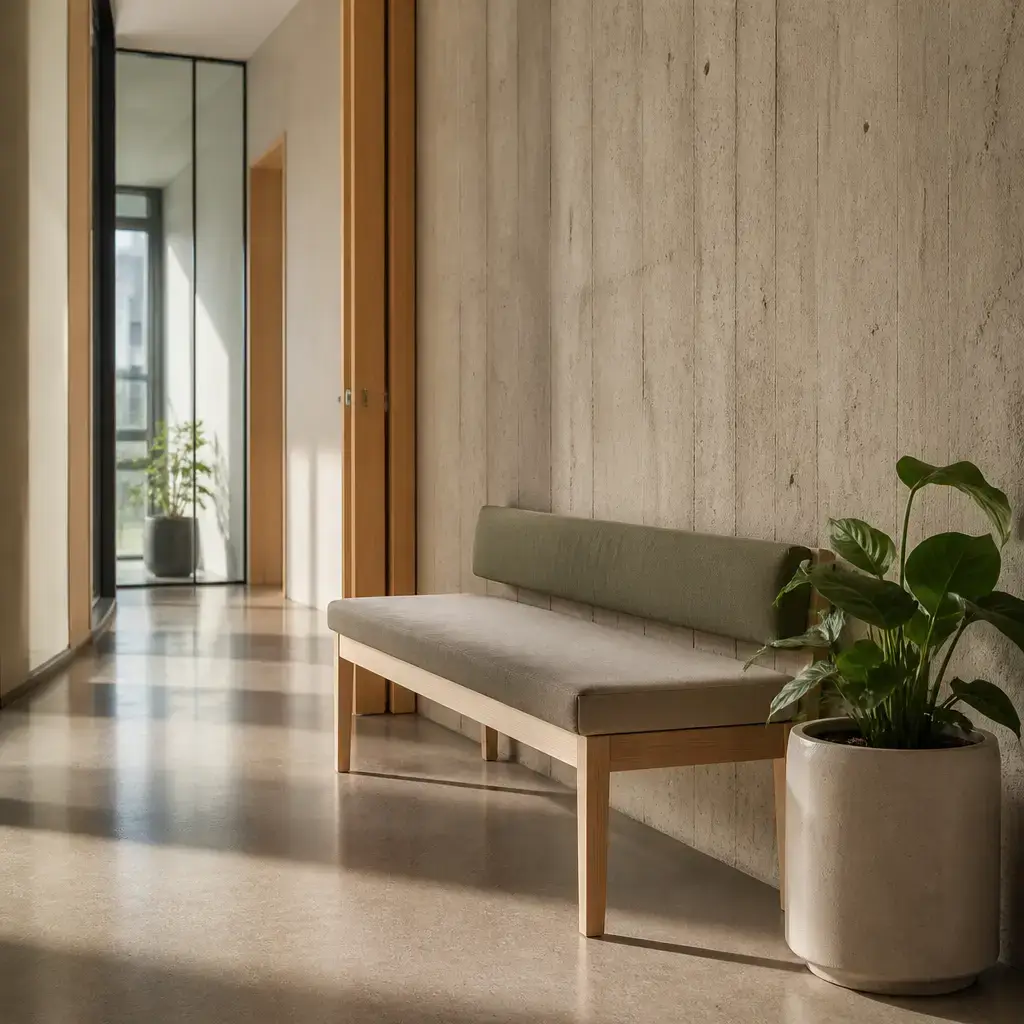
Der er et roligt sted i gangen.
DAIR air et ROH-lee SDEH ee GAHNG-un. There's a quiet spot in the hall.
A
Er der en bænk dér?
AIR dair en BENK DAIR? Is there a bench there?
B
Der er en ved væggen.
DAIR air en VEHth VENG-un. There is one by the wall.
A
Jeg vil sidde og hvile mig.
YAI vel SED-uh uh VEE-luh my. I want to sit and rest.
B
Lad os sidde der sammen.
la uhss SED-uh DAIR SAM-un. Let's sit there together.
A
Der er roligt her.
DAIR air ROH-lee HAIR. This spot feels quiet.
B
Det er et godt sted til en kort pause.
Deh air et GOHT SDEH tehl en KOHRD POW-suh. This is a good place for a short break.Word by Word
Hvor
“Hvor” means “where” in the question “Hvor kan vi holde pause?” It is used at the beginning of a question about a place, such as asking where to take a break.
kan
“kan” means “can” or “be able to” in “Hvor kan vi holde pause?” It comes before the subject and the action in a question about what is possible; here, the speakers ask where they are able to take a break.
vi
“vi” means “we” in “Hvor kan vi holde pause?” It refers to the speaker and the other person together. A useful pattern is “vi” followed by an action, as in “vi holde pause.”
holde
In “holde pause,” “holde” contributes to the expression meaning “take a break.” The reusable pattern is “holde pause,” used when talking about taking a break.
pause
“pause” means “break” in “holde pause.” Together, “holde pause” describes stopping an activity for a period of rest, for example when two people choose a place to sit.
Der
At the start of “Der er et roligt sted i gangen,” “Der” introduces the existence of something and means “there” in the sense of “there is.” The same word appears as lowercase “der” in “Lad os sidde der sammen,” where it refers to a place.
er
“er” means “is” or “are” in the existence statements “Der er et roligt sted i gangen” and “Der er en ved væggen.” The pattern “Der er + noun” states that something exists or is available, while “Er der...?” asks about its existence.
et
“et” means “a” or “an” before “sted” in “et roligt sted” and “et godt sted.” It is the indefinite article used with this noun, so the phrases introduce a place without identifying one previously.
roligt
“roligt” means “quiet” in “et roligt sted” and describes the place the speakers find. In “Der er roligt her,” the same form describes the current surroundings as quiet; it is useful when choosing a calm place.
sted
“sted” means “place” or “spot” in “et roligt sted.” The pattern “et sted i...” identifies a place located somewhere, such as a spot in a hallway.
i
“i” means “in” in “i gangen,” locating the quiet spot inside the hall. A useful pattern is “i” followed by a place when saying where something is.
gangen
“gangen” means “the hall” or “the hallway” in “i gangen.” This form refers to the specific hallway where the speakers find the quiet spot.
en
In “en bænk,” “en” means “a” or “an,” introducing an unspecified bench. In “Der er en ved væggen,” it means “one” and refers back to the bench, avoiding repetition of the noun.
bænk
“bænk” means “bench” in “en bænk.” The pattern “en bænk” introduces a bench that may be used as a place to sit.
dér
“dér” means “there” in the question “Er der en bænk dér?” It points to a place that has already been indicated or is visible, such as the quiet spot in the hall.
ved
“ved” means “by” or “next to” in “ved væggen.” It expresses the bench’s location beside the wall; the pattern “ved + place or object” gives a nearby location.
væggen
“væggen” means “the wall” in “ved væggen.” It identifies the specific wall beside which the bench is located.
Jeg
“Jeg” means “I” in “Jeg vil sidde og hvile mig.” It is the subject referring to the person speaking. A useful pattern is “Jeg vil” followed by an action the speaker wants to do.
vil
“vil” means “want to” in “Jeg vil sidde og hvile mig.” It expresses the speaker’s wish or intention and is followed by the action they want to perform.
sidde
“sidde” means “sit” in “Jeg vil sidde og hvile mig” and “Lad os sidde der sammen.” It is used after “vil” to express wanting to sit and after “Lad os” to make a suggestion to sit.
og
“og” means “and” in “sidde og hvile mig.” It joins the two actions of sitting and resting, and the pattern “verb og verb” links actions done as part of the same plan.
hvile
“hvile” means “rest” in “hvile mig.” Together with “mig,” it describes the speaker resting, which is the purpose of taking the break.
mig
“mig” refers to the speaker in “hvile mig,” giving the meaning “rest myself.” It is used here with the action “hvile” to show who is resting.
Lad
“Lad” helps form the suggestion “Lad os sidde der sammen,” meaning “Let’s sit there together.” The reusable pattern “Lad os + action” is used when inviting another person to do something together.
os
“os” means “us” in “Lad os sidde der sammen.” It includes the speaker and the other person as participants in the suggestion. Together, “Lad os” introduces a proposal for shared action.
sammen
“sammen” means “together” in “Lad os sidde der sammen.” It shows that the people will sit as a group rather than separately, and it can follow an action to express joint activity.
her
“her” means “here” in “Der er roligt her.” It locates the quiet surroundings at the speakers’ current place, which is useful when evaluating whether to stay there.
Det
“Det” means “this” or “it” in “Det er et godt sted til en kort pause.” Here it refers to the place being considered. The pattern “Det er + description” can identify or evaluate something.
godt
“godt” means “good” in “et godt sted.” It gives a positive evaluation of the place, which the speaker considers suitable for a break.
til
“til” means “for” in “til en kort pause.” It connects the place with its intended purpose: the place is for taking a short break. A useful pattern is “sted til + purpose.”
kort
“kort” means “short” in “en kort pause.” It describes the limited duration of the break, useful when the speakers plan to rest only briefly.
Grammar Points
lad os + infinitiv
Lad os sidde sammen.
la uhss SED-uh SAM-un.Let's sit together.
Efter lad os bruges verbets infinitiv, som i sidde, ikke en bøjet verbform.
Danish Vocabulary
bænk
noun
BENK
bench
- Gender
- common
dér
adv
DAIR
there
gang
noun
GAHNG
hall; corridor
gangen
- Gender
- common
holde pause
phrase
HOL-uh POW-suh
take a break
hvile
verb
VEE-luh
rest
hvor
adv
VOHR
where
rolig
adj
ROH-lee
quiet
roligt
- Gender
- neuter
sidde
verb
SED-uh
sit
sted
noun
SDEH
place; spot
- Gender
- neuter
ved
prep
VEHth
by; next to
vi
pron
VEE
we
væg
noun
VEH
wall
væggen
- Gender
- common
Quiz
Word Order
Arrange the words in the correct order.
Where can we take a break?
Show Answer
Hvor kan vi holde pause?Is there a bench there?
Show Answer
Er der en bænk dér?There is one by the wall.
Show Answer
Der er en ved væggen.Spelling
Tap the letters to spell the word.
where
Show Answer
hvorbench
Show Answer
bænkquiet
Show Answer
roligthall; corridor